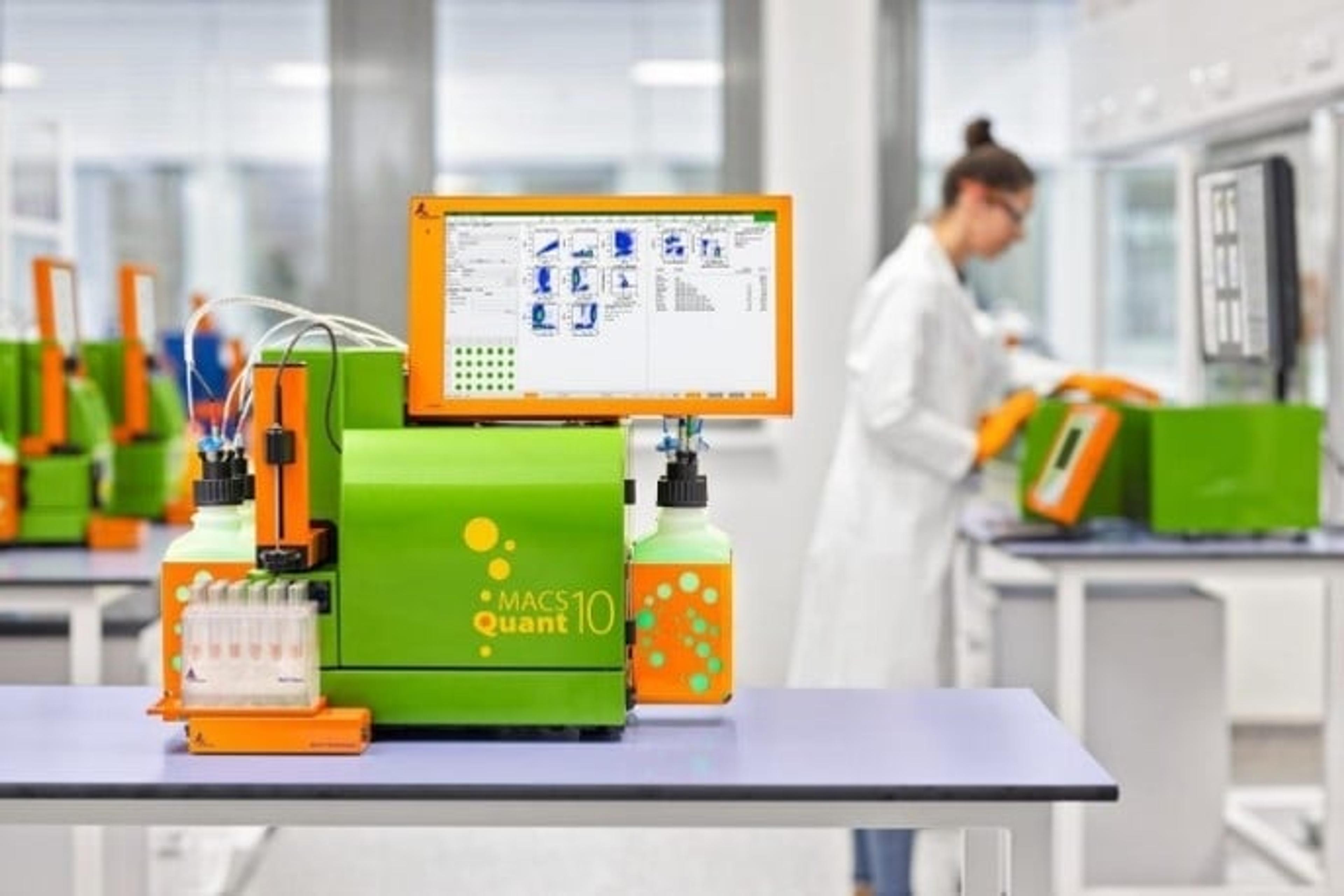
MACSPlex Analysis of Plasma Derived Extracellular Vesicles

4 Feb 2019

Extracellular vesicles (EVs) or exosomes are small membrane vesicles of endocytic origin that are released by many cell types. Depending on the originating cell, exosomes are loaded with a specific set of proteins, lipids, and nucleic acids. EVs are involved in various biological processes, including immune surveillance, blood coagulation, neuronal communication, stem cell maintenance, and tissue repair. Their impact on tumor progression, neurodegeneration, autoimmune disorders, and other diseases is under investigation. The surface proteins on EVs can affect the cellular uptake and the EV load can impact the physiology of target cells. Due to their small size, it has been difficult to analyze EVs by standard flow cytometry, posing a technical limitation to scientific advancement in this field.

Links

Tags

Flow Cytometry / Cell CountingFlow cytometers are used to count, sort and examine multiple characteristics of cells. Other cell analysis equipment includes image cytometers, cell counters, fluorescence-activated cell sorters (FACS), magnetic-activated cell sorters (MACS), and a range of flow cytometry assay kits. Flow cytometers can reveal information on cell viability, cell proliferation, apoptosis and cell cycle progression, as well as identify cell populations and intracellular or cell-surface molecules. Additionally, some flow cytometers, known as FACS, have an additional sorting function after analysis. Cell counters and image cytometers count live and dead cell populations and can also conduct cell proliferation assays. Find the best flow cytometers, cell counters and cell sorters in our peer-reviewed product directory: compare products, check customer reviews and receive pricing direct from manufacturers.FluorescenceThe emission of fluorescence occurs when a photon of energy is supplied to a fluorescent chemical compound by an external source, causing it to become excited. Fluorescence can be detected and measured for different purposes using microplate readers, fluorescence microscopes, fluorescence scanners, and flow cytometers.VesiclesExosomesHuman PlasmaHuman plasma is the liquid component of blood, which carries blood components - nutrients, hormones, proteins, and waste - throughout the body. Plasma-based studies provide insights into biomarkers, immune responses, and disease mechanisms. Compare plasma handling tools and systems in our peer-reviewed product directory.ScreeningUsing robotics, data processing and control software, liquid handling devices and sensitive detectors, screening allows a researcher to quickly conduct millions of chemical, genetic or pharmacological tests.
MACSPlex Analysis of Plasma Derived Extracellular Vesicles