ResourceSpectroscopy
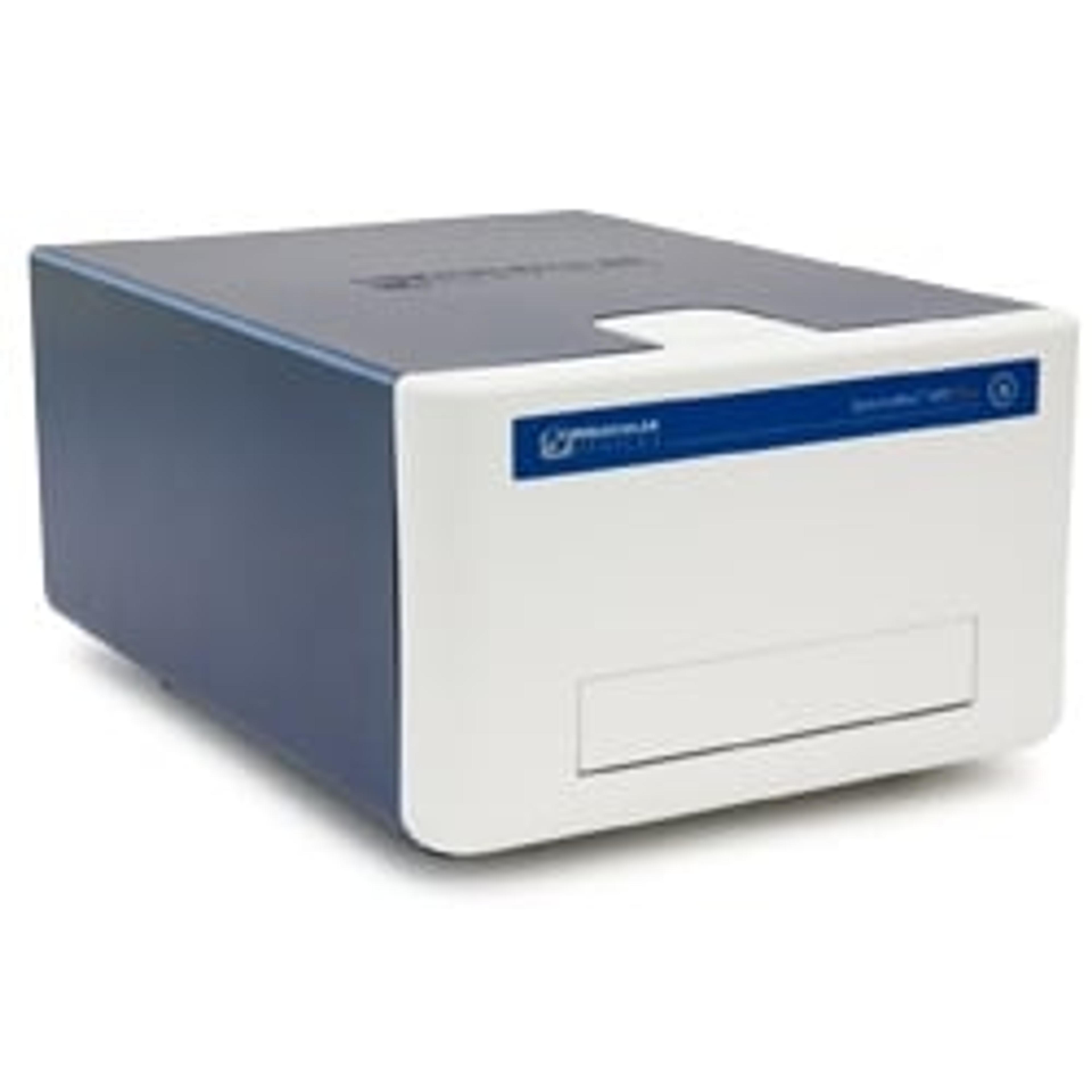
Low-Volume, High-Throughput DNA and Protein Detection on the SpectraMax ABS Plus Microplate Reader
9 Feb 2019Nucleic acid and protein quantitation are essential measurements upstream of many sophisticated assays in genetics and molecular biology. Various methods have been developed to quantitate these biological components, however, the most commonly used technique is still ultra-violet (UV) spectrophotometry.
Links
Tags
UV-Visible SpectroscopyUltraviolet-visible (UV-Vis) spectrophotometers are used to measure the interaction of UV and visible light with a sample, including transmission, reflectance & absorbance. The two major instrument classes are single-beam or double-beam spectrophotometers. More specialized equipment includes colorimeters, spectroradiometers and refractometers. Portable and microvolume spectrophotometers are also available. For the modular spectroscopy lab, explore a range of light sources for combination with a spectrograph/spectrometer and optics. Find the best UV-Vis spectroscopy products in our peer-reviewed product directory: compare products, check customer reviews and receive pricing direct from manufacturers.Microplate Readers / DetectorsMicroplate readers are used to automate the detection and analysis of labeled or label-free components in microplates during assays or live-cell monitoring. Microplate readers are generally distinguished by their mode of detection. Types include absorbance, luminescence, fluorescence intensity, fluorescence polarization, TRF / FRET and multimode microplate readers. Microplate readers deliver a high throughput of samples by reading multiple wells simultaneously, with the 96-well format the most commonly used. As a result, microplate readers are often used in the drug discovery, bioassays, research and pharmaceutical industries for screening applications. Microplate loading can also be automated, with robotic microplate stackers to increase throughput. Find the best microplate readers in our peer-reviewed product directory: compare products, check customer reviews and receive pricing direct from manufacturers.Protein QuantificationThe detection and quantification of proteins in a sample is vital across life sciences, pharmaceutical research and clinical diagnostics, and a variety of equipment is available to scientists to simplify the workflow. Proteins of interest can be easily labeled and detected on light-based detection instruments. Immunoassay kits allow you to identify a specific protein of interest and protein detection beads or antibody microarrays allow you to identify multiple specific proteins at once. Protein interactions and enzyme activity can also be monitored with protein-protein interaction assays. Additionally, the biophysical characterization of proteins is made easy with biokinetic analyzers. Find the best protein detection and quantification products in our peer-reviewed product directory: compare products, check customer reviews and receive pricing direct from manufacturers.DNA QuantificationDNA quantification is the process of measuring the amount of DNA in a sample. It is vital in genomics, molecular biology, and biotechnology, helping to ensure accurate experiments and data analysis. Explore DNA quantification tools in our peer-reviewed product directory; compare products, check reviews, and get pricing directly from manufacturers.High ThroughputHigh throughput experiments allow the simultaneous processing of several samples. This parallelization reduces the cost per experiment and increases reproducibility and output volume of data.UVUltraviolet (UV) light is used in a variety of applications, including disinfection, spectrophotometry, and molecular biology. UV light can damage DNA, making it a powerful tool in sterilization and in studies of mutagenesis and gene repair. Explore UV-related products in our peer-reviewed product directory; compare products, check reviews, and get pricing directly from manufacturers.