
ResourceSpectroscopy

Investigating Blood Glucose Monitoring and Sampling Through Spectral Analysis

21 Feb 2019

This application note presents some of the wavelengths of greatest glucose absorption currently being highlighted in spectral analysis, with the end goal of non-invasive monitoring and sampling of blood glucose levels.
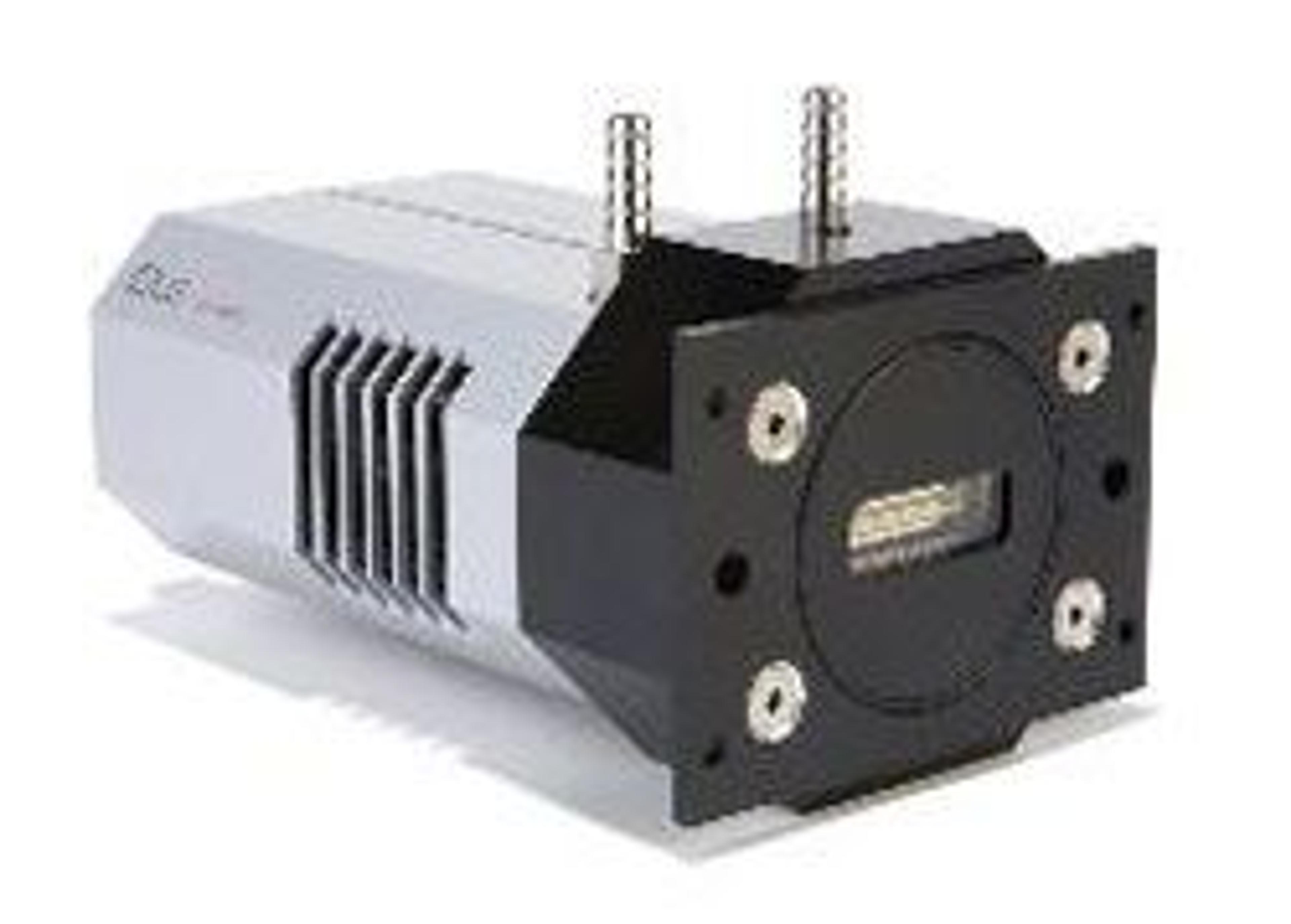
iDus InGaAs CCD Detector

Oxford Instruments Andor

From the manufacturer’s of the World's most compact and reliable spectroscopic CCD detector, comes a new Near Infrared detector solution, the Andor iDus InGaAs detector array system. With all the benefits you’ve come to expect from the iDus range of detectors, the iDus InGaAs detector offers a choice of 512 or 1024 element linear photodiode arrays (PDA) ideal for NIR spectroscopy with high sensitivity output and high resolution covering wavelengths from 800nm up to 2200nm. Andor's iDus InGaAs 1.7 Array Detector series provides the most optimized platform for Spectroscopy applications up to 1.7 µm. The TE-cooled, in-vacuum sensors reach cooling temperatures of -90°C where best Signal-to-Noise ratio can be achieved. Indeed dark current will improve moderately below -90°C where scene black body radiation will dominate, while Quantum Efficiency of the sensor will be greatly impacted at these lower temperatures and lead to a lower Signal-to-Noise ratio.Andor's iDus InGaAs 2.2 Array Detector series provides the most optimized platform for Spectroscopy applications up to 2.2 µm. The TE-cooled, in-vacuum sensors reach cooling temperatures of -90°C where best Signal-to-Noise ratio can be achieved. Indeed dark current will improve moderately below -90°C where scene black body radiation will dominate, while Quantum Efficiency of the sensor will be greatly impacted at these lower temperatures and lead to a lower Signal-to-Noise ratio.

(1)

Links

Tags

Investigating Blood Glucose Monitoring and Sampling Through Spectral Analysis