ResourceSeparations

Increasing Sensitivity in the Determination of Volatile Organics in Toys with Headspace Trap-GC/MS

Increasing Sensitivity in the Determination of Volatile Organics in Toys with Headspace Trap-GC/MS

7 Dec 2015

The safety of toys has gained publicity on a global scale, with numerous recalls and new regulations. One aspect of toys which needs to be considered under European Union regulations (EN-71) is the content of volatile organic compounds (VOCs). These compounds, such as benzene and toluene, are residual after the manufacture of various types of polymers, additives and coatings. VOCs are potentially hazardous to the health of children if present at high levels in toys. As a result, it is necessary to accurately determine the level of VOCs in toys to ensure safety. This application note will present an approach developed to measure VOCs at low levels using headspace trap (HS Trap) sample introduction with gas chromatography/mass spectrometry (GC/MS).

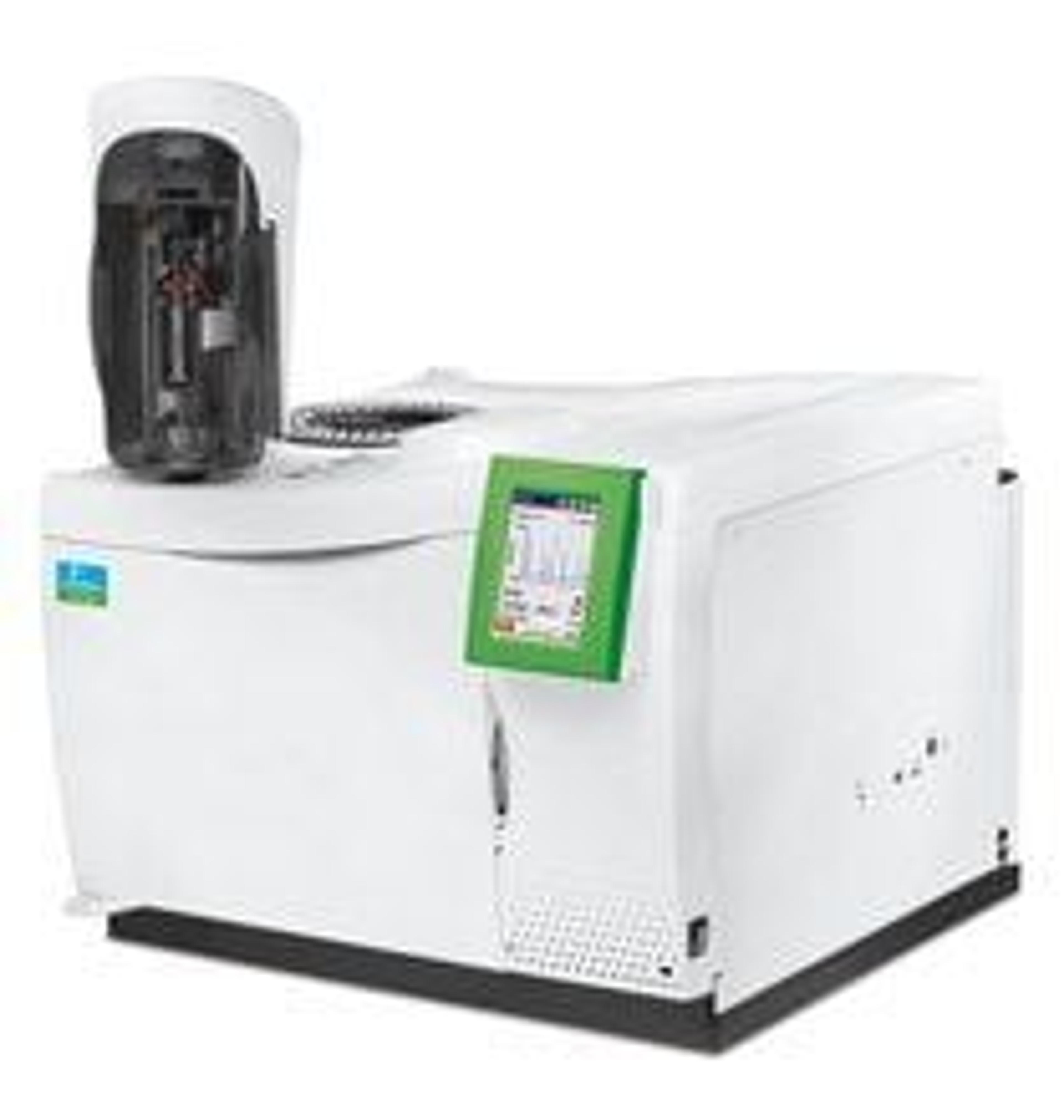
Clarus 680 GC

PerkinElmer

The Clarus® 680 GC is designed for fast-paced, high-volume laboratories that require fast analytical cycle times. It maximizes throughput with the fastest injection-to-injection time of any conventional gas chromatograph. The Clarus 680 GC incorporates many other PerkinElmer innovations that provide unprecedented operational simplicity and outstanding flexibility while removing the barriers to productivity that can arise with more demanding samples and applications. The fastest temperature programmable inlets available combined with programmable pneumatic control (PPC) provides simple and straightforward solutions to complex analyses such as analysis for methanol in crude oil or determination of pesticides in food. Its near-ambient performances make the Clarus 680 GC the instrument of choice for the separation of light volatile components or when Large Volume Injection is required to run high-sensitivity GC/MS applications. Complete instrument control is available through TotalChrom and TurboMass as well as Waters® Empower™ 2 and Agilent® EZChrom Elite™ drivers. Features/Benefits Patented high-performance oven - the unique oven design of the Clarus 680 GC provides the fastest available heat-up and cool-down rate, enabling shorter injection-to-injection and analytical cycle times, maximizing your sample throughput and achieve maximum return on your investment •  Its twin-walled oven design with concentric air exhaust* allows the user to achieve greater separation at near-ambient temperatures without the use of special coolants, especially important for the analysis of Volatile Organic Compounds (VOCs). •  Fast oven heat-up allows faster chromatography, particularly useful when speeding up the elution of late eluting compounds. •  Fastest available cool-down rate is delivered using forced convection air. This greatly reduces non-productive time between runs. •  Universal Programmable Split-Splitless (PSS) and Programmable On-Column (POC) injectors design enables Large Volume Injection of volatile solvents and cold on-column injections without the use of expensive cooling agents •  Novel Swafer™ micro-flow technology dramatically simplifies complex tasks helping to make the Clarus 680 GC easily used by operators at all skill levels •  Complete instrument control is available through TotalChrom™, TurboMass™ as well as Waters® Empower™ 2 and Agilent® EZChrom Elite™ drivers.

(19)

Links

Tags

Particle CharacterizationParticle characterization instruments are used to determine particle size distribution, shape, surface area, zeta potential, density and porosity of particles and materials. Multiple tecchniques are available for determining particle size, shape and count including dynamic light scattering (DLS), laser diffraction, electrozone (Coulter technique), imaging particle analysis and single particle optical sensing. Determine the density of your material with a gas pycnometer or examine its surface area and porosity with gas adsorption analyzers and mercury porosimeters. Find the best particle characterization instruments in our peer-reviewed product directory: compare products, check customer reviews and receive pricing direct from manufacturers.Thermal Analysis EquipmentThermal analysis equipment is used for measuring heat flow, weight loss, dimension changes or thermomechanical properties and is important for analyzing a material’s performance and stability. Thermal analysis equipment includes differential scanning calorimeters (DSC), thermogravimetric analyzers (TGA), thermomechanical analyzers (TMA), dilatometers, thermometers, vapor sorption analyzers, boiling and melting point apparatus. Thermal analyzers can reveal properties such as melting, crystallization and glass transitions or other processes such as oxidation, decomposition, volatilization, as well as coefficients of thermal expansion and modulus. Find the best thermal analysis equipment in our peer-reviewed product directory: compare products, check customer reviews and receive pricing direct from manufacturers.Non-Destructive TechniquesNon-destructive techniques (NDT) describes a variety of analytical techniques used to evaluate the properties of a material. Common methods include ultrasonic, magnetic-particle, liquid penetrant, radiographic, remote visual inspection (RVI), and eddy-current testing. NDT is regularly used in forensic engineering, civil engineering, mechanical engineering, electrical engineering, systems engineering, aeronautical engineering, and medicine.GC-MS GC-MS (gas chromatography-mass spectrometry) instruments and equipment are used to separate, quantify and identify mixtures of small and volatile compounds, such as polycyclic aromatics, fatty acids and alcohols. Often used in drug detection, forensic investigation and environmental analysis for pesticides and contaminants, GC-MS is a powerful addition to your lab’s analytical capabilities. GC-MS/MS instruments equipped with a qTOF or triple quadrupole analyzers can give greater sensitivity and resolution to your analysis. Find the best GC-MS instruments and equipment in our peer-reviewed product directory: compare products, check customer reviews and receive pricing direct from manufacturers.Volatile Organic Compounds (VOCs)Volatile organic compounds (VOCs) are chemicals that have a low boiling point. Some VOCs are harmful to human health, whereas others can be used to determine the shelf-life of foods samples. Polymeric MaterialsPolymeric materials are widely used in industries ranging from biomedical devices to packaging and electronics. Research into these materials focuses on their properties, including strength, flexibility, and degradation. Advances in polymer science have enabled the development of more sustainable and high-performance materials. Explore the best polymeric material products in our peer-reviewed product directory; compare products, check reviews, and get pricing directly from manufacturers.Headspace Sampler