
Improving the Chromatographic Separation of DMB-Labeled Sialic Acids for the Comparison of Biosimilars to Reference Materials
Improving the Chromatographic Separation of DMB-Labeled Sialic Acids for the Comparison of Biosimilars to Reference Materials
18 Jan 2016Sialic acids are important because they affect bioavailability, function, stability, and metabolism of glycoproteins. A new HPLC method employing an Ascentis® Express RP-Amide column was developed to determine DMB-labeled NGNA and NANA sialic acids released from biotherapeutic proteins. This article explains the many advantages this method offers over the original C18 method.
Related products
Request Quote for All Products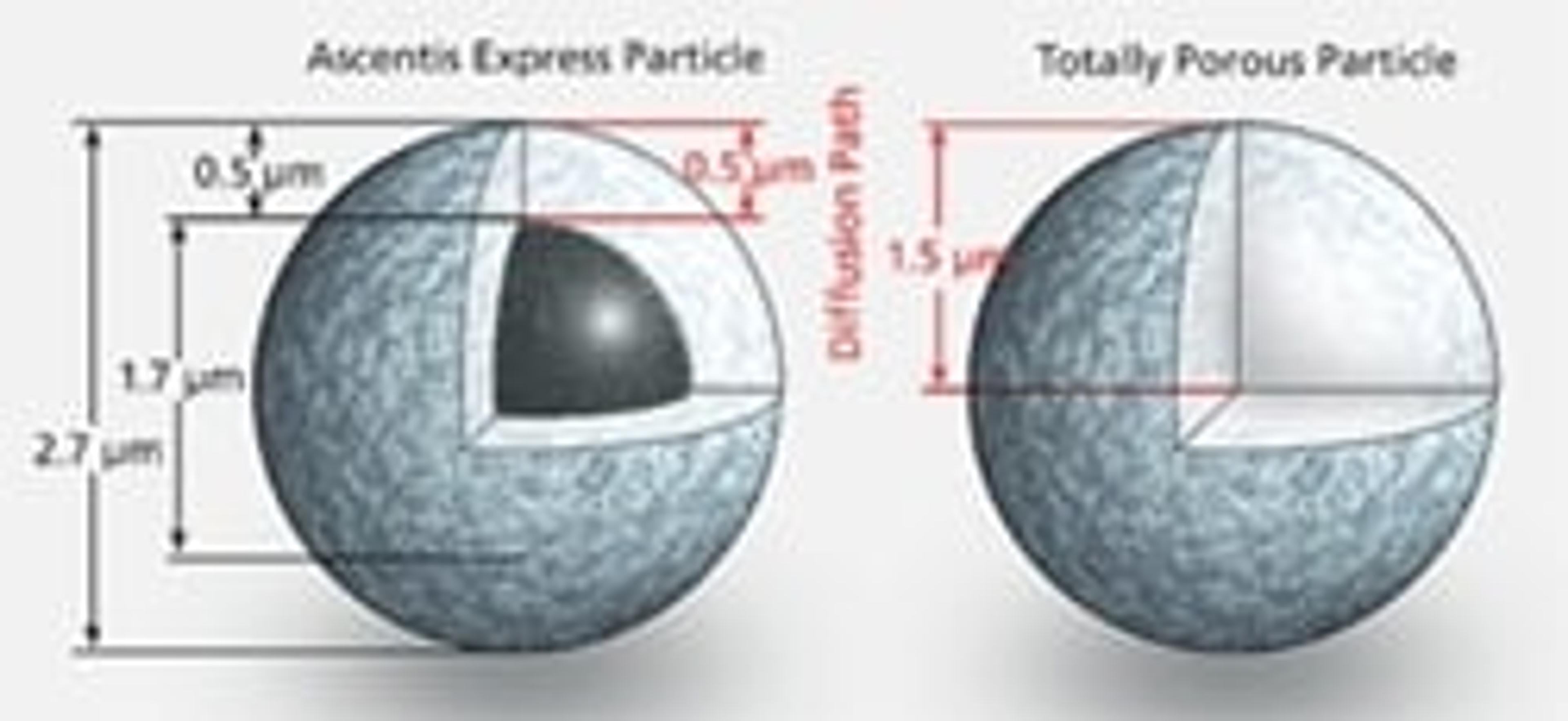
Ascentis® Express RP-Amide HPLC Columns
Sigma-Aldrich SupelcoAscentis Express RP-Amide HPLC columns are the most recent product additions to the Supelco HPLC product line. Combining an embedded polar group (EPG) stationary phase with the Fused-Core particles, Ascentis Express RP-Amide provides a host of useful benefits to the HPLC chromatographer. Ascentis Express RP-Amide is a blend of modern phase technology and innovative particle technology. The Fused-Core particle provides benefits in terms of speed, resolution, sensitivity, and ruggedness. The one-step RP-Amide bonding chemistry provides benefits in terms of selectivity, aqueous stability, and improved peak shape for bases. Read about how this product was used to analyze Riboflavin and impurities here. Benefits: Alternative reversed-phase selectivity to C18 Improved peak shape for bases 100% aqueous compatible reversed-phase column Column Details: Chemistry: RP-Amide Particle Size: 2.7, 5.0 μm Pore Size: 90 Å Length: 20, 30, 50, 75, 100, 150, 250 mm ID: 2.1, 3.0, 4.6 mm