ResourceLife Sciences
Identification of 18 Immune Cell Subsets in Human Blood Using a 13-Color Panel
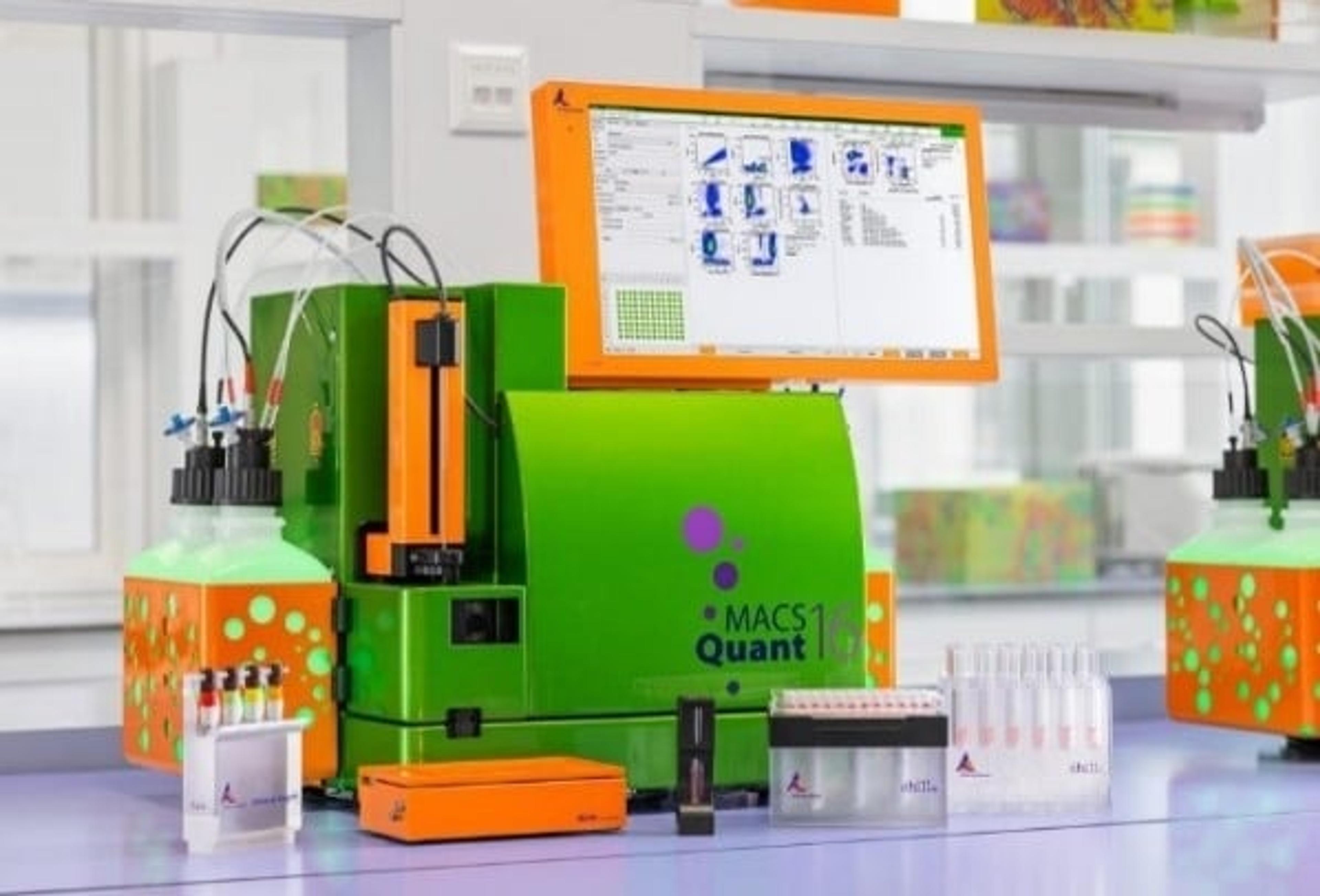
4 Feb 2019Flow cytometry has become the method of choice for immunophenotyping and identifying specific cellular subsets. Within seconds, it provides a thorough overview of the major cell types that constitute a sample. Using multiple markers simultaneously increases the number of parameters that can be analyzed per run and decreases the amount of starting material required to perform an assay. This can be critical for precious sample material and long-term immunemonitoring studies. In this application note, we demonstrate 13-color immunophenotyping of human peripheral blood mononuclear cells (PBMCs) using the MACSQuant® Analyzer 16, a compact and reliable benchtop flow cytometer equipped with three lasers.
Links
Tags
Flow Cytometry / Cell CountingFlow cytometers are used to count, sort and examine multiple characteristics of cells. Other cell analysis equipment includes image cytometers, cell counters, fluorescence-activated cell sorters (FACS), magnetic-activated cell sorters (MACS), and a range of flow cytometry assay kits. Flow cytometers can reveal information on cell viability, cell proliferation, apoptosis and cell cycle progression, as well as identify cell populations and intracellular or cell-surface molecules. Additionally, some flow cytometers, known as FACS, have an additional sorting function after analysis. Cell counters and image cytometers count live and dead cell populations and can also conduct cell proliferation assays. Find the best flow cytometers, cell counters and cell sorters in our peer-reviewed product directory: compare products, check customer reviews and receive pricing direct from manufacturers.ImmunologyImmunological techniques measure and characterize immune responses. Immunology kits and analysis systems often use techniques such as ELISA, radioimmunoassay (RIA) and immunodiffusion assays, Immunohistochemistry, and flow cytometry. Immunologists use equipment such as flow Cytometers, plate readers, plate washers and fluorescent microscopes.Flow CytometryImmunophenotypingBlood AnalysisThe analysis of blood is vital for many areas of life sciences and forensic investigations. Blood samples can be tested for a number of different reasons such as diagnosis, glucose levels, cholesterol and drug testing.