ResourceSeparations

Evaluating the Reproducibility of Protein Extraction from Hard Tissues Using the Bead Ruptor 12 Homogenizer

10 Jun 2014

This application note demonstrates that the Bead Ruptor 12 is an ideal homogenization platform facilitating high throughput, reproducible protein extraction, with the homogenization of eight rat heart tissue samples accomplished in 60 seconds.

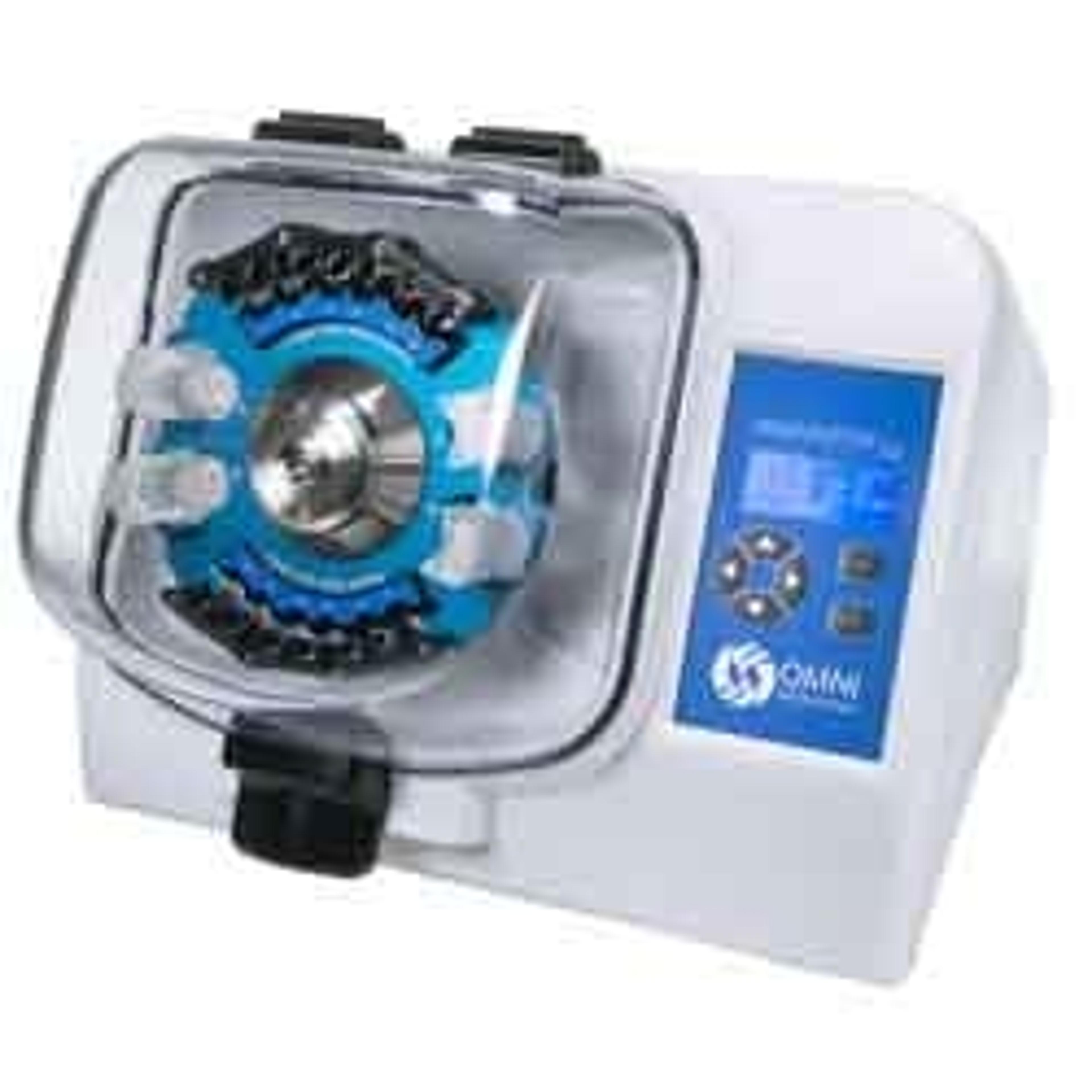
Bead Ruptor 12

OMNI International Inc.

The Bead Ruptor 12 is the most powerful and economical bead mill homogenizer available today. It is an ideal solution for a variety of applications that require grinding, lysing, and homogenization of biological samples prior to molecular extraction. Using disposable sample tubes pre-filled with a variety of lysing beads, the Bead Ruptor 12 vigorously and uniformly shakes up to 16 tubes at a time providing an efficient, consistent homogenization and high-yield. Unlike most other bead mill homogenizers, the Bead Ruptor 12 does not require a cool down period between runs. This means more samples can be processed in a smaller amount of time.   Benefits of the Bead Ruptor 12 Homogenizer include: Simultaneously homogenize up to 12 x 2mL or 0.5mL tubes and 4 x 7mL tubes Convenient front-loading tube holder position for ease of use and optimal bead/sample interactions Processing range is ideal for soft tissue samples No cool-down required between runs = non-stop processing Disposable tubes ensure no threat of cross-contamination No sample degradation due to quick processing Features and integrated lid lock   Compelling performance at a compelling price The Bead Ruptor 12 is designed with a unique  tube carriage motion to ensure that the intra-tube bead movement reduces swirling and results in the  a high bead impact force. The Bead Ruptor 12 is more powerful than  competitor bead mills that are twice the cost making it an excellent solution for any lab working with tissues or cellular material. Bead impact forces generated by commercially available bead mills.   Bead impact forces are calculated as a function of tube acceleration, tube displacement and the motor force applied to the tube. The Bead Ruptor 12 and Bead Ruptor Elite have the broadest force range and produce the highest impact forces of any bead mill on the market. This results in an increased processing efficiency on the Bead Ruptor platforms   Unique snap in tube carriage design The Bead Ruptor 12 eliminates the tedious task of screwing down finger plates  which are present other bead mills. The patent pending snap in tube carriage allows tubes to be “snapped in” and “snapped out” easily thus decreasing  workload and increasing safety. The Bead Ruptor 12 is an ideal bead mill for core laboratories or as a shared resource with its short learning curve and ease of use.   Wide range of bead kits for any sample type  Omni International offers users ultimate flexibility with a range of bead beating tubes and lysing matrices to support homogenization of any sample type.

(1)

Links

Tags

Sample PreparationSample preparation can improve the quality and speed of separation techniques. Products to assist sample preparation include filtration equipment, evaporators, membranes and sieves.Western BlottingWestern blotting equipment is used to transfer and identify specific proteins within a sample, reveal protein modifications, as well as give a semi-quantitative estimation of their concentration. Western blotting equipment includes all apparatus necessary to transfer proteins from gel to membrane and subsequent processing steps. Protein transfer can be performed by electroblotting with wet, semi-dry and dry transfer systems onto nitrocellulose and PVDF membranes. Blocking, washing and labeling of membranes follows, involving buffers, blocking reagents, blotting / incubation trays, labeling reagents, immunoblotting assays, antibodies and conjugates. Automated equipment for these steps is available to accelerate your lab workflow. Finally, detection and imaging of proteins can be conducted using gel documentation and imaging systems. Find the best western blotting equipment in our peer-reviewed product directory: compare products, check customer reviews and receive pricing direct from manufacturers.ProteomicsProteomics is the systemic bioinformatics study of proteins and amino acids, including their structure, size, function and identification. Tools used in proteomics include chromatography, blotting and gels, protein arrays, mass spectrometry and ELISA and associated analysis software. Analyzers and proteomic systems should be sensitive, high resolution, fast and may be automated for high-throughput.Protein PurificationProtein purification is a vital step in drug discovery, therapeutics, biotech and life science research. The purification process typically involves subcellular or membrane protein extraction with cell lysis kits, separation of proteins from cell debris by filtration or spin columns, and the isolation of proteins of interest from other proteins and impurities with affinity purification (including fusion protein tags and antibody binding proteins A, G and L), immunoprecipitation or chromatographic methods, such as ion exchange, size exclusion and immobilized metal affinity chromatography. All purification methods come in multiple formats for your laboratory needs, including agarose or magnetic beads, resins, columns and filter plates. Find the best protein purification equipment in our peer-reviewed product directory: compare products, check customer reviews and receive pricing direct from manufacturers.Homogenizers and BlendersHomogenizers and blenders are used to homogenize various types of material, including tissue, cells, plants, food, soil, biological and chemical samples for subsequent analysis. Lab equipment for sample homogenization includes handheld and benchtop homogenizers, bead mill, ultrasonic and multiple sample homogenizers, high shear homogenizers and blenders. Homogenizer bead and probe multipacks are available to avoid cross contamination of samples, as well as cooling systems for homogenizing temperature-sensitive samples. Homogenizers are often used in the first step of extraction of DNA, RNA and proteins from tissue and cell samples. Find the best homogenizers and blenders in our peer-reviewed product directory: compare products, check customer reviews and receive pricing direct from manufacturers.Tissue ProcessingTissue processing involves preparing biological tissue samples for microscopic analysis, including fixation, embedding, and sectioning. This process is essential for histopathology and diagnostic applications. Explore tissue processing products in our peer-reviewed product directory; compare products, check reviews, and get pricing directly from manufacturers.Protein BiologyThe analysis of protein expression, identity and function is vital for many areas of life science research and drug discovery. Some of the most commonly used techniques in protein analysis include Western blotting, electrophoresis and mass spectrometry.Sample HomogenizerSample ProcessingSample processing is required to prepare samples prior to analysis. Technologies used for sample processing include homogenizers, grinders, mills and mixers.