
Evaluating the Efficacy and Reproducibility of Automated Homogenization Technologies
15 Jun 2014This poster evaluates the potential for an automated homogenization system to increase sample throughput and improve reproducibility by comparing two automated homogenization technologies to the widespread approach of hand held rotor stator based homogenization.
Related products
Request Quote for All Products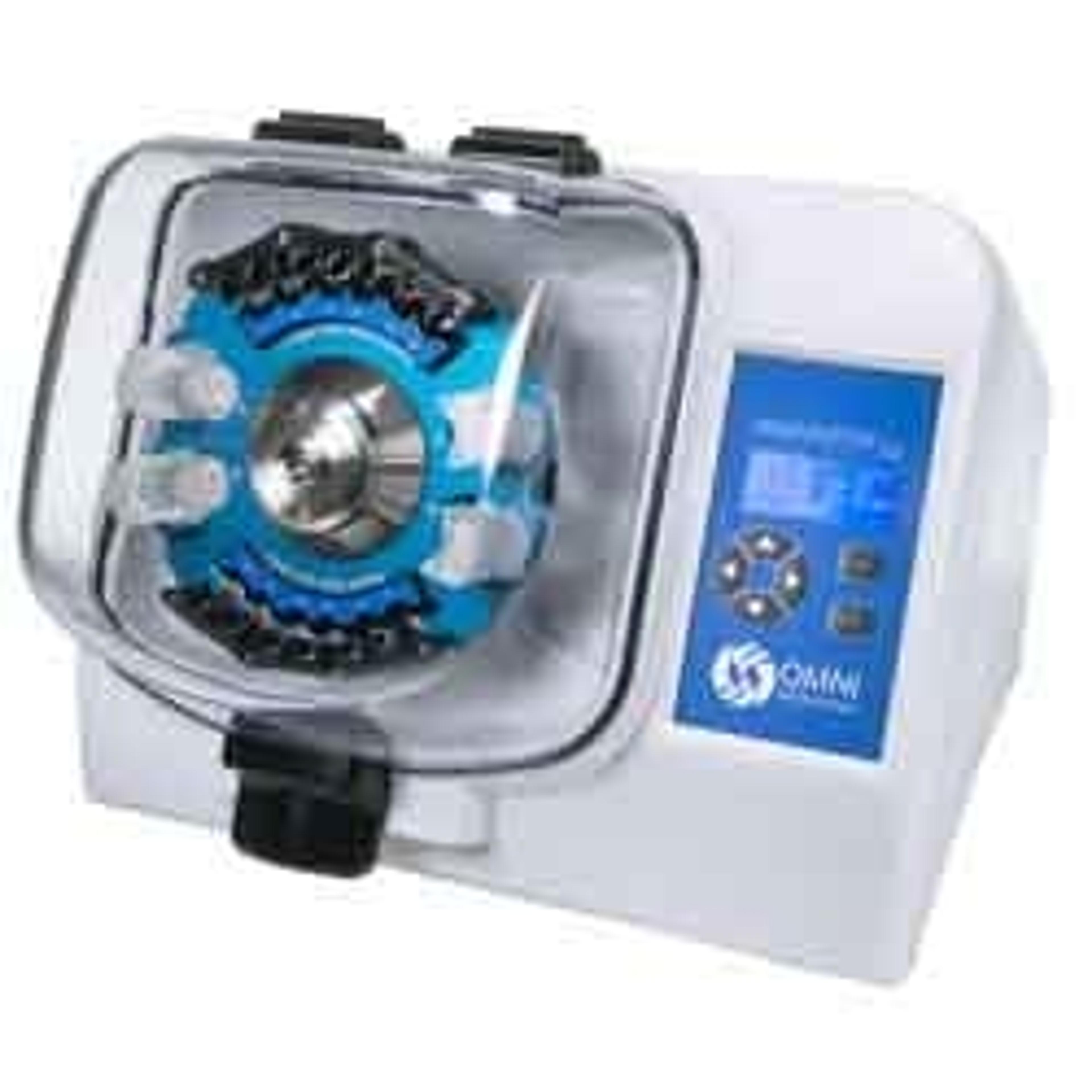
Bead Ruptor 12
OMNI International Inc.The Bead Ruptor 12 is the most powerful and economical bead mill homogenizer available today. It is an ideal solution for a variety of applications that require grinding, lysing, and homogenization of biological samples prior to molecular extraction. Using disposable sample tubes pre-filled with a variety of lysing beads, the Bead Ruptor 12 vigorously and uniformly shakes up to 16 tubes at a time providing an efficient, consistent homogenization and high-yield. Unlike most other bead mill homogenizers, the Bead Ruptor 12 does not require a cool down period between runs. This means more samples can be processed in a smaller amount of time. Benefits of the Bead Ruptor 12 Homogenizer include: Simultaneously homogenize up to 12 x 2mL or 0.5mL tubes and 4 x 7mL tubes Convenient front-loading tube holder position for ease of use and optimal bead/sample interactions Processing range is ideal for soft tissue samples No cool-down required between runs = non-stop processing Disposable tubes ensure no threat of cross-contamination No sample degradation due to quick processing Features and integrated lid lock Compelling performance at a compelling price The Bead Ruptor 12 is designed with a unique tube carriage motion to ensure that the intra-tube bead movement reduces swirling and results in the a high bead impact force. The Bead Ruptor 12 is more powerful than competitor bead mills that are twice the cost making it an excellent solution for any lab working with tissues or cellular material. Bead impact forces generated by commercially available bead mills. Bead impact forces are calculated as a function of tube acceleration, tube displacement and the motor force applied to the tube. The Bead Ruptor 12 and Bead Ruptor Elite have the broadest force range and produce the highest impact forces of any bead mill on the market. This results in an increased processing efficiency on the Bead Ruptor platforms Unique snap in tube carriage design The Bead Ruptor 12 eliminates the tedious task of screwing down finger plates which are present other bead mills. The patent pending snap in tube carriage allows tubes to be “snapped in” and “snapped out” easily thus decreasing workload and increasing safety. The Bead Ruptor 12 is an ideal bead mill for core laboratories or as a shared resource with its short learning curve and ease of use. Wide range of bead kits for any sample type Omni International offers users ultimate flexibility with a range of bead beating tubes and lysing matrices to support homogenization of any sample type.
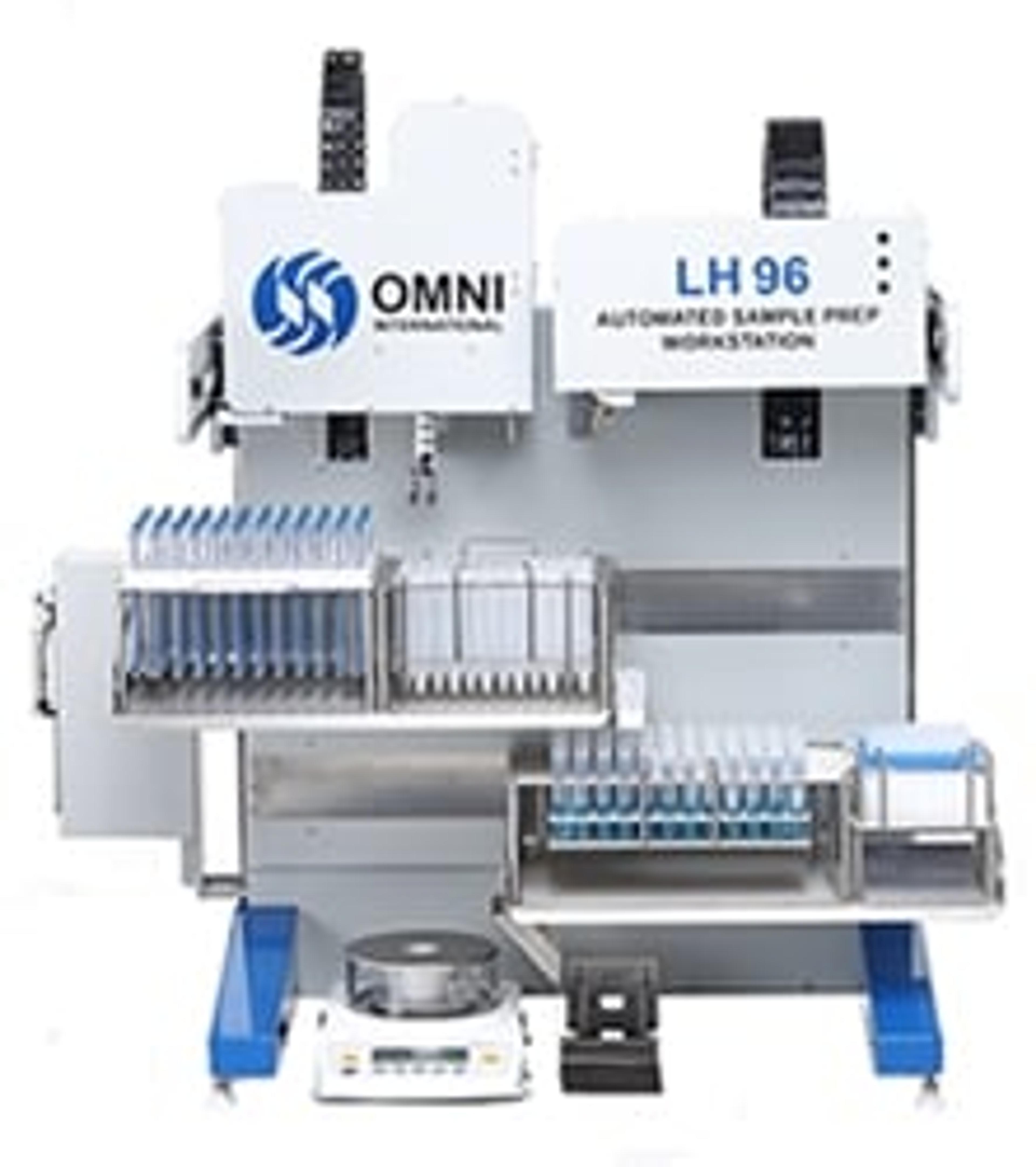
LH96 Automated Homogenizer Workstation
OMNI International Inc.The LH96 can be configured to combine multiple sample prep steps into one versatile, efficient and automated device. Quite literally, what used to take hours or days can now be completed in a matter of minutes, and without attendance. The LH96 integrates a core homogenizing platform, capable of efficiently processing a wide variety of samples from 5mL to 50mL tubes, with fully customizable liquid handling capabilities. Patented robotic technology (patent #US6988518) allows the LH96 to combine the functions of many different automated devices into a single platform small enough to fit into most laminar fume hoods.Features: Weigh samples -or- input pre-weighed sample data. Add liquids, dilute samples based on sample weight or pre determined weights. Homogenize up to 8 samples simultaneously. Eliminate cross contamination concerns using proven Omni Tip™ Plastic Homogenizer Probes. Or use traditional stainless steel probes. Add cooling, heating, barcode reading, weighing, sample dilution based on weight. Walk-away processing. The LH96 combines a core homogenizing platform, capable of efficiently processing a wide variety of samples, with fully customizable liquid handling capabilities. The LH96 can also be customized with a broad range of accessories and modules to accommodate the specific needs of your lab.
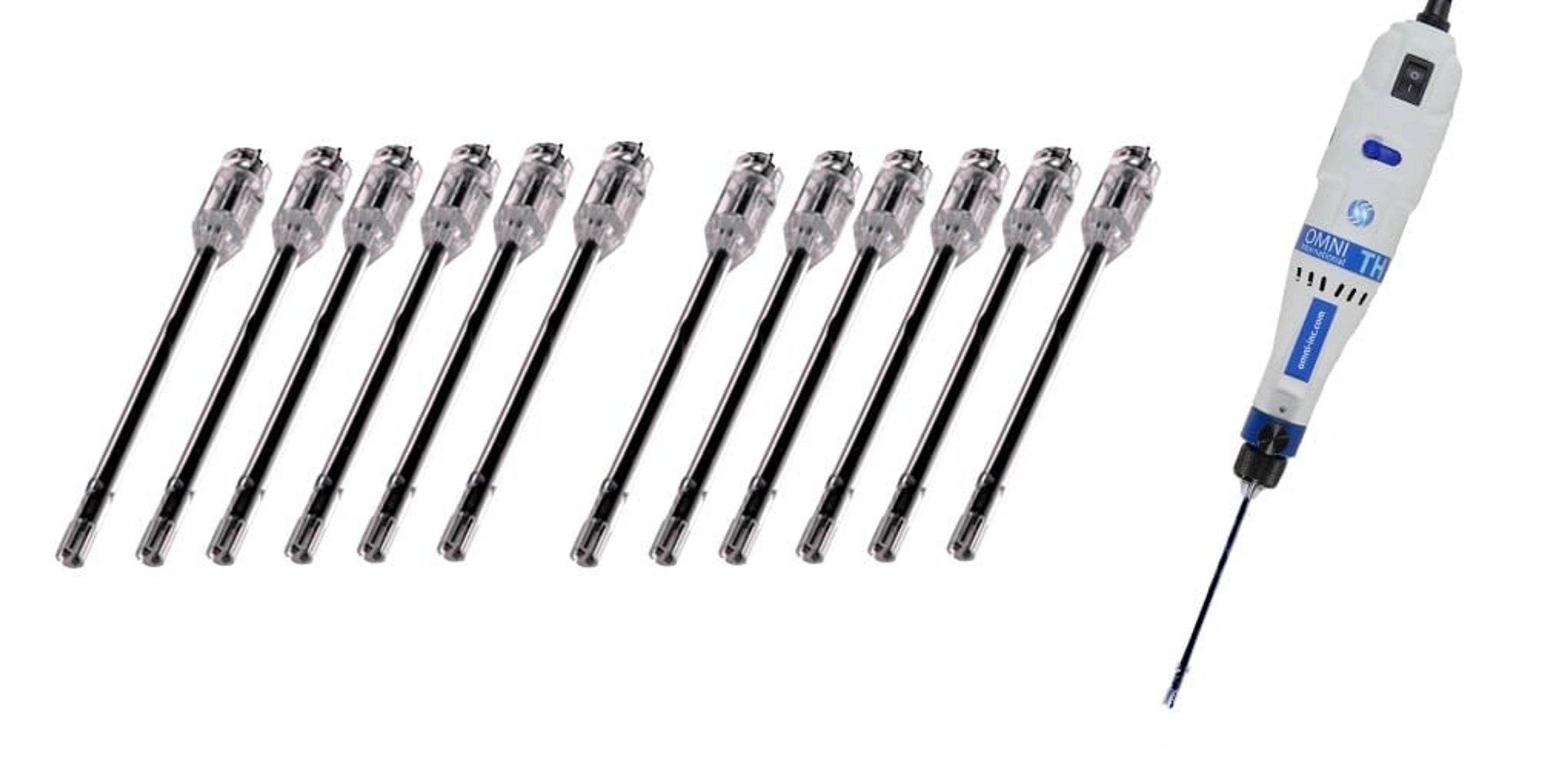
Omni Tip Homogenizer Kit
OMNI International Inc.Omni Tip™ Homogenizing Kits include everything you need to homogenize. These kits can be used to process sample sizes from 0.25mL to 30mL with Omni Tips & Omni Tip Kits come complete with the redesigned Omni TH Motor, patented Omni Tip™ Plastic Homogenizer Probes (in hard or soft tissue versions), Omni Tip™ Adapter, and tool kit all in a convenient storage case. Patented Omni Tip™ Plastic Homogenizer Probes are designed to completely avoid cross-contamination between samples during homogenization. Engineered from a durable plastic, they come in two different configurations for soft tissue and hard tissue homogenizing. Omni Tips are available in a standard size of 7mm (Diameter) x 110mm (Length).The outer tube of Omni Tips is made of Lexan 144R, a polycarbonate.The inner shafts are made of Ultem 1000, a polyetherimide. The Omni Tip Kit is extremely cost effective and will handle a wide range of applications for multiple users making it the perfect homogenizer solution for a small laboratory. Ideal for PCR, RNA, and DNA sample preparation along with environmental, pharmaceutical, microbiological research and soft or hard (frozen) tissue analysis Omni Tips™ are economical and can be disposed of after use or autoclaved up to 7 times No need to order multiple items, everything is contained in one package Omni TH Motor has a variable speed controller that allows for speeds of 5,000 to 35,000 rpm Kits are also available with 5mm, 7mm, or 10mm stainless steel generator probes for more fibrous/tough samples Includes an Omni TH Motor, Omni Tip™ Adapter, 12 Soft or 12 Hard Tissue Omni Tips™, stand clamp, convenient storage case and instruction manual.