DRAQ5™ in FC-Based Apoptosis Assays: Far-Red Fluorescent Live-Cell Permeant DNA Dye

DRAQ5™ in FC-Based Apoptosis Assays: Far-Red Fluorescent Live-Cell Permeant DNA Dye

8 Oct 2015

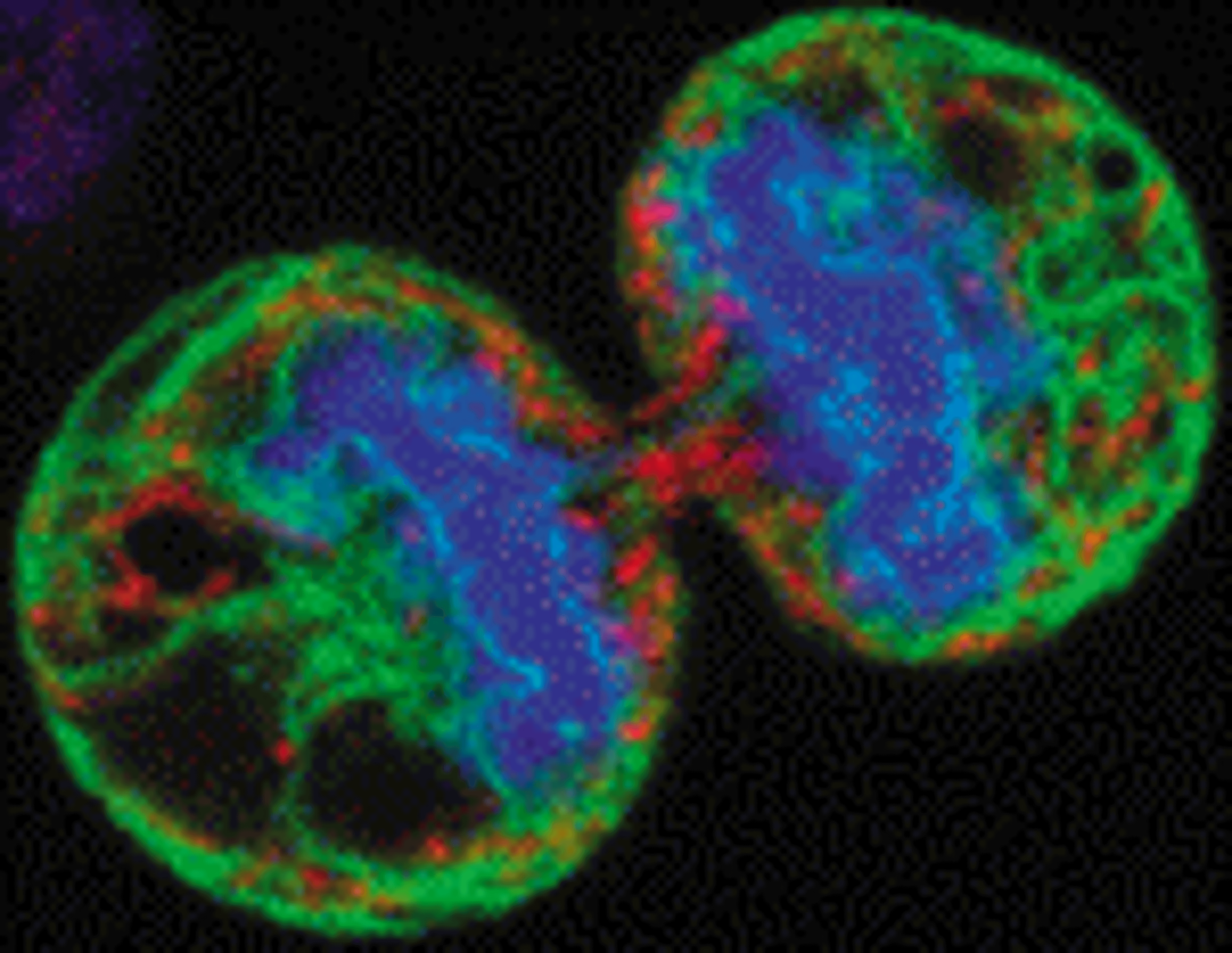
The cell cycle is a series of events that occur when a cell divides and replicates into two daughter cells. Cell cycle regulation depends upon processes that are pivotal to cell survival. During the cell cycle the quantity of DNA increases from 2N (G1 phase) to 4N (G2 phase) via the S (synthesis) phase. Perturbation of the cell cycle can lead, for example, to cell cycle arrest or uncontrolled cell division, as in cancer, while cells with DNA below 2N are typically in apoptosis, this is the, so-called, sub-G1/G0 peak. The quantity of DNA in each nucleated cell in a population can be measured by labeling the nuclear DNA with a fluorescing DNA dye, most commonly propidium iodide (PI). As a live-cell permeant DNA probe DRAQ5™ can be applied directly to complex samples such as blood or bone marrow or cultured cells, as the last step prior to analysis and without any washing steps.

DRAQ5

Biostatus Limited

The proven far-red probe for live or fixed cells, spectrally compatible with UV / Vis-range fluors.

(267)

Links

Tags

DNA / RNA Extraction and PurificationPurified DNA and RNA are required for numerous downstream molecular biology applications. Consequently, the importance of high-quality DNA/RNA extraction and purification equipment cannot be underestimated. Many purification kits are available and are typically optimized for nucleic acid type and source, including plasmid DNA, genomic DNA, mRNA, RNA and viral nucleic acid purification kits. Automated extraction and purification of nucleic acids can be implemented with magnetic bead separator instruments or high-throughput purification workstations. Find the best DNA/RNA extraction and purification equipment in our peer-reviewed product directory: compare products, check customer reviews and receive pricing direct from manufacturers.DNA SequencingDNA sequencing, such as sanger sequencing, is a biological technique that determines the precise order of nucleotide bases in a fragment or template of DNA. DNA sequencers and genetic analyzers are based on capillary electrophoresis, where labeled DNA fragments are electrophoretically separated by size as they migrate through a polymer. Find the best DNA sequencing products, including DNA sequencing kits, genomic libraries and genetic identity kits in our peer-reviewed product directory: compare products, check customer reviews and receive pricing direct from manufacturers.ApoptosisApoptosis, or programmed cell death, is a vital process for healthy tissues and is key to our understanding of disease mechanisms like cancer and neurodegeneration. Research tools enable apoptosis detection, quantification, and analysis. Browse products for apoptosis research in our peer-reviewed product directory.FluorescenceThe emission of fluorescence occurs when a photon of energy is supplied to a fluorescent chemical compound by an external source, causing it to become excited. Fluorescence can be detected and measured for different purposes using microplate readers, fluorescence microscopes, fluorescence scanners, and flow cytometers.DNADeoxyribonucleic Acid (DNA) is the main component of chromosomes and the carrier of genetic information of living organisms. Find out here about PCR, NGS, ChIP-Seq, gel imaging, and many other techniques which can be used for the analysis of DNA.Assay DevelopmentThe process of proving an assay to be sensitive with respect to the target is known as assay development. The assay should be able to characterize novel compounds and measure the potency of these compounds against a validated biological target.
DRAQ5™ in FC-Based Apoptosis Assays: Far-Red Fluorescent Live-Cell Permeant DNA Dye