
ResourceLife Sciences
Determine Hydrodynamic Size of Surfactant Micelles with DelsaMax CORE
27 Nov 2014Understanding the experimental properties and thermodynamics of detergent solutions is important for the cleaning industry, basic encapsulation research, and increasingly, in protein studies. This application note demonstrates how the DelsaMax CORE accurately determined the hydrodynamic size of Sodium Dodecyl Sulfate micelles, a representative surfactant. The measurements in this work all took just a few minutes thanks to the state-of-the-art dynamic light scattering detection system on the DelsaMax CORE.
Related products
Request Quote for All Products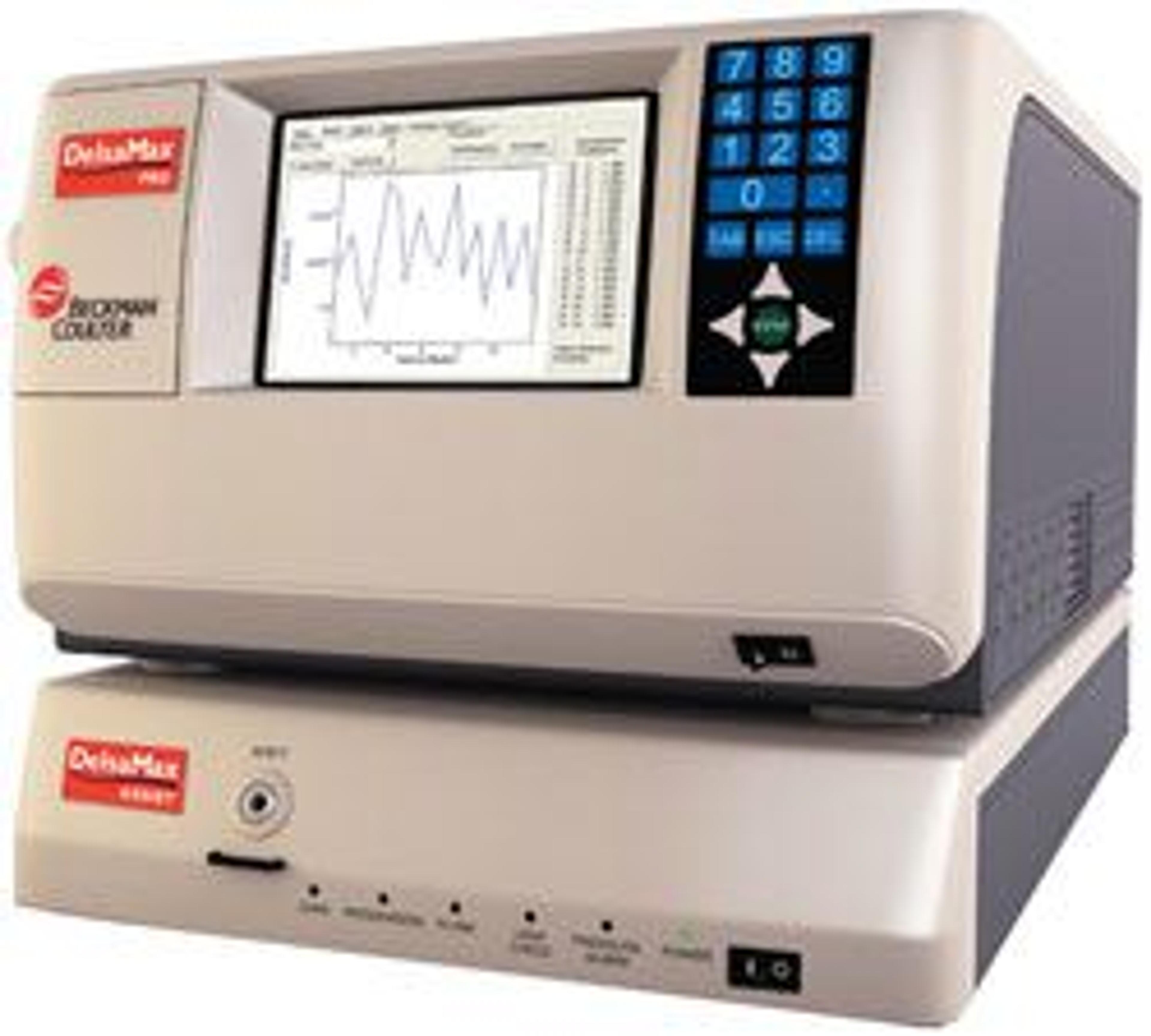
DelsaMax Series - Particle Analyzers
Beckman Coulter Life SciencesWith unprecedented speed, the flexibility to analyze the lowest sample volumes available, and a level of precision and accuracy you can always count on, the new DelsaMax Series helps you advance your research like never before.
Links
Tags
Protein PurificationProtein purification is a vital step in drug discovery, therapeutics, biotech and life science research. The purification process typically involves subcellular or membrane protein extraction with cell lysis kits, separation of proteins from cell debris by filtration or spin columns, and the isolation of proteins of interest from other proteins and impurities with affinity purification (including fusion protein tags and antibody binding proteins A, G and L), immunoprecipitation or chromatographic methods, such as ion exchange, size exclusion and immobilized metal affinity chromatography. All purification methods come in multiple formats for your laboratory needs, including agarose or magnetic beads, resins, columns and filter plates. Find the best protein purification equipment in our peer-reviewed product directory: compare products, check customer reviews and receive pricing direct from manufacturers.Particle CharacterizationParticle characterization instruments are used to determine particle size distribution, shape, surface area, zeta potential, density and porosity of particles and materials. Multiple tecchniques are available for determining particle size, shape and count including dynamic light scattering (DLS), laser diffraction, electrozone (Coulter technique), imaging particle analysis and single particle optical sensing. Determine the density of your material with a gas pycnometer or examine its surface area and porosity with gas adsorption analyzers and mercury porosimeters. Find the best particle characterization instruments in our peer-reviewed product directory: compare products, check customer reviews and receive pricing direct from manufacturers.Dynamic Light ScatteringDynamic light scattering is used to measure the size distribution of particles in suspension by analyzing the way light scatters off them. It is commonly used in materials science, nanotechnology, and protein characterization. Browse our peer-reviewed product directory to find the best dynamic light scattering systems, compare products, check reviews, and get pricing directly from manufacturers.