Determination of Organochlorine Pesticides and Polychlorinated Biphenyls Using GC/MS/MS Operated in the MRM Mode

11 Nov 2016

In this application note a triple quadrupole GC/MS/MS method using Multiple Reaction Monitoring (MRM) mode is used for sensitive and selective detection and quantitation of Organochlorine pesticides (OCPs) and polychlorinated biphenyls (PCBs); this is a common analysis in most environmental laboratories.

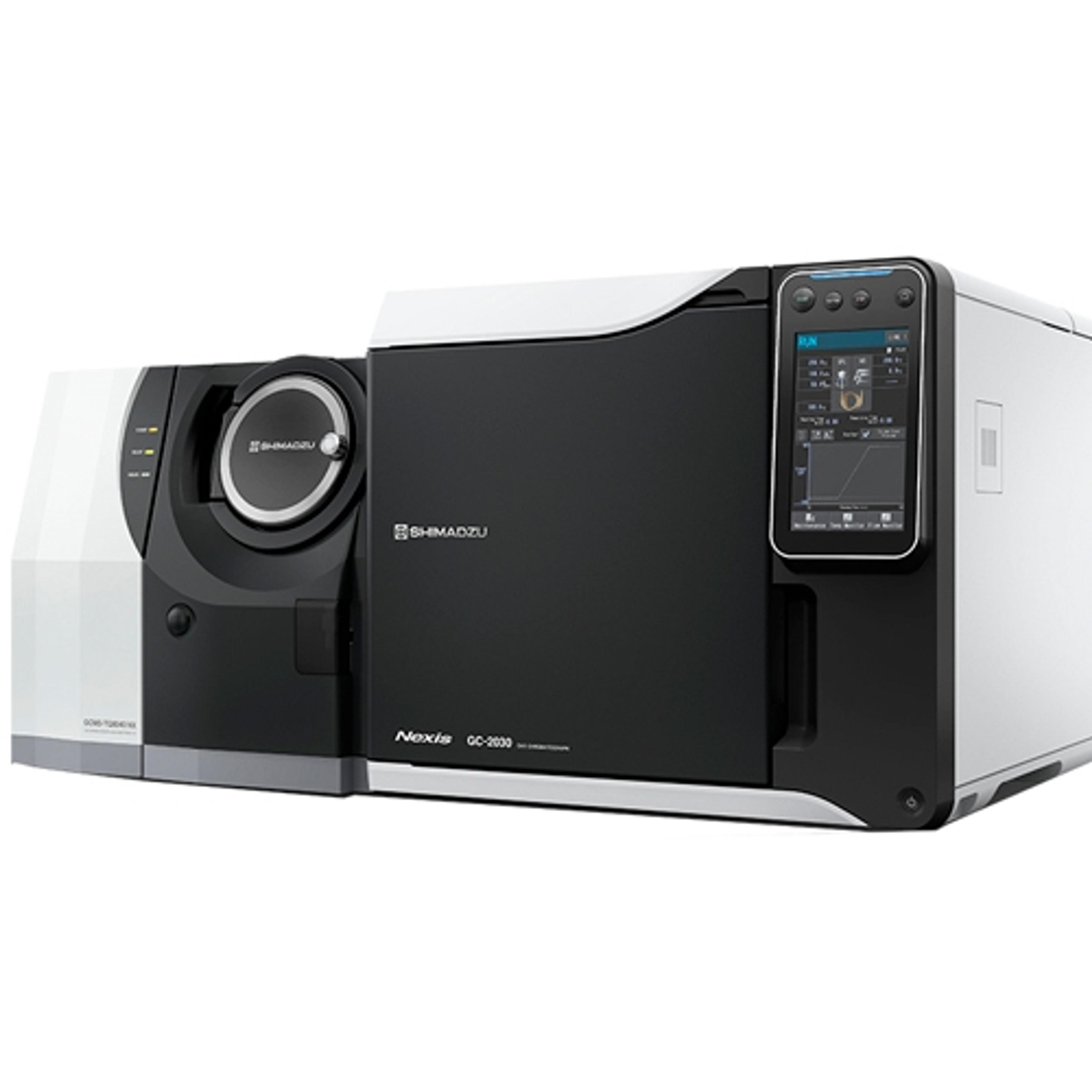
GCMS-TQ8040 NX Triple Quad Gas Chromatograph Mass Spectrometer

Shimadzu Corporation

Featuring Smart Productivity for high-efficiency sample throughput, Smart Operation for quick and easy method development, and Smart Performance for low detection limits and Scan/MRM, the GCMS-TQ8040 NX is a cost-effective, easy-to-use triple quadrupole GCMS for routine analytical work.   With over 32,000 MRM transitions in a single run, the GCMS-TQ8040 NX with Smart MRM can combine over 400 compounds into a single MRM method without sacrificing sensitivity or selectivity, doubling or even tripling laboratory productivity. This results in added throughput before routine maintenance is required and faster return on investment. The Shimadzu GCMS-TQ8040 NX MRM Optimization Tool automatically determines optimum transitions and collision energies for all compounds in a single sequence, and seamlessly incorporates them into the Smart Database Series for fully automated MRM method development. Using flexible MS events, the Smart MRM function routinely determines the best dwell and loop times for >400 compounds in a single method, providing optimum precision and sensitivity. The GCMS-TQ8040 NX can acquire data in the classic MRM mode, or in synchronous Scan/MRM mode for simultaneous qualitative and quantitative results. The Scan/MRM mode simultaneously acquires accurate library-searchable mass spectra and low-level MRM quantitation in a single analysis – a critical function when sample volume is limited. Shimadzu’s proprietary UFsweeper™ technology achieves high-speed MRM analysis up to 800 transitions per second. The Advanced Scanning Speed Protocol (ASSP™) provides high-speed scanning control at 20,000 u/second. ASSP and simultaneous Scan/MRM analysis mode provides high-quality library searchable fragmentation spectra, and accurate low-level quantitative data in a single analysis. This efficient design provides optimum performance in all analysis modes: MRM, SIM, Scan, Scan/MRM, Scan/SIM, Neutral Loss, Product Ion Scan, Precursor Ion Scan and combination modes.

(20)

Links

Tags

Sample PreparationSample preparation can improve the quality and speed of separation techniques. Products to assist sample preparation include filtration equipment, evaporators, membranes and sieves.Mass SpectrometryMass spectrometry (MS) is a powerful analytical technique used to identify and quantify molecules based on the mass-to-charge ratio of gas-phase ions. It provides detailed information about the structure, composition, and properties of compounds and is widely used across fields such as environmental monitoring, materials science, drug discovery and development, food and beverage testing, and wider chemical research. Key MS techniques include tandem mass spectrometry (MS/MS), liquid chromatography–mass spectrometry (LS-MS) and inductively coupled plasma (ICP-MS). Choosing from these wide range of techniques and technologies can be a daunting task, so keep up to date with scientific applications, performance expectations, and customer reviews here all in one place. Visit our product directory to receive quotes direct from the manufacturer. Sample ManagementSample management systems include sample storage devices such as freezers and plate storers, sample environment enclosures and sample organization, retrieval and sorter systems. Useful system features include high-throughput, automation, robotic arms, automated liquid handling and associated database systems. Accessories in sample management include barcode scanners, heat sealers and tubes.Environmental Monitoring and TestingEnvironmental monitoring and testing uses handheld portable analyzers, kits, spectrometers or chromatography systems for air, water, soil, food and other sample testing. Useful features of analyzers such as BOD and COD include portability, easy calibration, automation and sensitivity.  Environmental test kits for pH, water, moisture, etc, should be accurate, sensitive, reliable, fast and easy to use.Robotic InstrumentsRobotic instruments can be used for high-throughput automation of many lab processes. Such processes use instruments for assays like cell based assays and ELISA, for sample preparation like shakers, centrifuges and incubators, and for analysis such as sequencing and western blot analyzers. Useful features of robotic instruments include speed, reproducibility, barcode readers, software and automation.GC-MS GC-MS (gas chromatography-mass spectrometry) instruments and equipment are used to separate, quantify and identify mixtures of small and volatile compounds, such as polycyclic aromatics, fatty acids and alcohols. Often used in drug detection, forensic investigation and environmental analysis for pesticides and contaminants, GC-MS is a powerful addition to your lab’s analytical capabilities. GC-MS/MS instruments equipped with a qTOF or triple quadrupole analyzers can give greater sensitivity and resolution to your analysis. Find the best GC-MS instruments and equipment in our peer-reviewed product directory: compare products, check customer reviews and receive pricing direct from manufacturers.Water PurificationThere are a number of water purification methods available to remove contamination from laboratory water. These systems include demineralization, reverse osmosis, filtration and ultrafiltration. A combination of methods is sometimes necessary to achieve purified water suitable for use in experiments.PesticidesPesticides are used to protect crops from diseases, pests and unwanted plants. They are classed as persistent organic pollutants (POPs) and can be harmful to humans. The Environmental Protection Agency (EPA) currently regulates the use of pesticides in the USA. EPA MethodsEPA methods are procedures approved by the U.S. Environmental Protection Agency for monitoring and analyzing environmental pollutants, including air, water, and soil samples. These methods are critical in ensuring public health and environmental safety. Explore EPA methods and tools in our peer-reviewed product directory; compare products, check reviews, and get pricing directly from manufacturers.Triple Quadrupole MsWater AnalysisAnalytical methods used to test the purity of drinking water include determining the level of contaminants abides to the level set by the Environmental Protection Agency (EPA).Organic CompoundsOrganic compounds are carbon-based molecules that form the building blocks of life. These include hydrocarbons, lipids, proteins, and nucleic acids. Understanding organic compounds is crucial in chemistry, biochemistry, and pharmacology. Explore organic compound analysis tools in our peer-reviewed product directory; compare products, check reviews, and get pricing directly from manufacturers.Solid Phase Extraction (SPE)Solid phase extraction (SPE) is a sample preparation technique used to separate and concentrate analytes from complex mixtures. It is widely used in environmental, pharmaceutical, and clinical analysis. SPE provides higher sensitivity and selectivity compared to traditional liquid-liquid extraction methods, making it essential for accurate and reproducible results. Explore SPE tools and systems in our peer-reviewed product directory; compare products, check reviews, and get pricing directly from manufacturers.Compound ScreeningCompound screening is a method used to discover specific compounds that could be promising candidates for pharmaceutical use. This potential is identified when compounds interact with the target protein during screening and could therefore be carried forward in the drug development process.Polychlorinated Biphenyls