
ResourceFood and Beverage
Determination of Antioxidant Capacity on the Thermo Scientific Varioskan LUX Multimode Reader
14 Jun 2017This application note describes a method to measure the oxygen radical absorbance capacity (ORAC) of different food and beverage samples with a fluorometric assay using the Thermo Scientific™ Varioskan™ LUX multimode microplate reader. Microplate reader handling and data analysis were controlled by the Thermo Scientific™ SkanIt™ software. We show that with the Varioskan LUX reader, determination of the antioxidant capacity of samples is very fast, sensitive and accurate.
Related products
Request Quote for All Products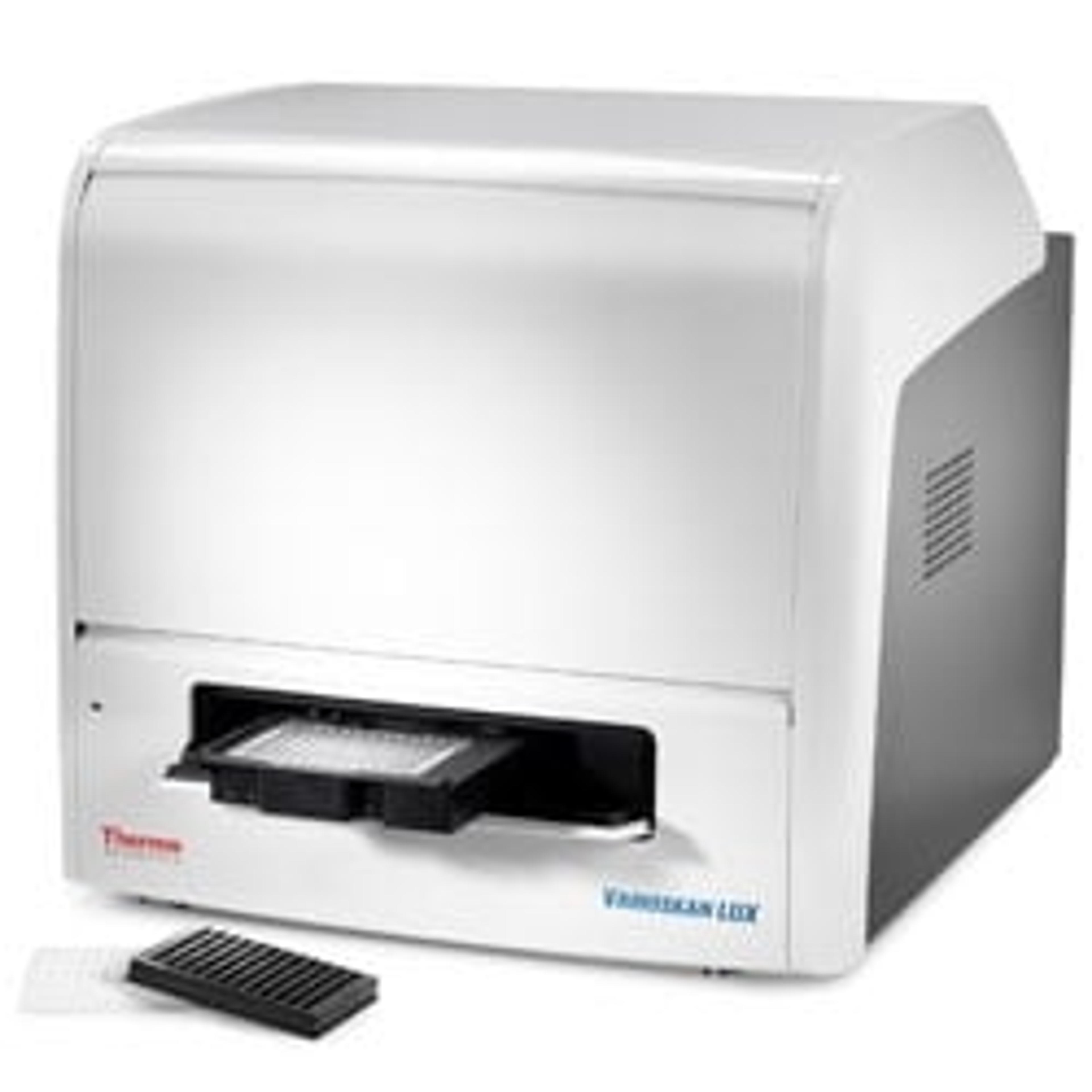
Thermo Scientific™ Varioskan™ LUX Multimode Microplate Reader
Thermo Fisher ScientificTop-of-the-line modular and upgradeable multimode reader with up to five detection technologies. Experience simplified versatility with powerful, intuitive Thermo Scientific SkanIt Software
Links
Tags
MicroplatesMicroplates are multi-well plates used to increase the throughput of biological investigations. The number of wells microplates contain can range from 6 to 3243 wells, with the 96-well format being the most commonly used. Microplates can come tailored for a range of applications including cell culture, PCR, filtration, storage, non-binding surface, protein crystallization, as well as pre-coated, deep well and normal Standard microplates. Additionally, options for microplate colors include clear , black, white or black with clear bottom and white with clear bottom for absorbance microplate reader applications. Find the best microplates for your lab in our peer-reviewed product directory: compare products, check customer reviews and receive pricing direct from manufacturers.Microplate Readers / DetectorsMicroplate readers are used to automate the detection and analysis of labeled or label-free components in microplates during assays or live-cell monitoring. Microplate readers are generally distinguished by their mode of detection. Types include absorbance, luminescence, fluorescence intensity, fluorescence polarization, TRF / FRET and multimode microplate readers. Microplate readers deliver a high throughput of samples by reading multiple wells simultaneously, with the 96-well format the most commonly used. As a result, microplate readers are often used in the drug discovery, bioassays, research and pharmaceutical industries for screening applications. Microplate loading can also be automated, with robotic microplate stackers to increase throughput. Find the best microplate readers in our peer-reviewed product directory: compare products, check customer reviews and receive pricing direct from manufacturers.Food and Beverage AnalyzersFood and Beverage Analyzers are commonly used to provide information about the chemical composition, structure and physical properties of food materials.Food and Beverage ProcessingFood and Beverage Processing involves the preparation of food products for further analysis. Typical instrumentation includes blanchers, color sorters, cookers, grinders, and refrigeration. These are used to replicate the processes commonly used in the commercial preparation of food and beverages.AntioxidantFood TestingFood testing refers to a variety experiments including PCR, mass spectrometry, processing, QuEChERS, analyzing and Kjeldahl.Beverage AnalysisBeverage analysis involves testing and evaluating the composition, quality, and safety of drinks, from alcoholic beverages to soft drinks. Techniques like chromatography and spectroscopy are commonly used to analyze flavors, nutrients, contaminants, and additives. Browse our peer-reviewed product directory to find the best beverage analysis tools, compare products, check reviews, and get pricing directly from manufacturers.