
Comparison of Commercially Available Coupling Kits, including Anteo Technologies’ AMG™ Activation Kit using Mix&Go™ technology, for Luminex MagPlex Microspheres
5 Jul 2015Luminex® MagPlex® Microspheres may be coupled with antibodies using commercially available coupling kits to simplify development of multiplex immunoassays. Anteo Technologies’ AMG™ Activation Kit, using Mix&Go™ technology, has been compared to two other kits using covalent EDC/NHS chemistry. This application note gives the example of coupling TNF antibodies to MagPlex Microspheres using these three kits. An immunoassay was then performed using the Luminex® system with the matched detection antibodies and standards. The method demonstrates the advantages to using the AMG Activation Kit with fewer steps and shorter incubation times.
Related products
Request Quote for All Products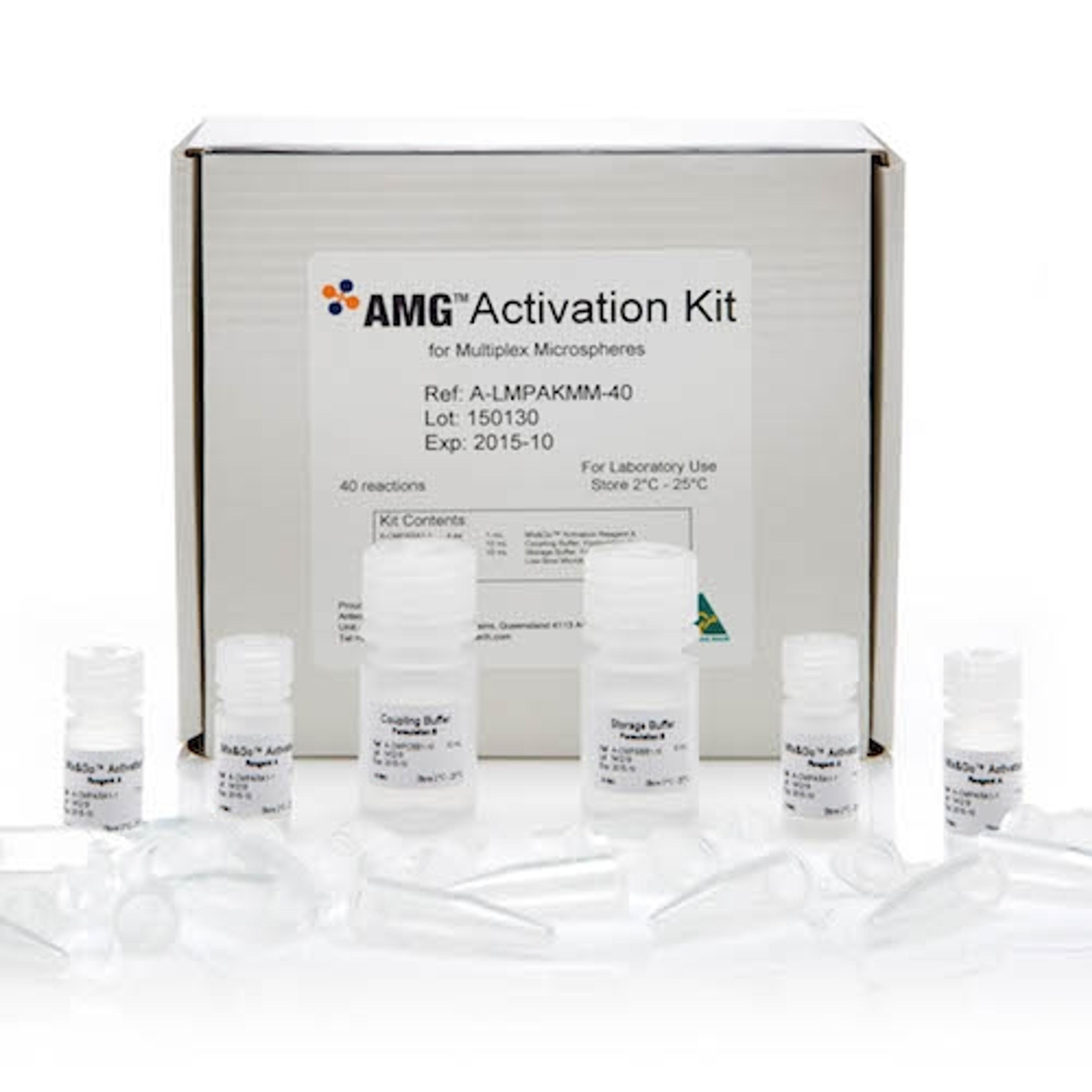
AMG™ Activation Kit for Multiplex Microspheres
Anteo TechnologiesAnteo identified the most common problems scientists experience transferring from ELISA to Multiplex Assays: Binding difficult antibodies and antigens to microspheres, complex protocols for inexperienced xMAP users, lengthy microsphere and protein preparation before coupling, lack of reproducibility between experiments and limited storage of ready-to-couple microspheres. From these findings, Anteo developed AMG (Anteo Mix&Go) Activation Kit for Multiplex Microspheres, designed to solve the problems mentioned above. Using the AMG Activation Kit, scientists are enabled to test even the most problematic proteins on Luminex® xMap®. Activation and coupling takes fewer steps improving efficiency in terms of time and cost to companies globally. Additionally, the ability to store the activated microspheres for use at a later time; up to 1 year, is something that is not possible with EDC coupling chemistry. Another advantage to using the AMG Activation Kit is increased stability and functionality of antibodies, and decreased background noise. How It Works: Download the infographic
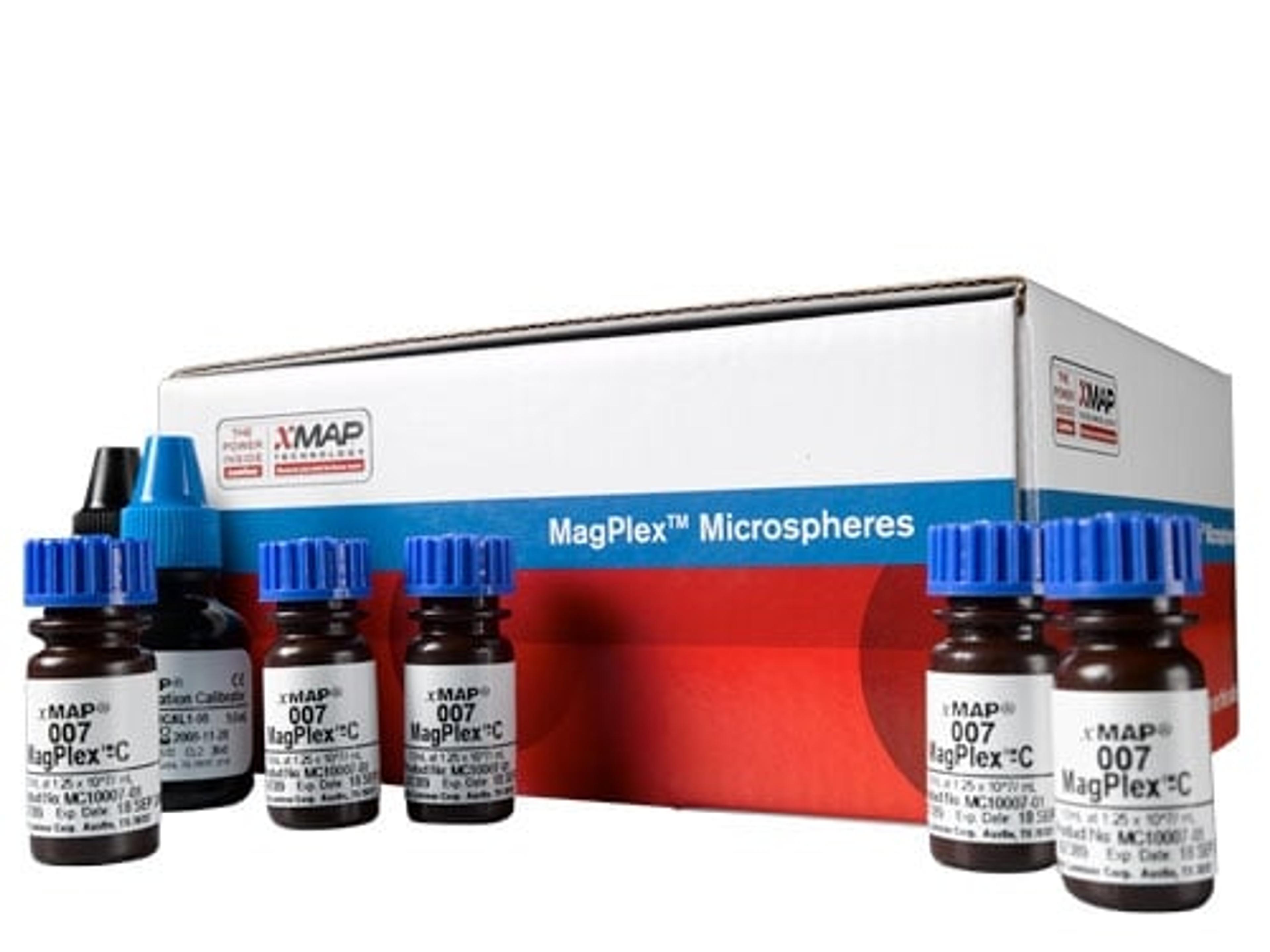
MagPlex® Multiplexing Microspheres
LuminexxMAP® Technology uses color-coded microspheres to detect up to 500 protien or oligonucleotide analytes from a single aliquot of sample in a single reaction well, enabling you to generate more data while saving sample, time, and reagents. Depending on your targets and the application, there are five different microsphere types to select from to produce the best experimental results. MagPlex® are magnetic carboxylated polystyrene microspheres that have been dyed into 500 spectrally distinct sets or “regions”, allowing them to be individually identified by an xMAP instrument. In the multiplex assay environment, the microspheres act as both the surface for the solution phase assay and the spectral identifier that the instrument detects. The open architecture of xMAP Technology enables users to build custom multiplex assays or select from a broad menu commercially available kits. MagPlex are the most versatile xMAP microspheres and are: Compatible with both protein and nucleic acid applications Maximum xMAP microsphere regions available: 500 Superparamagnetic, eliminating the need for filter plates and offering superior washing efficiency Ideal for automated high throughput applications Available in two concentrations: 2.5 (10 regions only) & 12.5 (millions/mL) Available in multiple vial sizes: 1 mL, 4 mL, Custom Compatible with all xMAP instruments: FLEXMAP 3D® (500 regions), Luminex® 100/200™ (80 regions), MAGPIX® (50 regions) Additional xMAP microspheres: MagPlex-TAG™, MicroPlex®, MagPlex-Avidin®, SeroMAP™