
Chemical characterization of polymeric films, blends, and self-assembled monomers
27 Jun 2023The spatial resolution of conventional bulk infrared (IR) spectroscopy is limited by Abbe diffraction laws to between 3–10 µm, depending on the method used. Atomic force microscopy (AFM) is a widely used nanoscale imaging technique that provides the user with a high spatial resolution topographic map of a sample surface. Until now, the major drawback of AFM has been its inability to chemically characterize the material underneath the tip. When combined with an IR source, the resulting AFM-IR technique breaks the diffraction limit of conventional IR spectroscopy by orders of magnitude, while still providing the high-resolution imaging capabilities of AFM.1 In this application note from Bruker, explore how AFM-IR is used to address nanoscale chemical characterization on a range of polymeric and thin film samples.
Related products
Request Quote for All Products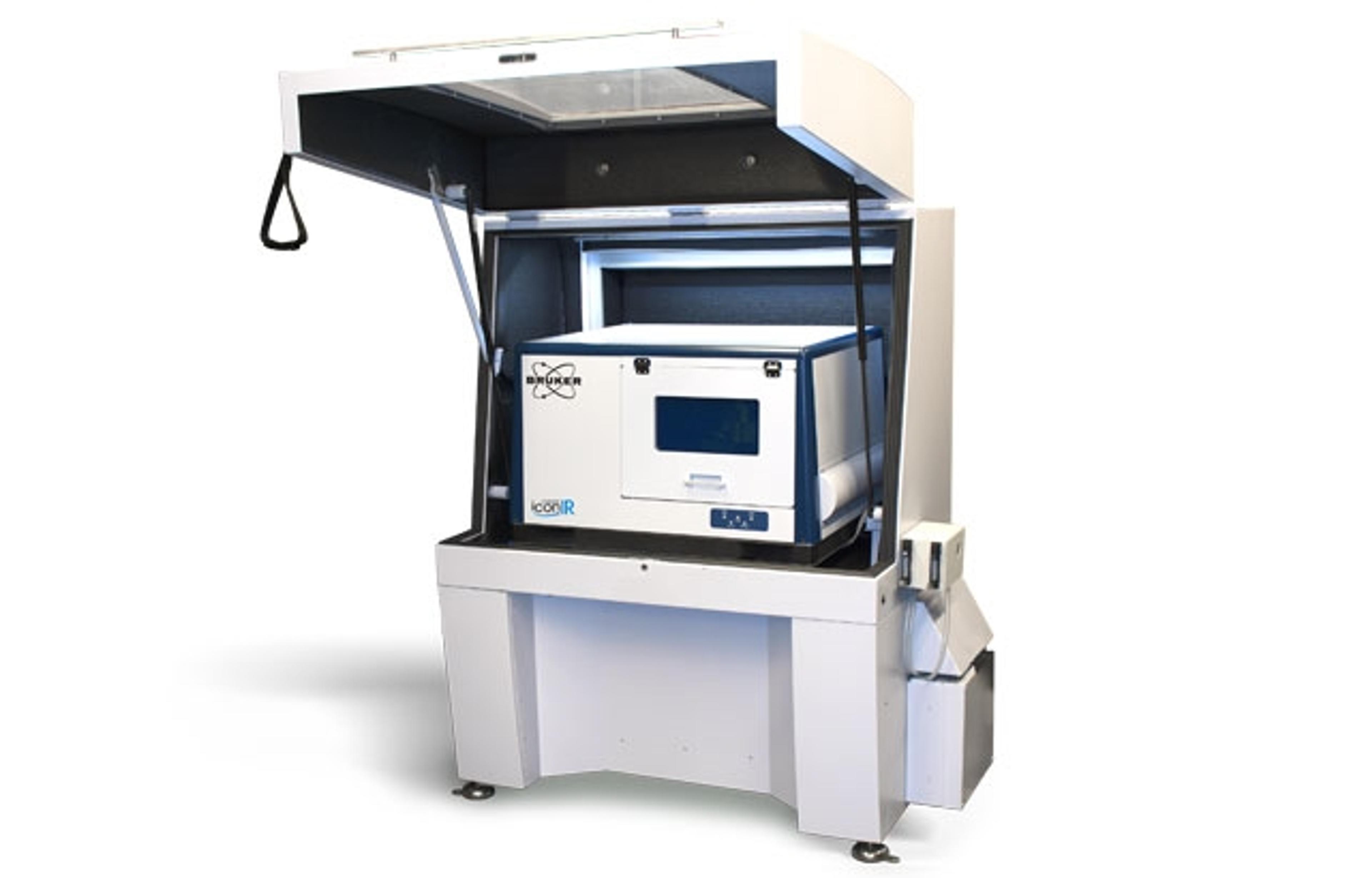
Dimension IconIR
Bruker Nano Surfaces and MetrologyBruker’s large-sample Dimension IconIR system combines nanoscale infrared (IR) spectroscopy and scanning probe microscopy (SPM) on one platform to deliver the most advanced spectroscopy, imaging, and property mapping capabilities available for academic researchers and industrial users. Incorporating decades of research and technological innovation, IconIR provides unrivaled performance based on and building off the industry-best AFM measurement capabilities of the Dimension Icon.
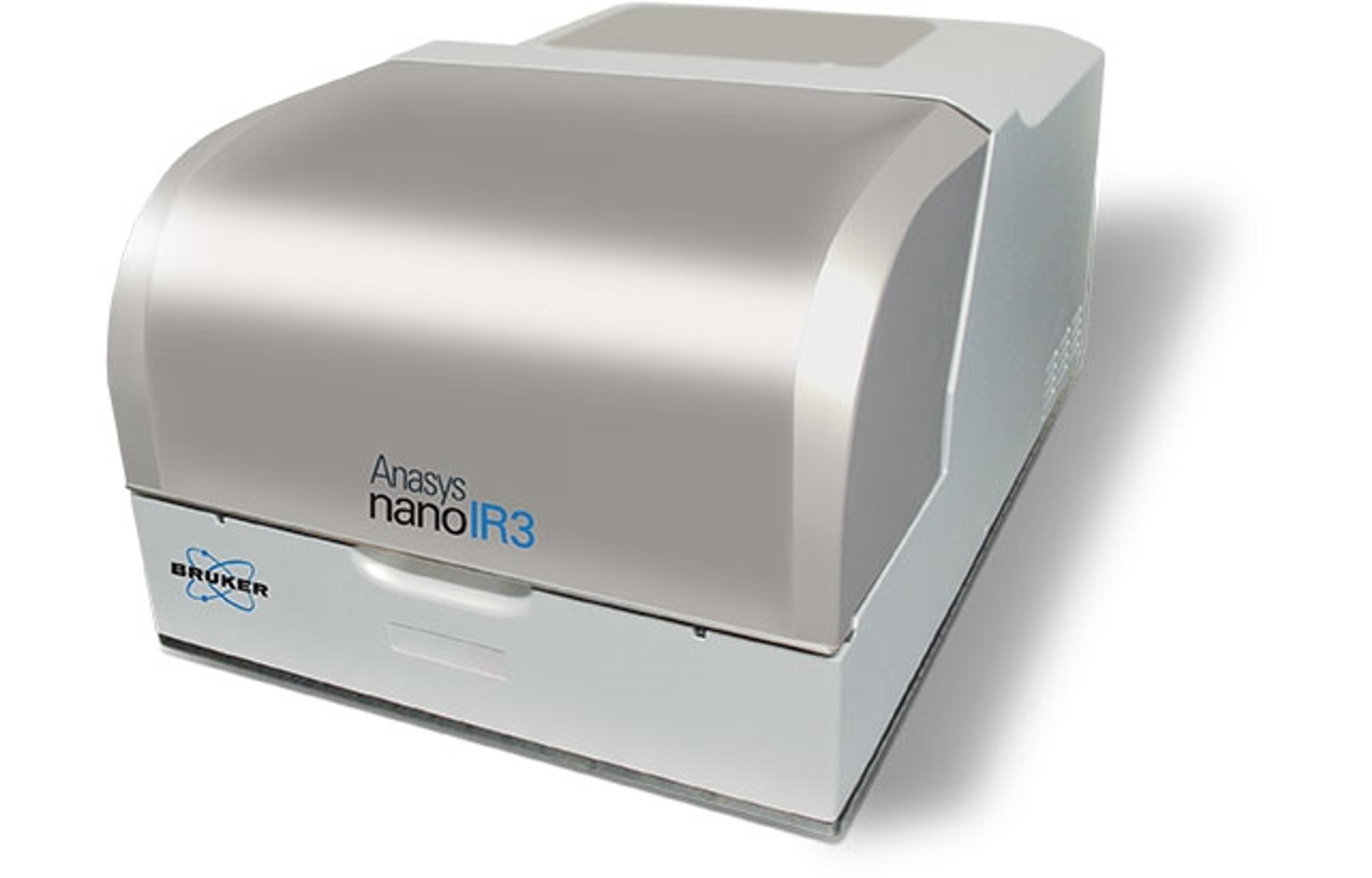
Anasys nanoIR3
Bruker Nano Surfaces and MetrologyThe nanoIR3 is the latest generation nanoscale IR spectroscopy, chemical imaging, and property mapping system for both materials and life science applications. The system also provides IR-based chemical imaging to provide mapping of chemical variations of the feature of interest. Unique point spectroscopy capabilities provide both spectroscopy and chemical imaging with a single source.