Bring Your Biomarkers to Life

21 Sept 2017

Discover the protein detection system that fits your needs.

MILLIPLEX MAP Human Complement Panel 1 - Immunology Multiplex Assay

Merck

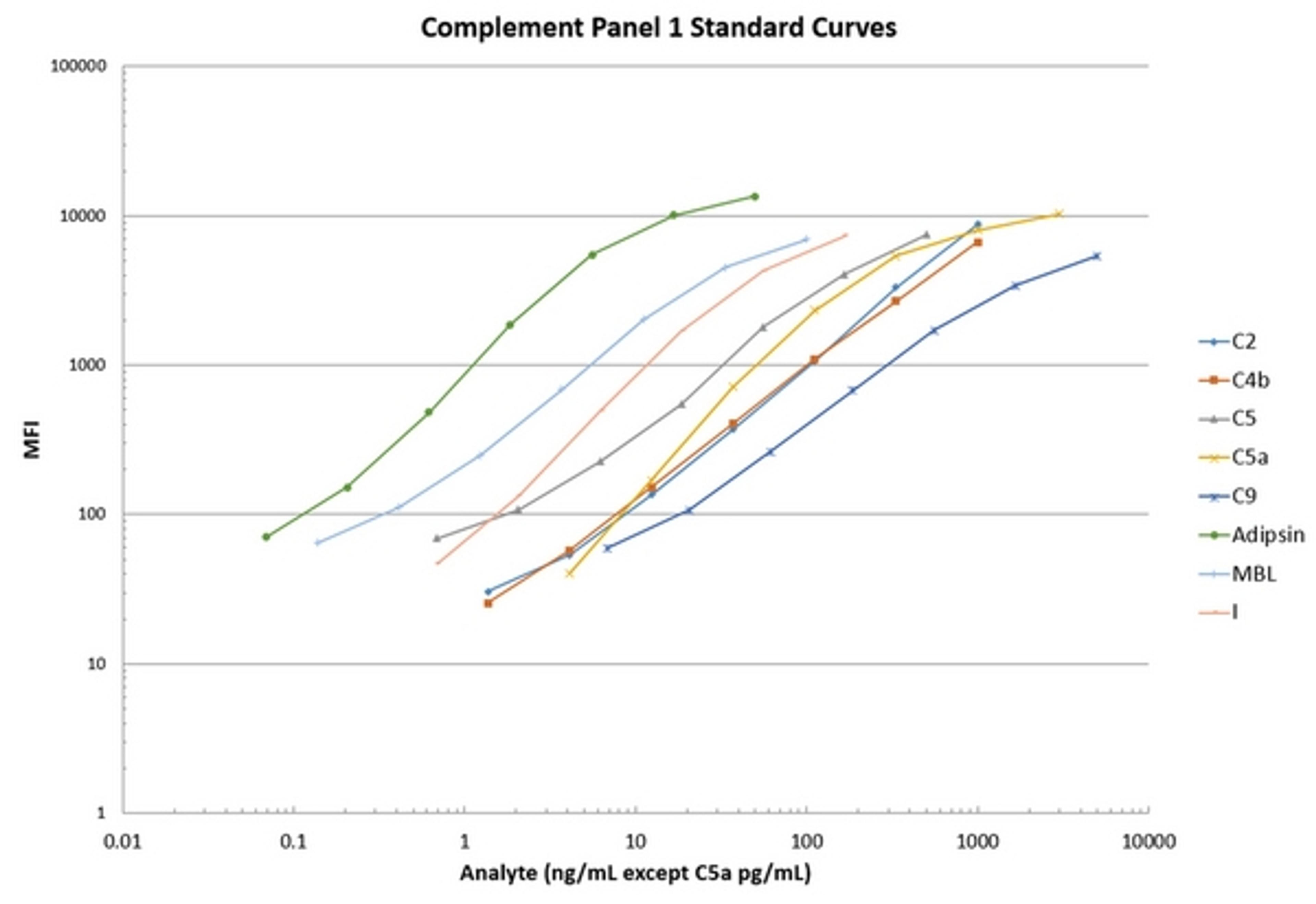
EMD Millipore’s MILLIPLEX® MAP Complement Panel 1 Magnetic Bead Panel is an 8-plex kit to be used for the simultaneous quantification of any or all of the following analytes in serum, plasma or culture supernatant samples: Complement 2, Complement C4B, Complement C5, Complement C5a, Complement C9, Adipson/Complement Factor D, Mannose-Binding Lecting (MBL) and Complement Factor I. MILLIPLEX® MAP offers the broadest selection of analytes across a wide range of disease states and species. Once the analytes of interest have been identified, you can rely on the quality that we build into each kit to produce results you can trust. In addition to the assay characteristics listed in the protocol, other performance criteria evaluated during the validation process include: cross-reactivity, dilution linearity, kit stability, and sample behavior(e.g. detectability and stability). Each panel and kit meets stringent manufacturing criteria to ensure batch-to-batch reproducibility. Each MILLIPLEX® MAP panel and kit includes: Quality controls (QCs) provided to qualify assay performance Comparison of standard (calibrator) and QC lots to a reference lot to ensure lot-to-lot consistency Optimized serum matrix to mimic native analyte environment Detection antibody cocktails designed to yield consistent analyte profiles within panel EMD Millipore’s MILLIPLEX® MAP Complement Panel 1 Magnetic Bead Panel is part of the most versatile system available for complement factor research. From our single to multiplex biomarker solutions, we partner with you to design, develop, analytically validate and build the most comprehensive library available for protein detection and quantitation.
(0)

High-Definition Erenna® Immunoassay System

Merck

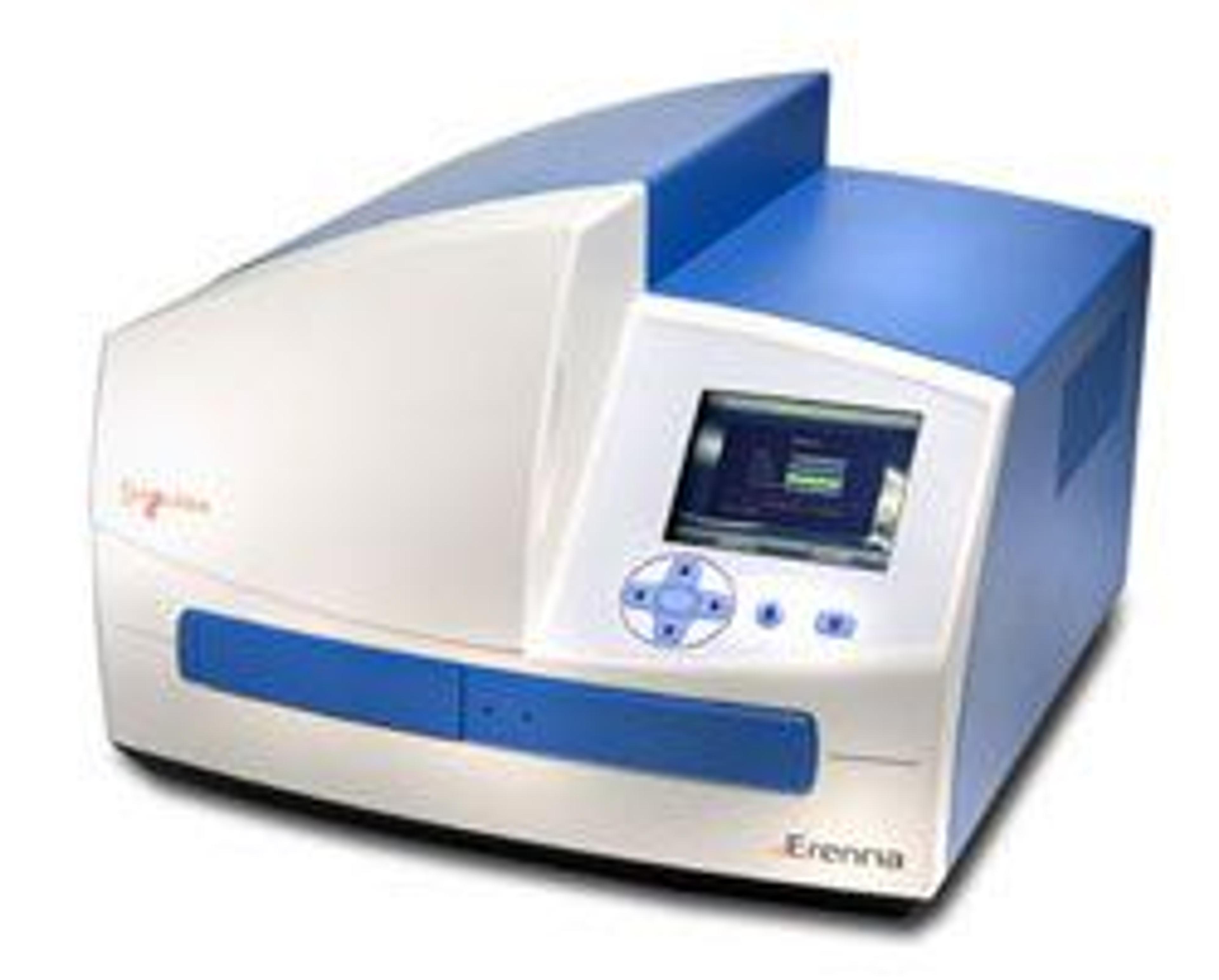
The Erenna Immunoassay System, powered by Singulex's patented single-molecule detection technology, accelerates biomedical and translational research by accurately and reliably quantifying low-abundance biomarkers at or below sub-picogram concentrations. This unique high-definition technology enables distinct stratification of healthy and disease subjects through a broad dynamic range of over 4 logs, enhancing the clinical utility of biomarkers and allowing researchers to gain insights into drug safety and efficacy. The Erenna Immunoassay System includes fully equipped benchtop analytical instrumentation, integrated and prepared reagents for ultrasensitive immunoassays, and dedicated software to automatically analyze data and display detailed assay reports. The Erenna Immunoassay System uses a robust digital molecule-counting module to count photons, where ultra-sensitive fluorescence is measured in the presence of proprietary background reduction methodology. A large dynamic range of 4+ logs is obtained by combining single-molecule counting (low range) with photon counting (mid range) and total light measurements (high range).

(1)

Links

Tags

AntibodiesAntibodies are used in techniques such as confocal and fluorescence microscopy, flow cytometry, ELISA, ELISPOT, immunohistochemistry, western blotting and immunopreciptation. Select specific antigen reactivity, high specific affinity, low non-specific binding, monoclonal or polyclonal, primary or secondary antibodies and associated conjugates such as an enzyme or dye for visualization.ELISAEnzyme-linked immunosorbent assays (ELISA), also known as enzyme immunoassays (EIA), are used for the detection and quantification of proteins, peptides and antibodies in a sample. ELISA often comes in kit format, with pre-selected antibody pairs to detect specific proteins or biomarkers of diseases such as diabetes and obesity, or cardiovascular and neurological disorders. Detection is made possible with chemiluminescent, fluorescent or colorimetric substrates and detection instruments such as microplate / ELISA readers. Other kits available include: Enzyme-linked immunospot (ELISPOT) assays for the quantification of protein-producing cells and chemiluminescent immunoassays (CLIA) kits. Find the best ELISA kits and products in our peer-reviewed product directory: compare products, check customer reviews and receive pricing direct from manufacturers.MicroplatesMicroplates are multi-well plates used to increase the throughput of biological investigations. The number of wells microplates contain can range from 6 to 3243 wells, with the 96-well format being the most commonly used. Microplates can come tailored for a range of applications including cell culture, PCR, filtration, storage, non-binding surface, protein crystallization, as well as pre-coated, deep well and normal Standard microplates. Additionally, options for microplate colors include clear , black, white or black with clear bottom and white with clear bottom for absorbance microplate reader applications. Find the best microplates for your lab in our peer-reviewed product directory: compare products, check customer reviews and receive pricing direct from manufacturers.Microplate Readers / DetectorsMicroplate readers are used to automate the detection and analysis of labeled or label-free components in microplates during assays or live-cell monitoring. Microplate readers are generally distinguished by their mode of detection. Types include absorbance, luminescence, fluorescence intensity, fluorescence polarization, TRF / FRET and multimode microplate readers. Microplate readers deliver a high throughput of samples by reading multiple wells simultaneously, with the 96-well format the most commonly used. As a result, microplate readers are often used in the drug discovery, bioassays, research and pharmaceutical industries for screening applications. Microplate loading can also be automated, with robotic microplate stackers to increase throughput. Find the best microplate readers in our peer-reviewed product directory: compare products, check customer reviews and receive pricing direct from manufacturers.Cell-Based AssaysCell-based assays are used to monitor the presence, quantity and activities of a desired cellular analyte including drug molecules or biomarkers. This can reveal information on cell health (apoptosis, cytotoxicity, viability and proliferation assays), cell metabolism, cell migration and cell signaling mechanisms. Find the best cell-based assay products, kits and equipment with our peer reviewed product directory: compare products, check customer reviews and receiving pricing direct from manufacturers.BiomarkersBiomarkers are biological markers which can be measured and evaluated to indicate a biological state. The use of biomarkers in research and diagnosis can indicate a normal or disease state or drug response of cells / tissues. Biomarkers include genetic markers, cell surface markers such as antigens, antibodies or receptors and secreted molecules such as cytokines. An assay system is required for identification of biomarkers. :ImmunoassayImmunoassays are laboratory tests that utilize antibody-antigen interactions to detect specific substances. They are widely used in diagnostics for detecting diseases, drug testing, and environmental monitoring. These assays offer rapid, sensitive, and precise detection of biomarkers, making them invaluable in clinical and research labs. Browse our peer-reviewed product directory to compare immunoassay systems, read user reviews, and get pricing directly from manufacturers.MultiplexProtein DetectionProtein detection techniques are essential for understanding protein expression, localization, and function. Methods such as western blotting, ELISA, and mass spectrometry are commonly used in research and diagnostics. Browse our peer-reviewed product directory to find the best tools for protein detection, compare products, check reviews, and get pricing directly from manufacturers.Cancer ResearchCancer research aims to understand the mechanisms of cancer development and progression to improve prevention, diagnosis, and treatment. From molecular biology to clinical trials, research spans a wide range of disciplines, including immunotherapy, targeted therapies, and drug discovery. Explore the best cancer research products in our peer-reviewed product directory; compare products, check reviews, and get pricing directly from manufacturers.In Vitro DiagnosticsIn vitro diagnostics (IVD) involve testing samples outside the body, typically in a laboratory, to diagnose diseases or conditions. IVD technologies include blood tests, molecular assays, and other bodily fluid tests, enabling accurate diagnosis and monitoring of diseases. These tests are essential for guiding treatment decisions in clinical settings. Browse our peer-reviewed product directory to find the best IVD solutions; compare products, check reviews, and get pricing directly from manufacturers.Biomarker DiscoveryClinical biomarkers refer to substances related to known medical conditions that can be accurately measured <i>in vitro</i>. Biomarkers can be used to diagnose presence of a disease and indicate disease severity. The discovery of new biomarkers is incredibly valuable in the field of diagnostics.
Bring Your Biomarkers to Life