
Biological Liquid Waste Disposal – Best Practices
Biological Liquid Waste Disposal – Best Practices
18 Jan 2016Learn about the 7 key stages of biological liquid waste disposal with this poster. Inform yourself of the general requirements concerning safe waste disposal, from the importance of labeling, proper deactivation protocols and how to transfer the liquid safely.
Related products
Request Quote for All Products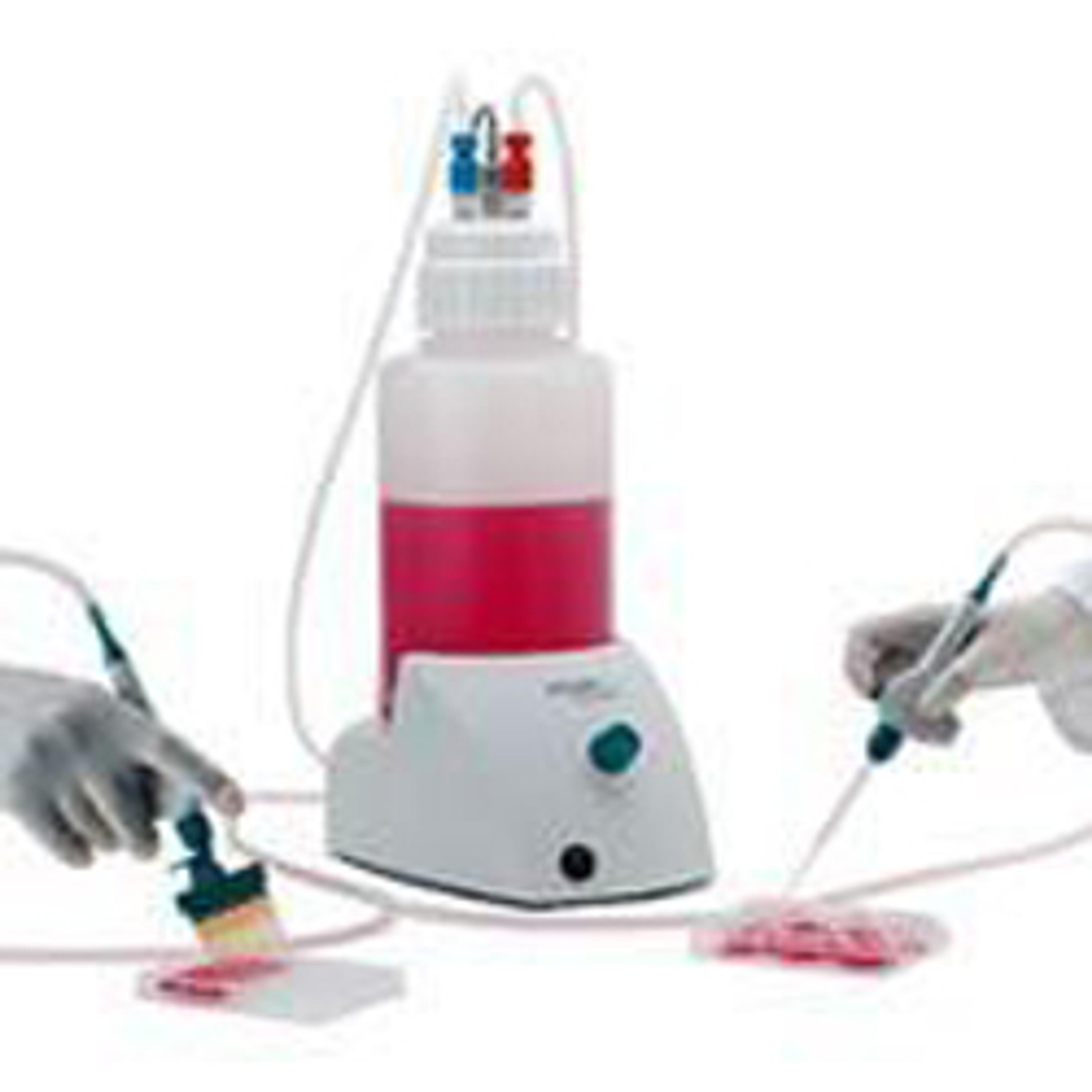
VACUSAFE - Vacuum Aspiration System
INTEGRA BiosciencesVACUSAFE – Safe aspiration of liquid waste Laboratory vacuum pumps are commonly used to aspirate liquids such as media from cell cultures or supernatants after centrifugation. Protecting the operator and equipment from contamination by an overflow trap and filter is good laboratory practice when disposing biological, chemical or radioactive liquid waste. The VACUSAFE combines vacuum pump, collection bottle, overflow protection and filter in an all-in-one liquid aspiration system. Such a closed aspiration system offers the most effective method for containment of hazardous liquids by maximal personal protection. The ergonomic VACUBOY hand operator and its adapters provide the flexibility to aspirate liquids from a wide range of laboratory containers including cell culture vessels and multi-well plates. The VACUBOY is the perfect match to the VACUSAFE. Features and benefits: • Collection bottle outlet with hydrophobic filters to block hazardous aerosols. • Automatic shut-off combined with a signal when bottle is full. • Quick couplings to connect tubing for safe bottle installation. • Quite operation for pleasant working. • One-button operation to adjust vacuum for simple use. • VACUBOY included for convenient aspiration of all kind of liquid waste. • Space saving design for minimal work space consumption.
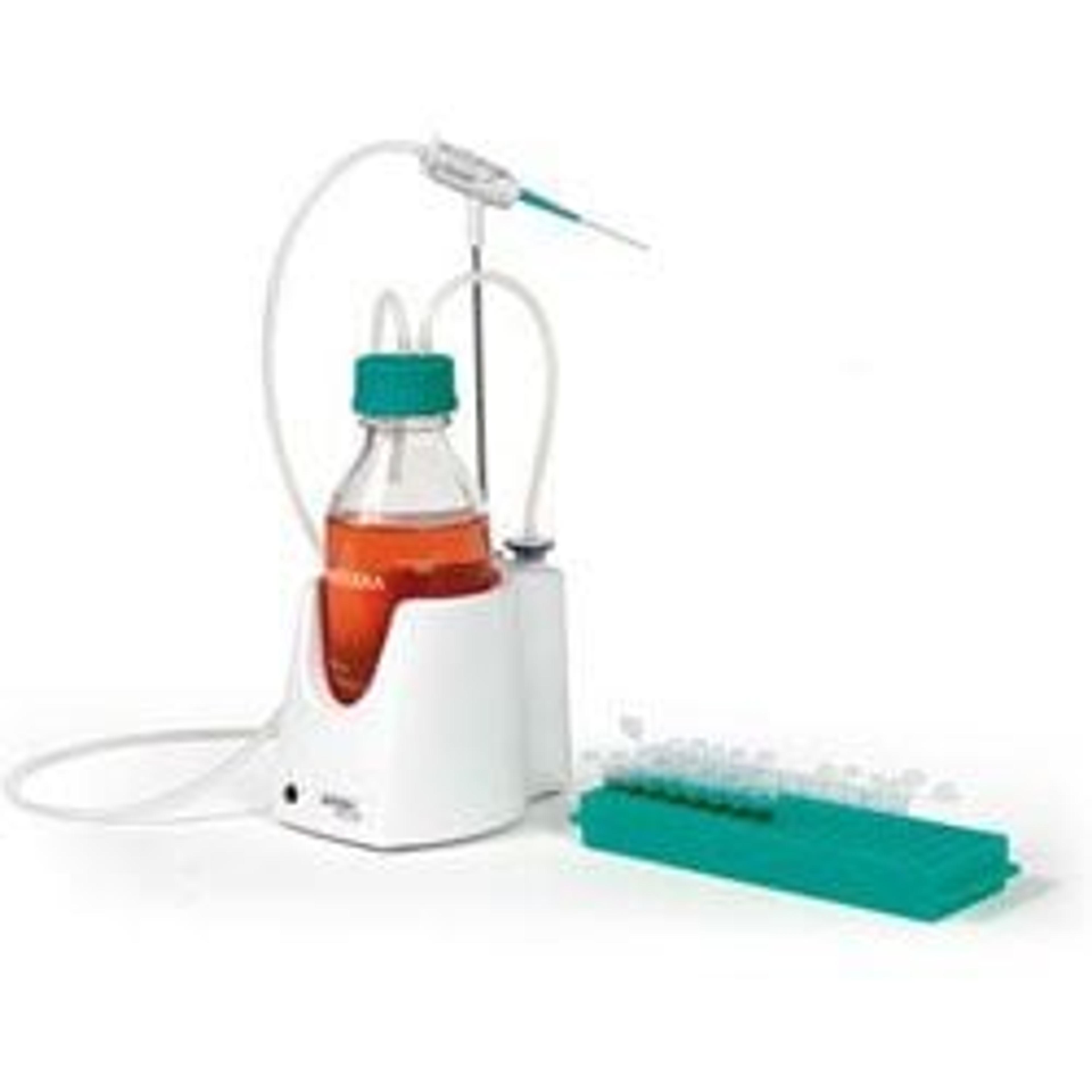
VACUSIP - Benchtop Aspiration System
INTEGRA BiosciencesVACUSIP – Liquid waste gone in a sip In the laboratory small volumes of liquid need be disposed of on a daily basis. This includes the removal of excess liquids from reaction tubes, aspiration of supernatant after centrifugation steps, removal of washing solutions from microplates and much more. Until today, this is often accomplished by self-made systems. VACUSIP provides an out-of-the-box solution for the wide array of liquid waste disposal tasks carried out at the laboratory bench. It features a reliable low noise pump, enabling it to operate independently from an external vacuum source. The battery version of VACUSIP contains a rechargeable battery for even more flexibility. A unique hand operator allows a fine regulation of the aspiration flow and accepts a variety of adapters. The 0.5 l glass bottle is quickly exchanged and all components coming in contact with liquids can be autoclaved. If the inactivation of the liquid waste is carried out externally, a disposable bottle may be used. Features and benefits: • Integrated, silent pump makes the VACUSIP location-independent. • The battery version eliminates cable mess in a laminar flow hood and increases mobility. • Automated pump shut-off optimizes battery run-time and pump life. • Quick exchange of waste bottle due to screw cap sealing. • Hydrophobic filter prevents aerosols and liquid from entering the system. • Very compact and space saving, HxWxD: 345x120x162 mm only. • No additional equipment necessary and maintenance free