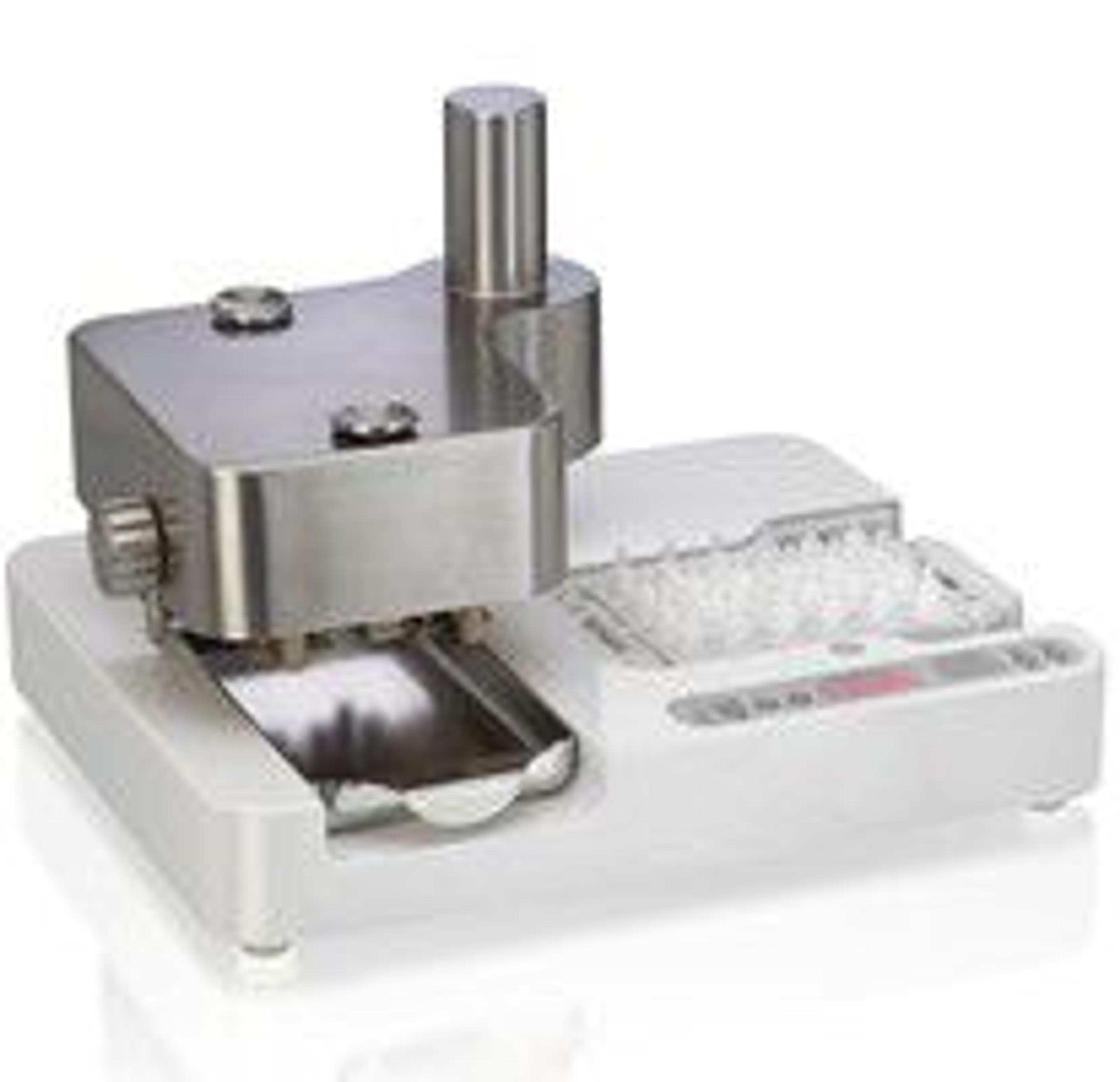
Automation of the RAFT™ Collagen-Based 3D Cell Culture System

21 Jan 2013

Researchers are increasingly turning to 3D cell culture techniques for their studies, due to the improved physiological relevance of the cellular environment. TAP Biosystems has developed a novel 3D cell culture technique, RAFT (Real Architecture for 3D Tissue), which allows researchers to culture cell types of their choice in an in vivo like environment. In this poster it is shown that the Tecan EVO freedom can be used to reliably automate 3D cell culture preparation. RAFT 3D cell cultures maintain high cell viability, reproducibility and experimental versatility.

RAFT (Real Architecture for 3D Tissue)

TAP Biosystems

RAFT is a new 3D cell culture system that enables scientists to create complex 3D tissue models in a simple, consistent and reproducible format. RAFT uses physiologically relevant collagen concentrations to create the most natural environment for cells. RAFT enables scientists to create 3D cell cultures in 3 simple steps in less than 1 hour. RAFT can be used to support assay development and secondary screening applications. It can also be used in a broad range of cell biology applications including: stem cell research, oncology research, toxicology and tissue engineering / scaffolds.

(0)

Links

Tags

Cell / Tissue CultureCell culture or tissue culture is used to study the biology of cells or tissues and to isolate cellular products in an environment which can be manipulated and well defined. Accurately control your culture environment with bioreactors or culture incubators, bind your cells to a surface or together with an extracellular matrix. Distinguish cell types with differential media or proliferate cells with certain characteristics using selective media. Enrich your media with supplements such as growth factors, sera and vitamins. Find the best cell and tissue culture products, kits and equipment in our peer-reviewed product directory: compare products, check customer reviews and receive pricing direct from manufacturers.Cell-Based AssaysCell-based assays are used to monitor the presence, quantity and activities of a desired cellular analyte including drug molecules or biomarkers. This can reveal information on cell health (apoptosis, cytotoxicity, viability and proliferation assays), cell metabolism, cell migration and cell signaling mechanisms. Find the best cell-based assay products, kits and equipment with our peer reviewed product directory: compare products, check customer reviews and receiving pricing direct from manufacturers.Robotic WorkstationsRobotic workstations are automated platforms enabling the user to perform high-throughput, multi-application processes, from sample preparation tasks such as PCR set-up, DNA purification and NGS library preparation, to integrated sample prep and analysis workstations. Automation makes processes consistent, fast, precise and fully walk-away. Find the best robotic workstations in our peer-reviewed product directory: compare products, check customer reviews and receive pricing direct from manufacturers.Automated Liquid HandlingAutomated liquid handling equipment is used to mix, dilute and dispense allotted volumes of liquid into microplates and other vessels automatically. The robotic, liquid handling arms can dispense from single channel to 3456 multichannel as well as operate nanoliter dispensing, enabling high throughput of samples. Find the best automated liquid handlers in our peer-reviewed product directory: compare products, check customer reviews and receive pricing direct from manufacturers.Cell ViabilityCell viability assays assess the health of cells and their ability to proliferate. These tests are crucial in drug development, toxicity testing, and cell-based research. Common methods for assessing viability include MTT, live/dead assays, and flow cytometry. Browse our peer-reviewed product directory to find the best tools for cell viability assays, compare products, check reviews, and get pricing directly from manufacturers.Cell GrowthCell growth refers to the process by which cells increase in size and number. It is essential for tissue development, wound healing, and cancer research. Understanding and controlling cell growth is a fundamental part of cell biology and regenerative medicine. Browse our peer-reviewed product directory to find the best tools for studying cell growth, compare products, check reviews, and get pricing directly from manufacturers.
Automation of the RAFT™ Collagen-Based 3D Cell Culture System