
Automated In Vitro ADME Screening Analysis in a Small Footprint, Using the Xevo TQ-S Micro Triple Quadrupole Mass Spectrometer
Automated In Vitro ADME Screening Analysis in a Small Footprint, Using the Xevo TQ-S Micro Triple Quadrupole Mass Spectrometer
5 Nov 2015During drug discovery, new chemical entities are typically tested in “in vitro ADME screening” to assess their potential as an eventual drug candidate. These screenings may include metabolic stability, permeability and efflux potential, for example. In this poster, automated method development, automated data acquisition and automated data processing is demonstrated for a set of compounds using the Xevo TQ-S micro triple quadrupole mass spectrometer.
Related products
Request Quote for All Products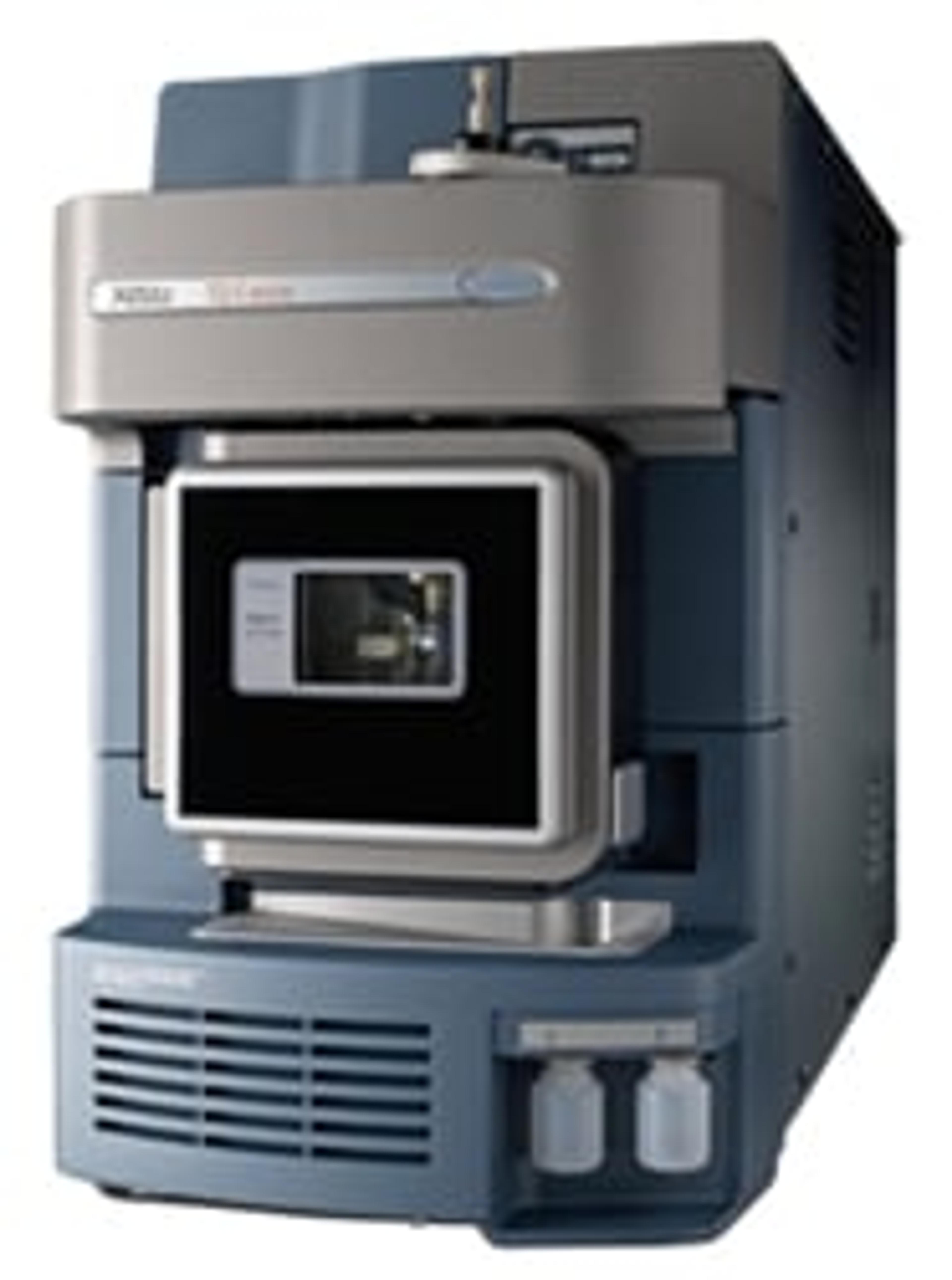
Xevo TQ-S micro Triple Quadrupole Mass Spectrometer
WatersHigh Performance from a compact design with rapid, reliable and reproducible quantitative data.
Links
Tags
Mass SpectrometryMass spectrometry (MS) is a powerful analytical technique used to identify and quantify molecules based on the mass-to-charge ratio of gas-phase ions. It provides detailed information about the structure, composition, and properties of compounds and is widely used across fields such as environmental monitoring, materials science, drug discovery and development, food and beverage testing, and wider chemical research. Key MS techniques include tandem mass spectrometry (MS/MS), liquid chromatography–mass spectrometry (LS-MS) and inductively coupled plasma (ICP-MS). Choosing from these wide range of techniques and technologies can be a daunting task, so keep up to date with scientific applications, performance expectations, and customer reviews here all in one place. Visit our product directory to receive quotes direct from the manufacturer.
High-Throughput ScreeningHigh-throughput screening (HTS) is an automated drug discovery technique for identification of active compounds against a compound library. Use HTS readers and integrated assay preparation / analysis workstations to screen your compounds. Identify active compounds against various HTS libraries, including membranes, proteins and peptides and HTS cell lines. Find the best high-throughput screening products in our peer-reviewed product directory: compare products, check customer reviews and receive pricing direct from manufacturers.Data AnalysisData analysis hardware and software is available to make data processing straight-forward yet powerful. Data software can be used for math and stats, technical graphing and image analysis. In addition, software is available for specific data analysis of electrophoresis, densitometry, ELISA and DNA sequencing.Cell-Based AssaysCell-based assays are used to monitor the presence, quantity and activities of a desired cellular analyte including drug molecules or biomarkers. This can reveal information on cell health (apoptosis, cytotoxicity, viability and proliferation assays), cell metabolism, cell migration and cell signaling mechanisms. Find the best cell-based assay products, kits and equipment with our peer reviewed product directory: compare products, check customer reviews and receiving pricing direct from manufacturers.High-Content ScreeningHigh-content screening (HCS), also known as high-content analysis (HCA), is a high-throughput technique used in drug discovery to identify substances that alter the phenotype of cells. HCS uses fluorescent microscopic imaging and automated image analysis to investigate cellular events such as apoptosis, cell viability, GPCR activation, oxide production, neurite outgrowth, and cell signaling. Find the best fluorescent labeling reagents, cellular assays, and high-content imaging systems in our peer-reviewed product directory: compare products, check customer reviews and receive pricing direct from manufacturers.Biopharmaceutical AdvancesBiopharmaceutical advances follow the development of pharmaceuticals derived from biotechnology, also known as biotechnology medicines. Biopharmaceuticals may be produced from cell lines, plants, or microbial cells. Important considerations of biopharmaceutical use include application, cost, production process and purification.Development SoftwareComputational techniques used in both the chemistry and biology aspects of drug development, for data acquisition, data analysis, processing and storage. Software is used for analysis of ADME results, toxicology, clinical trials and regulatory processes. In VitroIn vitro refers to experiments conducted outside living organisms, often in controlled lab environments such as petri dishes or test tubes. In vitro models are widely used in drug testing, cell biology, and disease research. Explore in vitro research tools in our peer-reviewed product directory; compare products, check reviews, and get pricing directly from manufacturers.AutomationAutomation in laboratories and manufacturing processes enhances efficiency, precision, and scalability by reducing the need for manual intervention. It plays a critical role in improving productivity, minimizing human error, and accelerating workflows in fields like diagnostics, drug development, and industrial testing. Automation technologies include robotic systems, automated liquid handlers, and process control systems that streamline complex tasks and ensure consistent, reproducible results. Explore our peer-reviewed product directory to discover the best automation solutions, compare options, read user reviews, and get prices directly from manufacturers.Method DevelopmentMethod development is the process of creating and optimizing experimental techniques and protocols to achieve reliable, reproducible results. This is essential in various fields, including pharmaceuticals, environmental science, and diagnostics. Browse our peer-reviewed product directory to find the best method development solutions, compare products, check reviews, and get pricing directly from manufacturers.Drug DiscoveryDrug discovery is the process of identifying potential new medications, involving stages such as target identification, compound screening, and preclinical development. It relies on cutting-edge technologies like high-throughput screening, artificial intelligence, and molecular modeling to accelerate the identification of drug candidates. Drug discovery plays a pivotal role in developing new therapies for diseases ranging from cancer to rare genetic disorders. Browse our peer-reviewed product directory to find the latest drug discovery technologies, compare options, check customer feedback, and get pricing directly from manufacturers.ADMEScreeningUsing robotics, data processing and control software, liquid handling devices and sensitive detectors, screening allows a researcher to quickly conduct millions of chemical, genetic or pharmacological tests.Data AcquisitionData acquisition refers to the collection and organization of information and data sets.