
ResourceLife Sciences
Anti-GST Biosensor Quantitation Assays
12 Nov 2017Glutathione-S-transferase (GST) is commonly fused to recombinant proteins as a means of facilitating detection, purification and increasing solubility. The anti-GST biosensor consists of a high affinity anti-GST antibody pre-immobilized on a ForteBio Biosensor. In conjunction with the Octet® System, the anti-GST biosensor provides a rapid and label-free method for GST-tagged protein quantitation and kinetic analysis.
Related products
Request Quote for All Products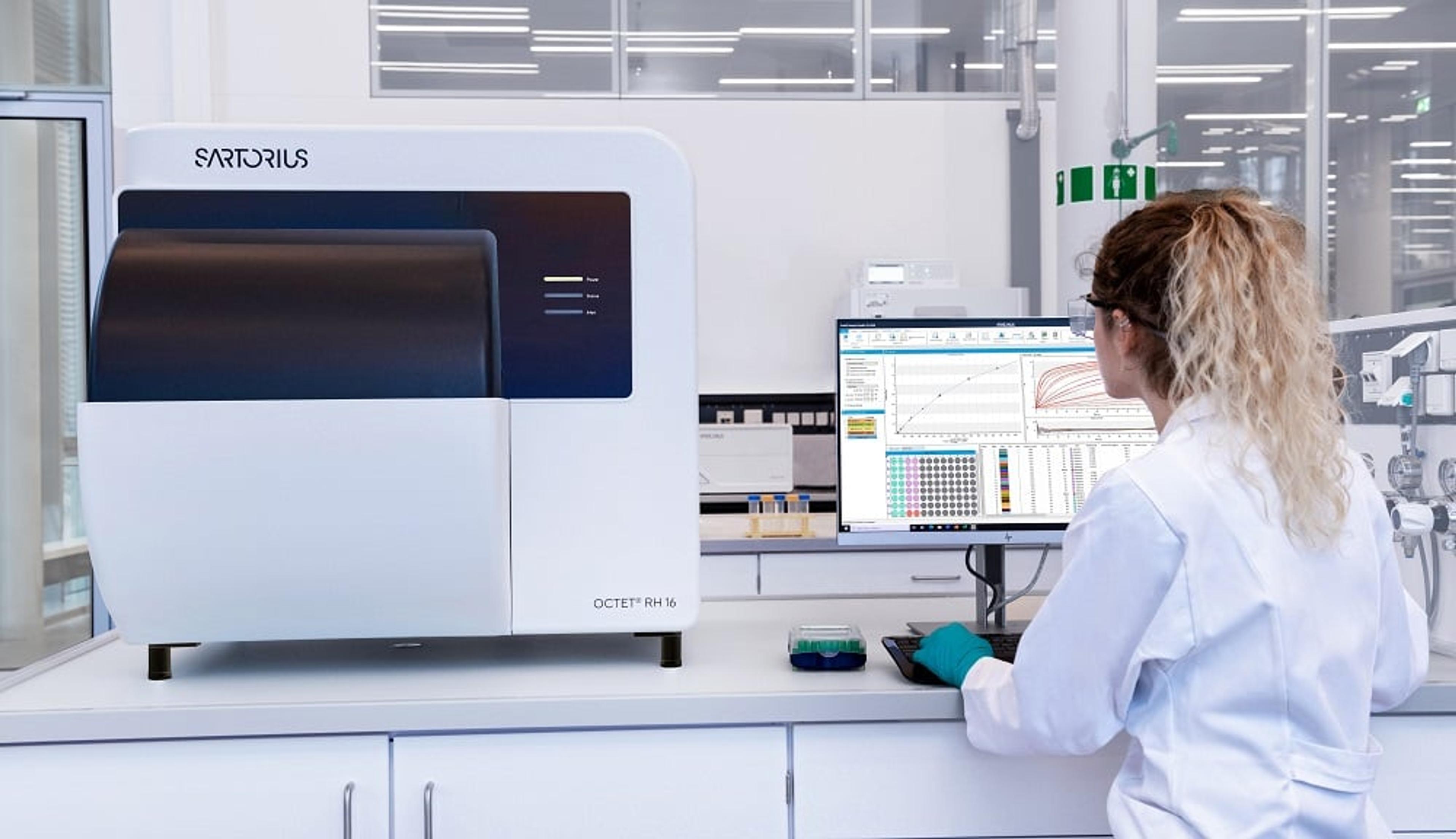
Links
Tags
BiosensorsBiosensors are devices used to detect an analyte using biological molecules specific to the analyte coupled to a detector. Biosensor instruments may be photometric, typically using surface plasma resonance (SPR), electrochemical or QCM (quartz crystal microbalance) biosensors. Biosensors should be selective, portable, robust and sensitive and have a fast response time. Systems may be manual or automated and usually have associated software.ProteomicsProteomics is the systemic bioinformatics study of proteins and amino acids, including their structure, size, function and identification. Tools used in proteomics include chromatography, blotting and gels, protein arrays, mass spectrometry and ELISA and associated analysis software. Analyzers and proteomic systems should be sensitive, high resolution, fast and may be automated for high-throughput.Label-Free AnalysisProtein BiologyThe analysis of protein expression, identity and function is vital for many areas of life science research and drug discovery. Some of the most commonly used techniques in protein analysis include Western blotting, electrophoresis and mass spectrometry.