
A Fast Method of Studying the Impact of Temperature on Chemical Reactions
29 Jan 2019Many life science and chemical applications require a thorough understanding of the dynamics of reaction processes. Variables such as temperature, pH, pressure and the presence of additional chemical components and macromolecules can have a significant effect on reaction rates. Understanding the influence of such parameters is key for a wide variety of applications including enzyme characterization, chemical synthesis, food manufacture and industries that rely on optimized product storage and stability conditions. UV-Vis spectrophotometers are routinely used to help characterize and quantify the kinetics of reactions as they can continuously measure changes in the concentration over time as determined by the change in absorbance over time.
Related products
Request Quote for All Products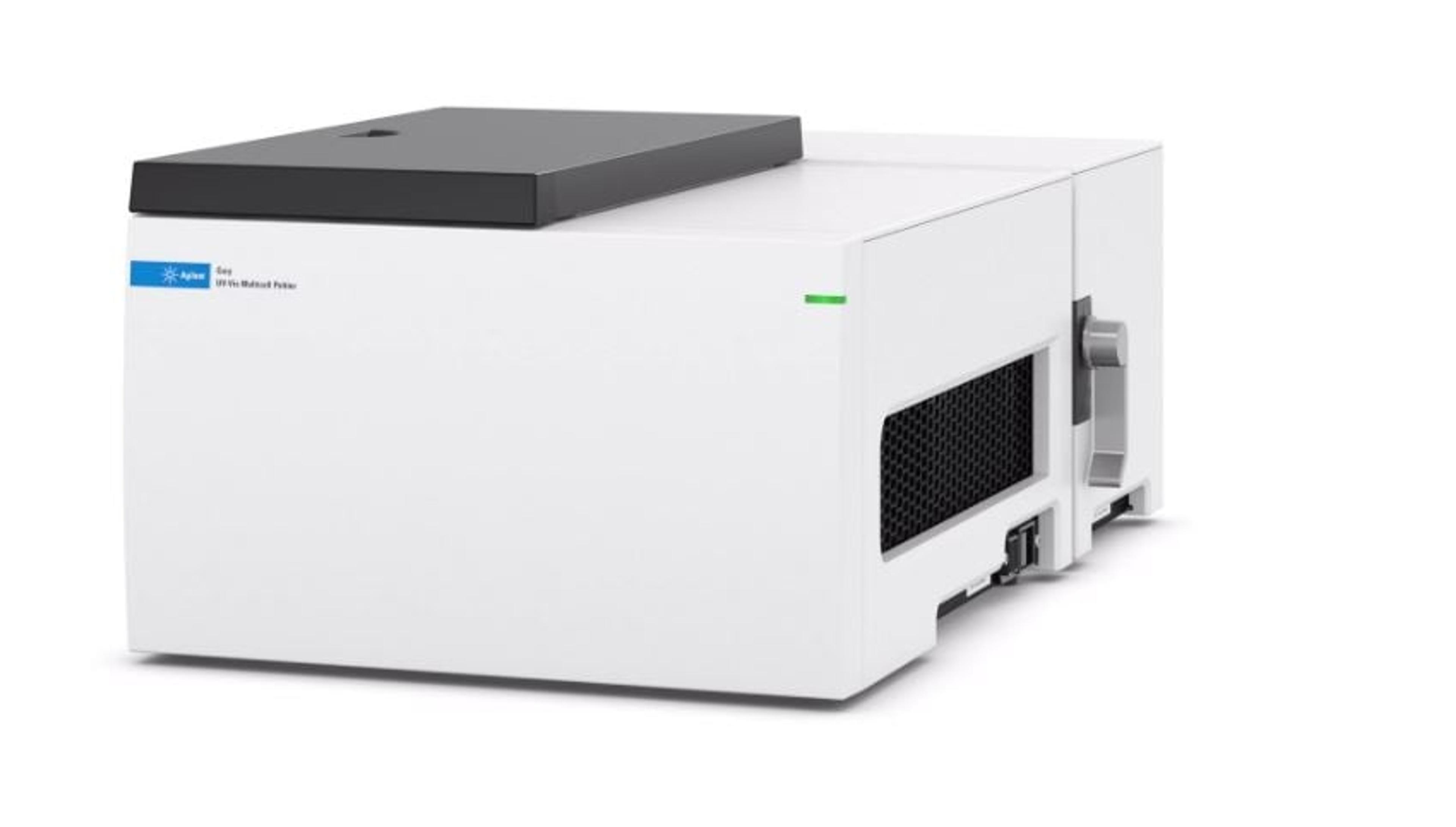
Cary 3500 Multicell UV-Vis Spectrophotometer
Agilent TechnologiesThe Cary 3500 UV-Vis double beam spectrophotometer offers new and unique measurement capabilities in ultraviolet-visible spectroscopy—for routine analysis and challenging measurements, including advanced data integrity in compliant environments. Measure up to four temperature experiments, across eight cuvette positions, simultaneously—with air-cooled Peltier temperature control. Xenon flash lamp technology enables accurate monitoring of kinetic experiments—with a data collection rate up to 250 points per second. You can also analyze low volume samples accurately, and reproducibly—every time. The Cary 3500 comes complete with Cary UV Workstation software—a next-generation analytical platform with streamlined methods for wavelength reads, scanning, concentration, kinetics, and temperature measurements. When configured with Agilent OpenLab data management software, Cary UV Workstation data is managed, protected, and stored in a local or central secure database Features: Measure samples at four temperatures across eight cuvette positions in a single experiment and collect data from each cuvette simultaneously—dramatically reducing analysis time with the Cary 3500 double beam spectrophotometer. Accurately and quickly control the temperature of your samples from 0 to 110 °C without water, noise, or messy cables using a unique and fully integrated air-cooled Peltier system. Control UV-Vis thermal ramp measurements at up to 30 °C/min using highly accurate, solid-state digital Cary temperature probes that control experimental temperature from inside the cuvette. Ensure analytical accuracy for small-volume measurements with a highly-collimated and uniform beam of less than 1.5 mm width, coupled with permanent optical alignment of the stationary cell holders. Get your double beam spectrophotometer results faster than a diode array, with advanced xenon flash lamp technology achieving a data collection rate of 250 points per second. Achieve research grade photometric performance, stability, and range with the Cary 3500 double beam spectrophotometer. Streamline method setup with the Cary UV Workstation software for scanning, concentration, kinetics, and thermal control. The software includes a Help and Learning Center with intuitive video tutorials to get you up and running fast. Meet data integrity standards—provides the technical controls to securely acquire, process, report and store data in laboratories that must follow the compliance guidelines of FDA 21 CFR Part 11, EU Annex 11, GAMP5, as well as and ISO/IEC 17025 and EPA’s 40 CFR Part 160. Store and manage Agilent Cary 3500 UV-Vis data in a local secured storage on the workstation PC, or in a central storage location. The OpenLab software suite includes optional secure database storage for electronic records, complete administration for users and access privileges, software licensing, and security settings—e-signature workflow and enhanced audit trail review capabilities. This solution received My Green Lab’s ACT (Accountability, Consistency, Transparency) label after independent audit for its environmental impact throughout the product lifecycle.