N Latex FLC kappa and N Latex FLC lambda Assays
Add confidence to screening and monitoring of monoclonal gammopathies.
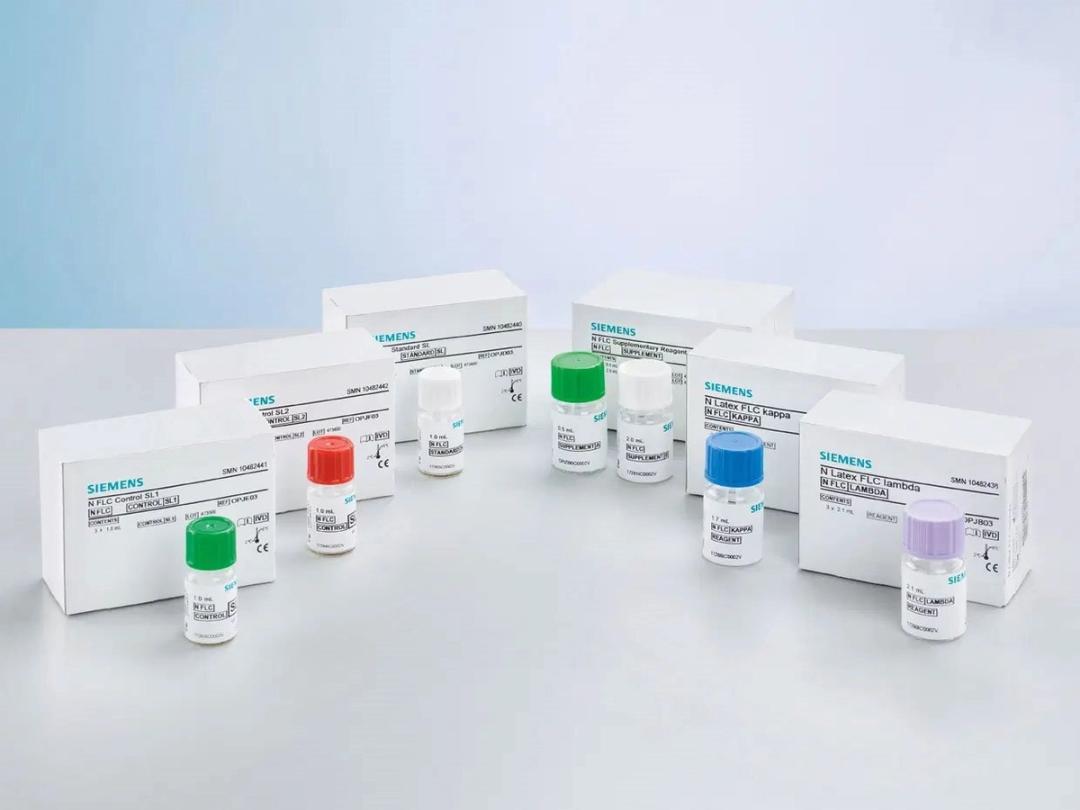
N Latex FLC kappa and N Latex FLC lambda Assays



Receive your quote directly from the manufacturer.
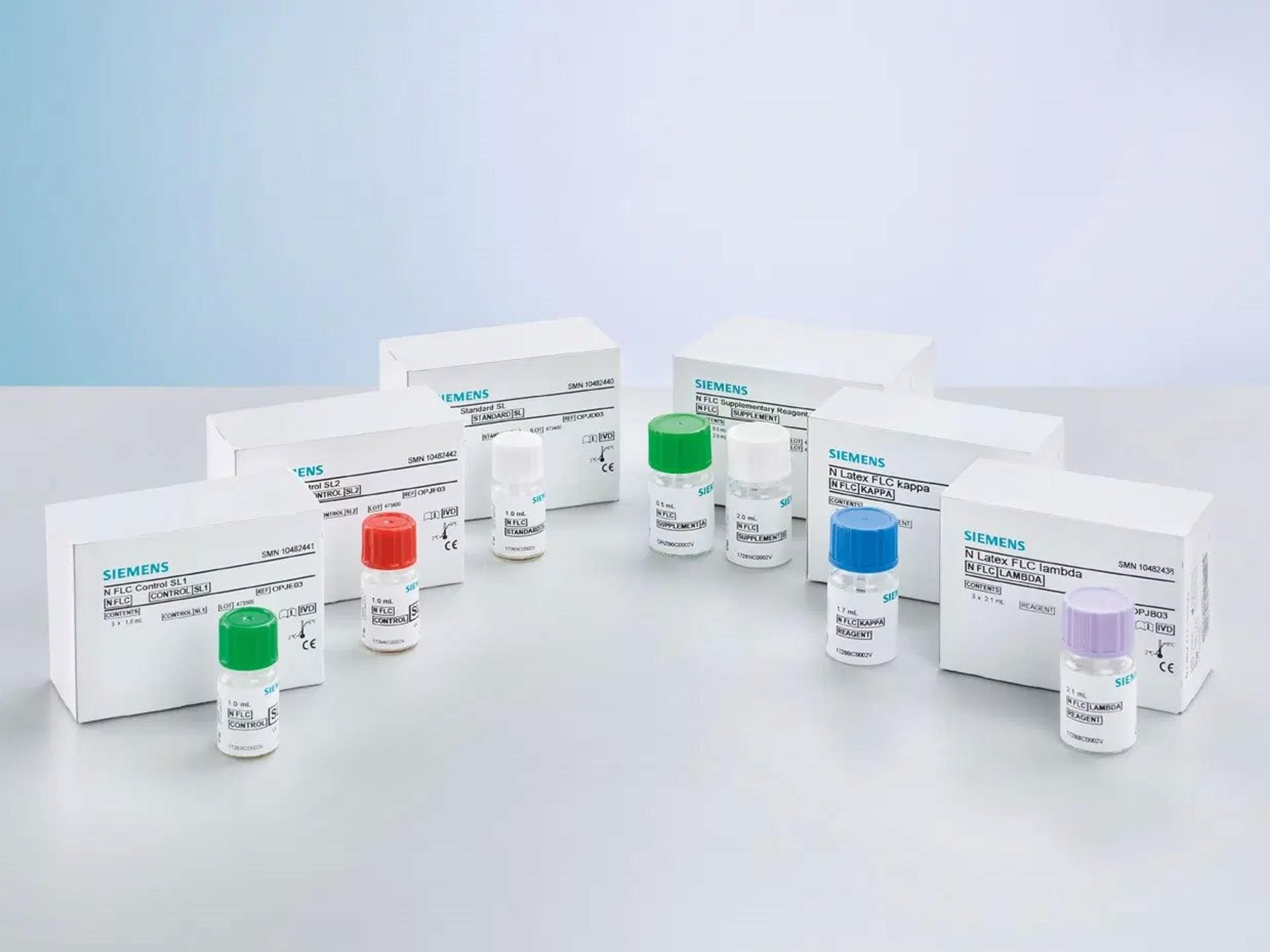
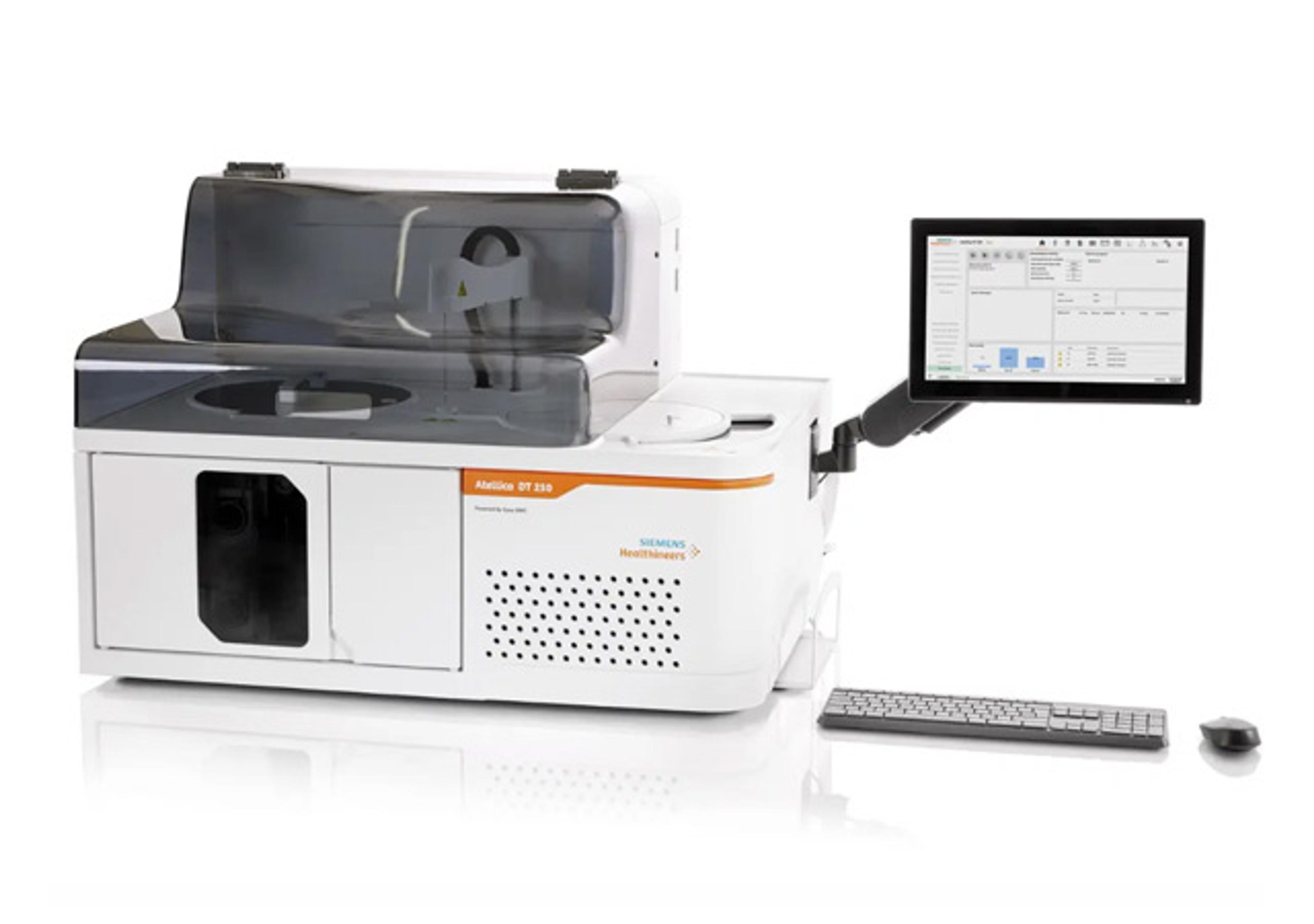
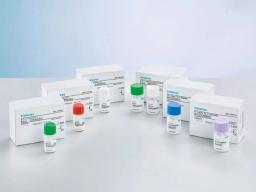
Free light chain (FLC) kappa and lambda Assays for use on Atellica® NEPH 630,* BN™ II, and BN ProSpec® Systems are designed for more reliable management of patients with monoclonal gammopathies. Excellent/stable lot-to-lot reproducibility leads to improved diagnostic accuracy as well as the sensitive detection of changes in follow-up testing.
Add confidence to screening and monitoring of monoclonal gammopathies with N Latex FLC kappa and N Latex FLC lambda Assays:
- High specificity based on monoclonal antibodies
- Excellent lot-to-lot reproducibility
- Pre-reaction protocol ensures high antigen-excess security
- Flexible kit design: reagents, supplementary reagent, standard, and controls are available separately and can be freely combined

N Latex FLC kappa and lambda assays
N Latex FLC assays from Siemens Healthineers can be used to determine levels of serum FLC kappa and lambda in patients with plasma-proliferative disorders and in the monitoring of these diseases. It has been proven that FLC determination can assist in monitoring therapy success, as well as providing prognostic information. In this review of N Latex FLC kappa and lambda assays, Siemens Healthineers presents a selection of papers related to the use of N Latex FLC assays in cases of multiple myeloma, amyloidosis, kidney disease, multiple sclerosis, and other neurological disorders. The papers included here provide a review of the guidelines and utility in diagnoses of the N Latex FLC assays, and also touch on methodological aspects of FLC quantification.
Implementation of N latex free light chain kappa and lambda assays into routine practice
The determination of serum FLC kappa and lambda in patients with plasma-proliferative disorders is used for the detection and monitoring of multiple myeloma and related disorders. It has been proven that FLC determination provides prognostic information and assists in monitoring therapy success. Before the launch of N Latex FLC kappa and lambda assays by Siemens Healthineers in 2011, the most widely adopted method used was the FREELITE assay. In this white paper, Siemens Healthineers presents the methodology, data analysis, and subsequent results from the evaluation of its N Latex FLC kappa and lambda assays by Royal Preston Hospital. The results showed that the N Latex FLC methods demonstrated good clinical concordance with The Binding Site FREELITE assay, with few discrepant results, and Royal Preston Hospital converted their FLC service to the N Latex FLC assays after 3 months of using both the FREELITE assay and the N Latex FLC assays.
Add consistency to monoclonal gammopathy testing: N latex FLC kappa and lambda assays
In recent years, the diagnosis of monoclonal gammopathies, wherein patients can be asymptomatic or present with a wide range of manifestations, such as light chain amyloidosis or fast-progressing multiple myeloma requiring aggressive therapy, has focused on detecting increased levels of either free light chain (FLC) kappa or lambda. The shift to this method of diagnosis from the detection of elevated complete immunoglobulin levels was a result of many gammopathies displaying no increased expression of immunoglobulins, instead showing increased levels of FLC kappa or lambda. In these conditions, the resulting phenotype was an abnormally low or high FLC kappa/lambda ratio. In this white paper, Siemens Healthineers presents its N Latex FLC kappa and lambda assays and show how they can be used to add consistency to monoclonal gammopathy testing.
N latex FLC ratio for definition of ultra-high-risk smoldering multiple myeloma (SMM) - validation of the FLC rule 100
Smoldering multiple myeloma (SMM), an asymptomatic precursor of multiple myeloma (MM), is often accidentally detected during serum or urine electrophoresis testing, and patients presenting with this disease have a 10% progression rate to MM within 5 years after diagnosis. In order to prevent the development of end-organ damage in MM by preventing the progression of SMM via early therapy, biomarkers are needed to accurately identify SMM patients who are at imminent risk of disease progression and presenting with biological malignancy. A serum free light chain (FLC) ratio equal to or more than 100 can act as a biomarker of malignancy, and in this white paper, Siemens Healthineers validates the FLC rule 100, explaining how their N Latex FLC assays can be used to determine FLC ratios and define ultra-high-risk SMM patients.
N Latex FLC: Free light chain testing to detect multiple myeloma as an underlying cause of renal impairment
In this video, Siemens Healthineers describes the impact on patients with renal impairment when using polyclonal vs monoclonal Free Light Chain assays.

Can kappa free light chains simplify multiple sclerosis diagnostics for laboratories?
New laboratory tools are prompting a rethink of how intrathecal inflammation is assessed beyond oligoclonal bands
Understanding the link between MGUS and multiple myeloma: an expert view
Clinical consultant at Siemens Healthineers explores the link between MGUS and multiple myeloma and reveals how immunoglobulins can be used to effectively aid disease detection