MolYsis™ Complete5
Host DNA depletion and microbial DNA isolation
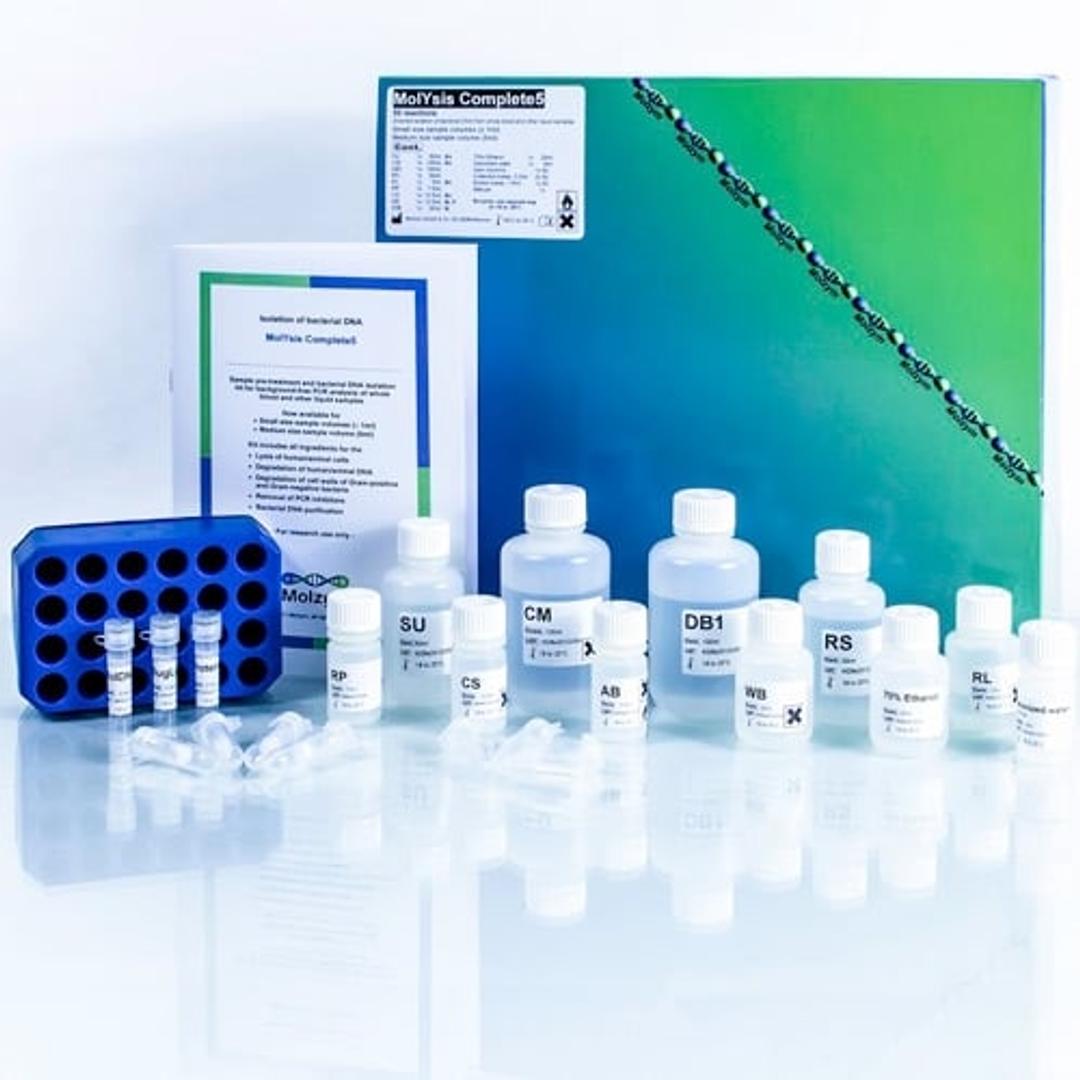
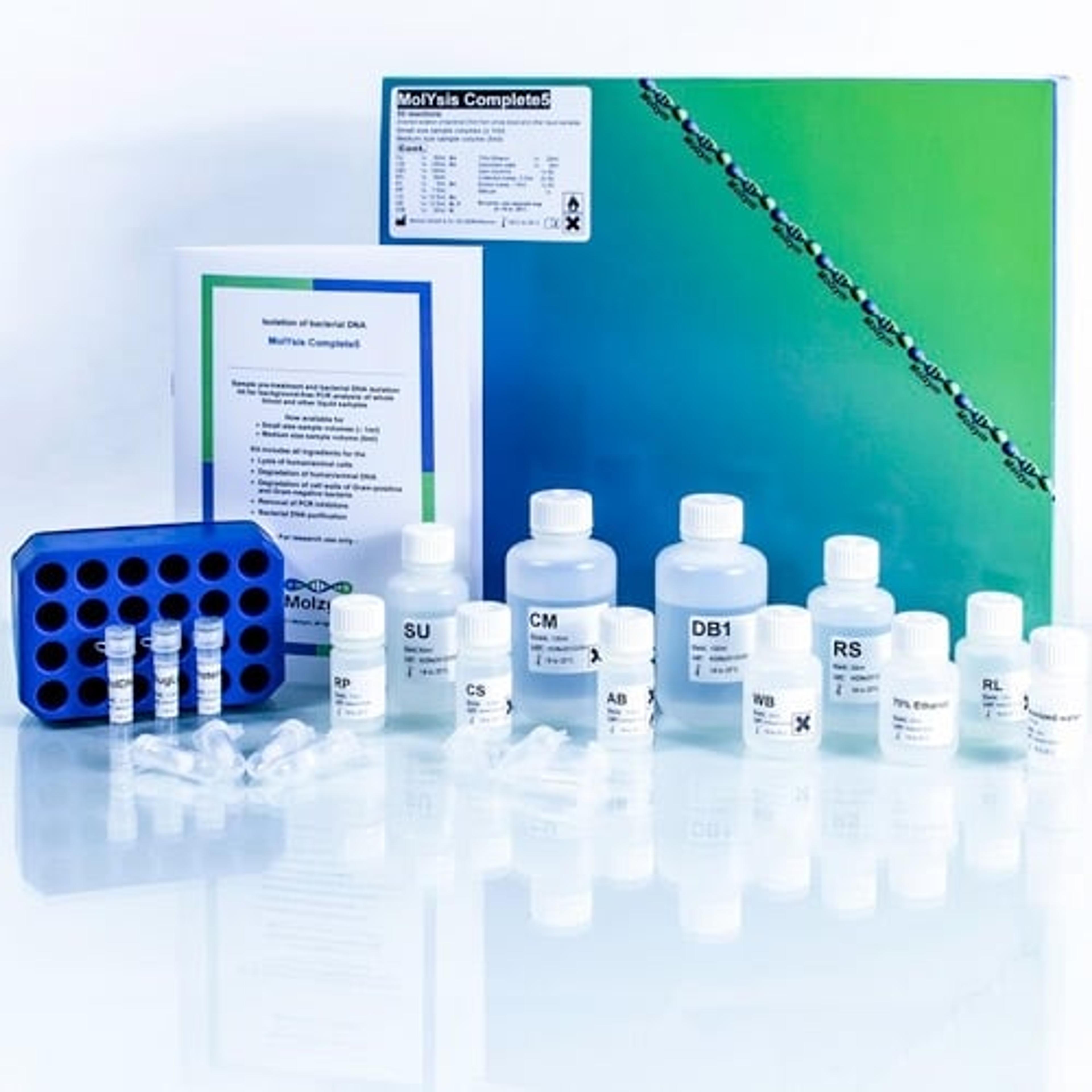
MolYsis™ Complete5 kit

MolYsis™ technology
The supplier does not provide quotations for this product through SelectScience. You can search for similar products in our Product Directory.
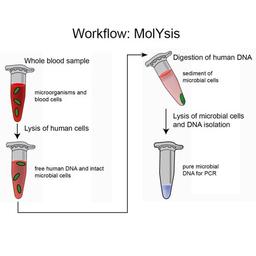
Host DNA often negatively influences the sensitivity and specificity of molecular analysis of microorganisms in human and animal samples. The proprietary MolYsis™ technology provides a solution for the depletion of non-target host DNA and enrichment and isolation of bacterial and fungal DNA from intact microorganisms. All reagents and consumables provided with the kits are DNA-free ensuring pure DNA without reagent-borne contaminations. During the MolYsis™ process, human or animal cells are selectively lysed and the free DNA is degraded by a DNase treatment. Afterwards, a reagent called BugLysis is used for a broad-range lysis of Gram-positive and Gram-negative bacteria and fungi. The microbial DNA is purified with a column-based bind-wash-elute procedure providing pure, enriched microbial DNA. Applications comprise next generation sequencing, amplicon cloning, real-time PCR, Sanger sequencing and DNA array analysis of microorganisms.
Benefits:
- Depletion of non-target, human or animal DNA
- Selective enrichment of bacteria and fungi
- Validated for a broad-range lysis of bacteria and fungi
- DNA-free reagents and consumables
- Suitable for fluids of 0.2-5 ml sample volumes
MolYsis™ Complete5 is validated for a variety of human and animal body fluids.
Brochures

Selective Enrichment of Bacterial and Fungal DNA
MolYsis™ is a tool for the removal of human DNA and enrichment of bacteria and fungi from liquid samples. Technically, in a short series of steps, MolYsis™ effects the selective lysis of blood cells and the quantitative degradation (>99%) of released human DNA. After enrichment from the lysate by centrifugation, microorganisms are treated with a reagent degrading cell walls of Grampositive and Gram-negative bacteria and fungi. The broad range lysis potential has been shown in clinical evaluations, including over 200 genera of bacteria (86 Grampositives, 120 Gram-negatives) and 65 genera of fungi.

Unleash the power of mNGS to identify infectious agents in complex human samples
A major challenge to enhance the use of mNGS for the identification of infectious agents is linked to the vast excess of human DNA, which negatively impacts sequencing results, sensitivity and the overall workflow. In this webinar, we will discuss how human DNA depletion by MolYsis™ can help overcome such limitations, improve sequencing depth and quality, and reduce the time and costs of analysis.
Key learning objectives:
- Learn more about the challenges and opportunities of mNGS in clinical infection diagnosis
- Learn how to increase sequencing depth and quality of microbial reads by depleting human DNA from body fluids, tissues and swabs
- Learn how MolYsis™ impacts the number of sequencing reads, sequencing time and overall data cost
- Learn how to facilitate the mNGS workflow for the identification of bacteria and fungi
Who should attend?
- Lab directors, lab managers and quality managers
- Medical laboratory scientists and technicians
- Molecular microbiologists
- Clinical lab scientists
- Clinicians, infectious disease specialists and pathologists
- Researchers, microbiologists and biotechnologists
Certificate of attendance
All webinar participants can request a certificate of attendance, including a learning outcomes summary, for continuing education purposes.
How the human microbiome impacts health and disease
This special feature explores the impact of the human microbiome on disease development and highlights the latest innovations driving microbiome research