Impact™ Protein Precipitation Plates
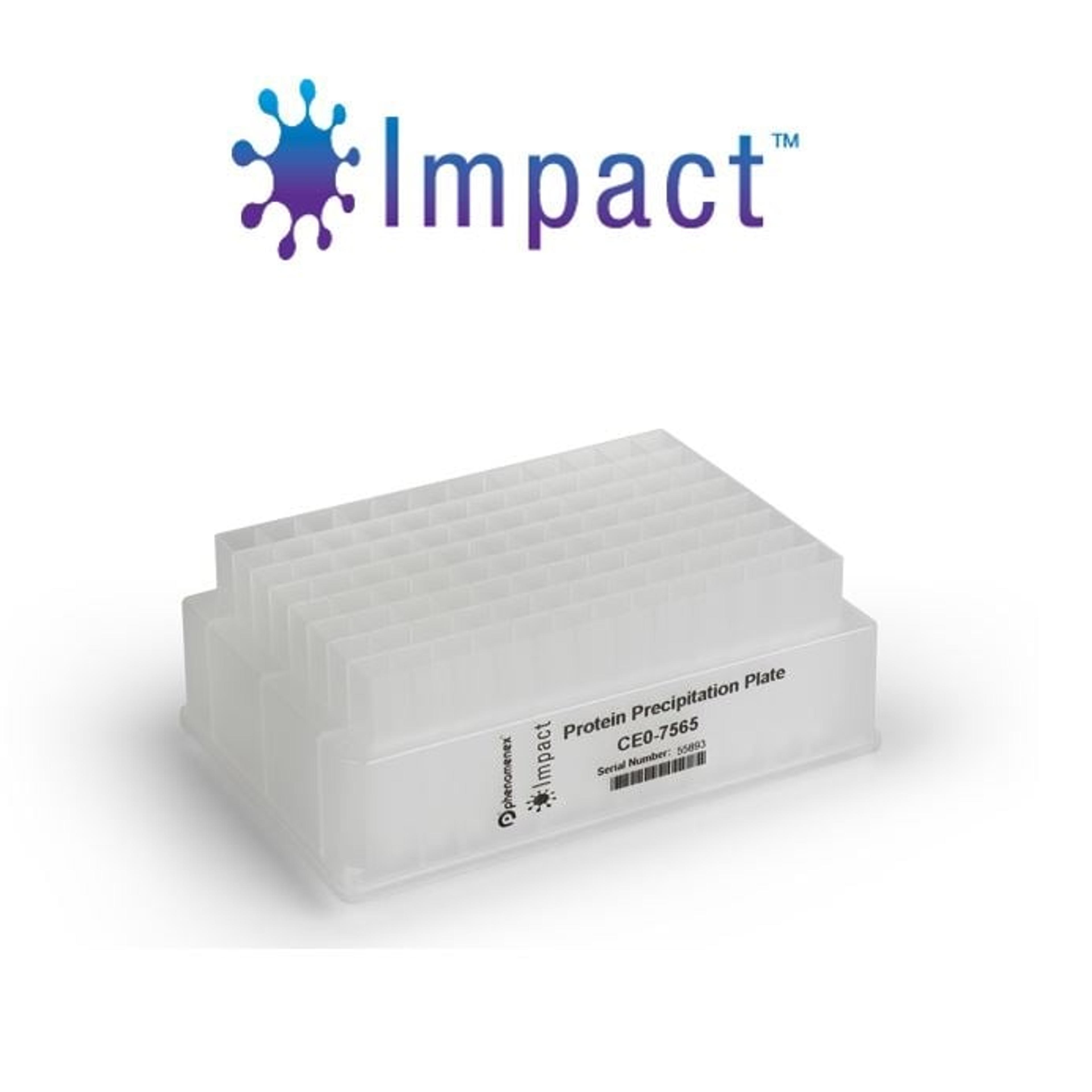
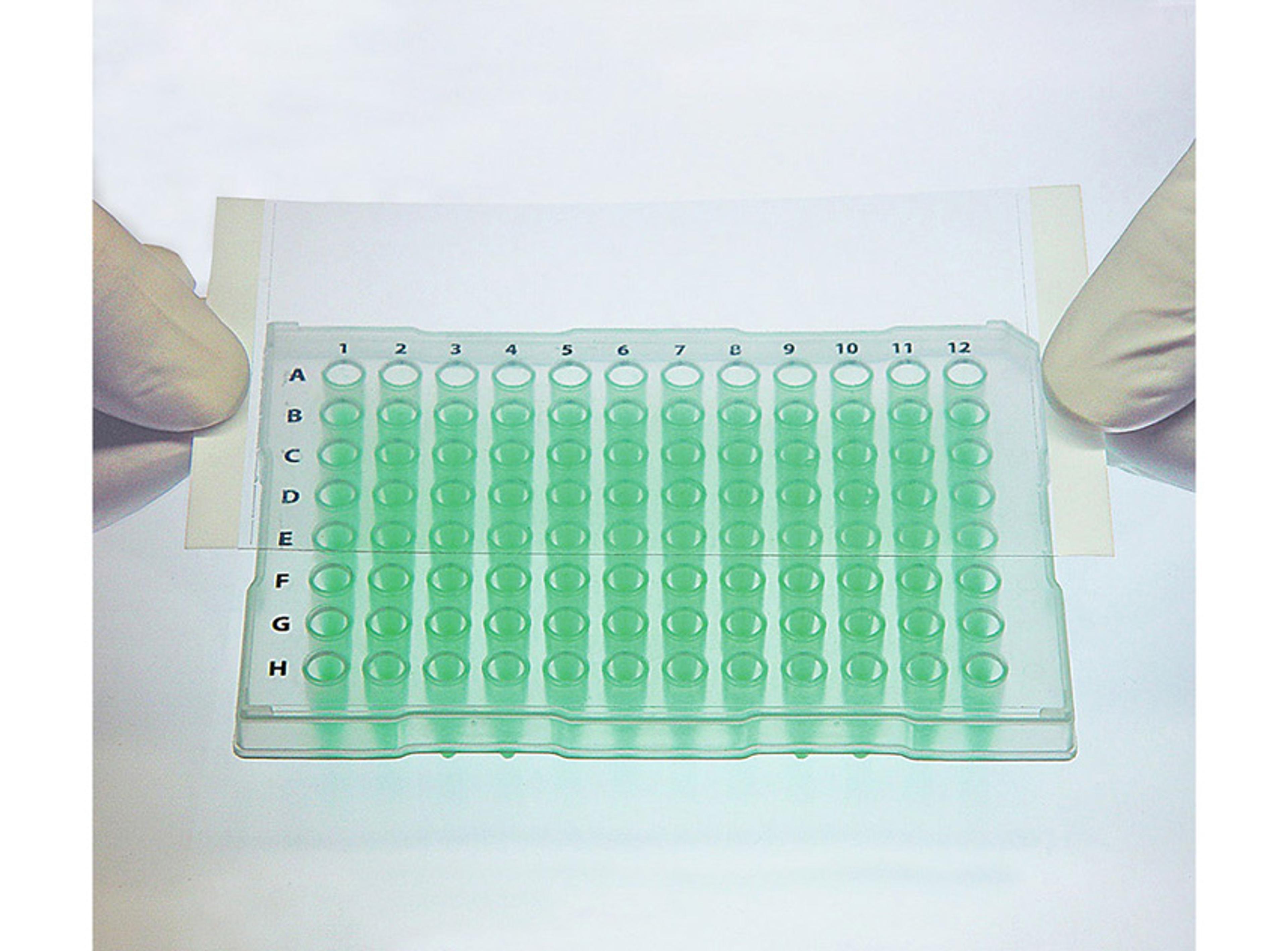
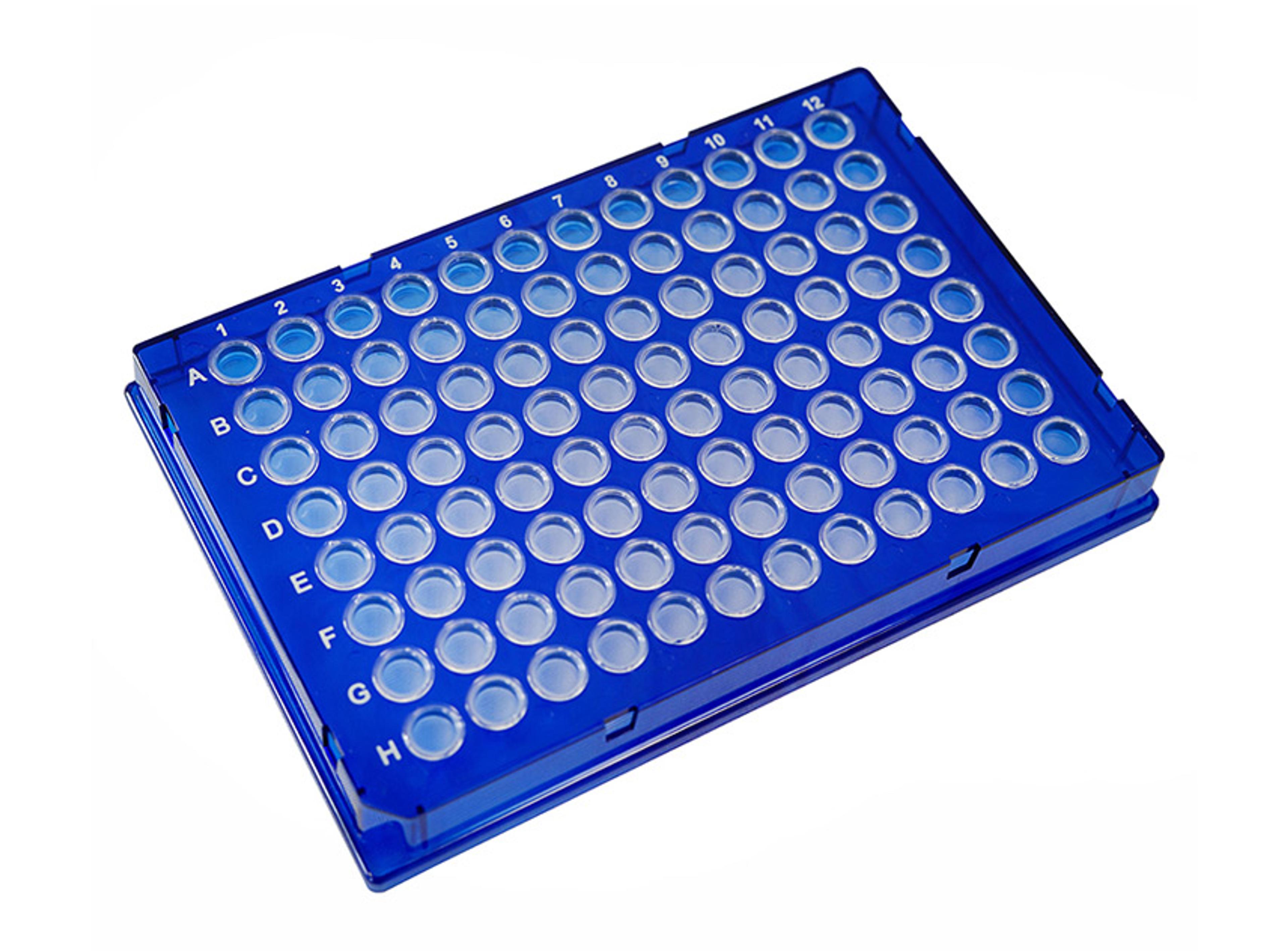
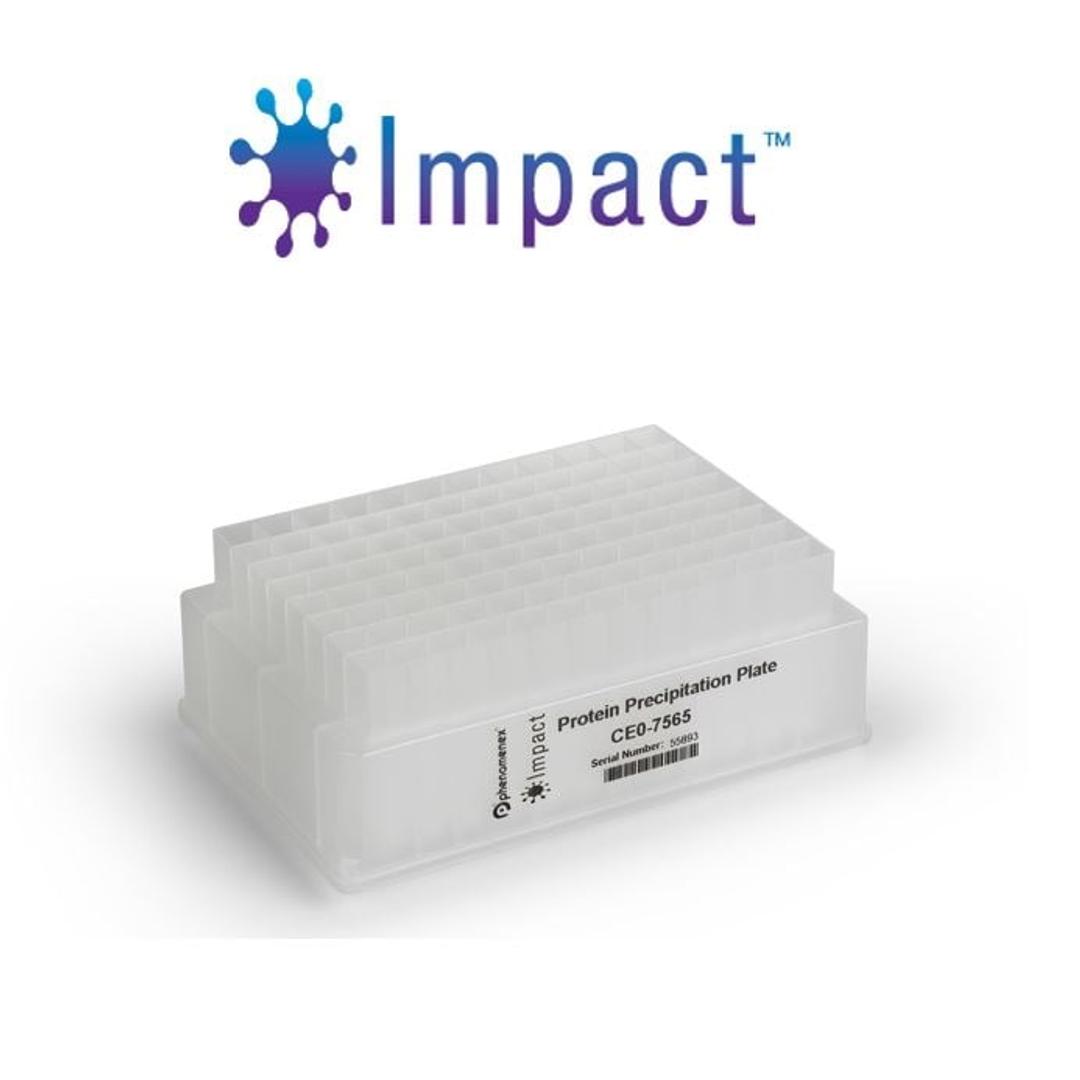
Impact™ protein precipitation plates with Solvent Shielding Technology™ offer a rapid and convenient way to remove proteins from plasma and tissue homogenate samples prior to analysis.The Solvent Shielding Technology design will withhold organic solvents above the filter membranes for up to 25 minutes, allowing for direct in-well precipitation upon sample addition. The precipitate is then filtered out via vacuum, centrifuge or…

The supplier does not provide quotations for this product through SelectScience. You can search for similar products in our Product Directory.
Impact™ protein precipitation plates with Solvent Shielding Technology™ offer a rapid and convenient way to remove proteins from plasma and tissue homogenate samples prior to analysis.
The Solvent Shielding Technology design will withhold organic solvents above the filter membranes for up to 25 minutes, allowing for direct in-well precipitation upon sample addition. The precipitate is then filtered out via vacuum, centrifuge or positive pressure resulting in a clean, protein depleted extract.

Sample preparation made simple: Selection and user guide
Sample preparation is crucial in achieving desired LC or GC analytical results. Sample matrix effects can result in an array of interferences which can lead to poor chromatography as well as instrumentation drawbacks, hindering your approach and goal for the analysis.
In this user guide, Phenomenex Inc provides all the information you need to choose and use the best sample preparation technique for your work, whether it's filtration, QuEChERS, SLE, PPT, PLR, or SPE. Download your free copy below to read recommendations for your industry, general methods, protocols for easy method development, and much more.
LC-MS/MS Environmental Applications
The world is changing and we need to widen our Environmental Scope. Although analytical techniques and established regulated methods are not easily changed; more complex targets, larger lists, and a variety of sample matrices create a daily challenge for environmental chemists. By using the latest technologies and techniques in HPLC/ UHPLC and Sample Preparation, laboratories and chemists are able to develop better approaches to make their work Faster, Cheaper and Easier. Phenomenex is committed to supporting the industry through a comprehensive product portfolio of Sample Preparation, HPLC/UHPLC, and LC-MS, columns and accessories, along with application and method development services to meet industry needs.
The Clinical Application Notebook: Edition 2
This clinical notebook contains a variety of 36 application notes, covering topics in endocrinology and biomarker research, therapeutic drug monitoring, toxicology and sample preparation.
Rapid Protein Precipitation without the Complications
This application note describes Phenomenex’s protein precipitation plate capabilities to rapidly filter and precipitate a large number of samples simultaneously. This enables fast analysis, ensures that samples are clean and reduces the number of filtration steps.
An Efficient HPLC Method for Quantitation of Vitamin C in Human Plasma Using Impact™ Protein Precipitation Plate Technology with Kinetex® HPLC Columns
As the determination of vitamin levels in patients becomes an increasingly important factor in the monitoring and diagnosis of diseases, high-throughput laboratories must adopt a rapid and robust method to accurately analyze and quantitate vitamins and their derivatives. This application note demonstrates a method developed by Phenomenex that can be easily automated, can be used in high-throughput labs, and provides sensitivity, speed, and reproducibility.
Quantitation of Human Plasma and Breast Milk Thiamine Monophosphate (TMP) and Thiamine by Applying Impact™ Protein Precipitation Plate Technology with Gemini® 3 μm NX-C18 HPLC Columns
Thiamine monophosphate (TMP) and thiamine were extracted from human plasma and human breast milk by performing a rapid protein precipitation using Impact Protein Precipitation Plates followed by HPLC analysis using a Gemini 3 μm NX-C18 100 x 3.0 mm HPLC column with fluorescence detection. Impact technology offers easy, fast protein removal while providing maximized recovery of the target analytes. The Gemini 3 μm NX-C18 HPLC column produced excellent chromatographic resolution, sensitivity, and high peak capacities.
Simple and Fast Quantitation of Nicotinic Acid and Nicotinamide in Human Plasma by Applying Impact™ Protein Precipitation Plate Technology with Gemini® 3 μm C18 HPLC Columns
In this application note, nicotinic acid and nicotinamide were extracted from human plasma by performing a rapid protein precipitation using Impact Protein Precipitation Plates followed by HPLC analysis using a Gemini 3 μm C18 100 x 4.6 mm HPLC column and positive polarity ESI LC/MS/MS system. Impact technology offers easy, fast protein removal while providing maximized recovery of the target analytes. The Gemini 3 μm C18 HPLC column produced excellent chromatographic resolution, sensitivity, and high peak capacities.
Removal of Beta-Glucuronidase Enzyme from Urine Post-Hydrolysis to Improve Assay Performance and Column Lifetime
Beta-glucuronidase is a 332 kDa enzyme that remains solubilized after incubation. Centrifuging samples post-hydrolysis is a common step to help remove the enzyme before analysis. This process works well in tubes, but the current centrifuges available for 96-well plates do not allow for sufficient speed to precipitate the enzyme. The increase in popularity of the 96-well plate format for high-throughput analysis has created a need for a simple technique to remove the enzyme that does not add significant cost to the assay. This application note demonstrates a simple post-hydrolysis step that removes the enzyme and significantly improves column lifetime.

Webinar Highlights: Overcoming Sample Prep Challenges in Clinical Research
Phenomenex’s sample preparation product manager shares his expert advice on preparing challenging biological sample matrices for LC-MS/MS