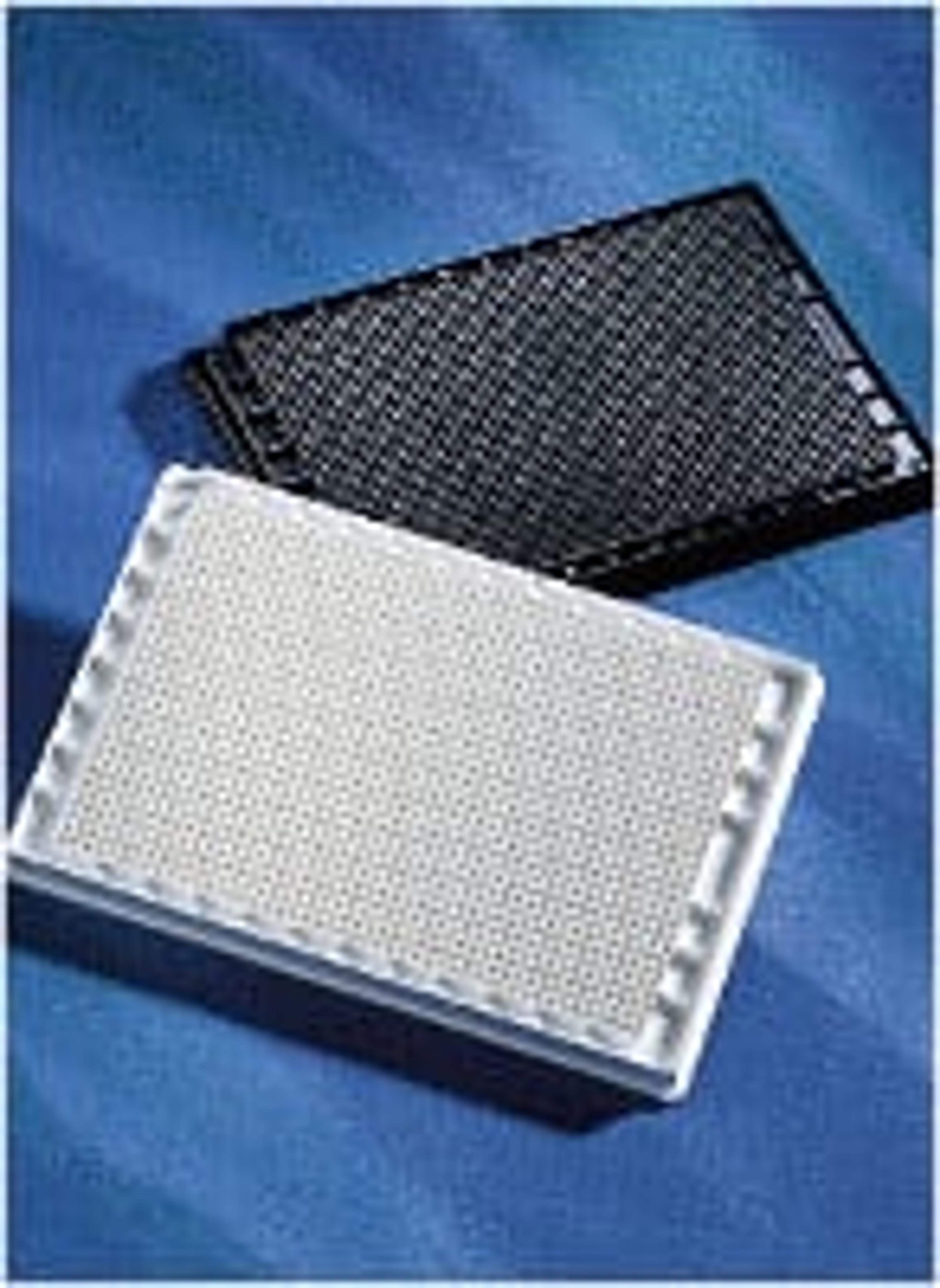
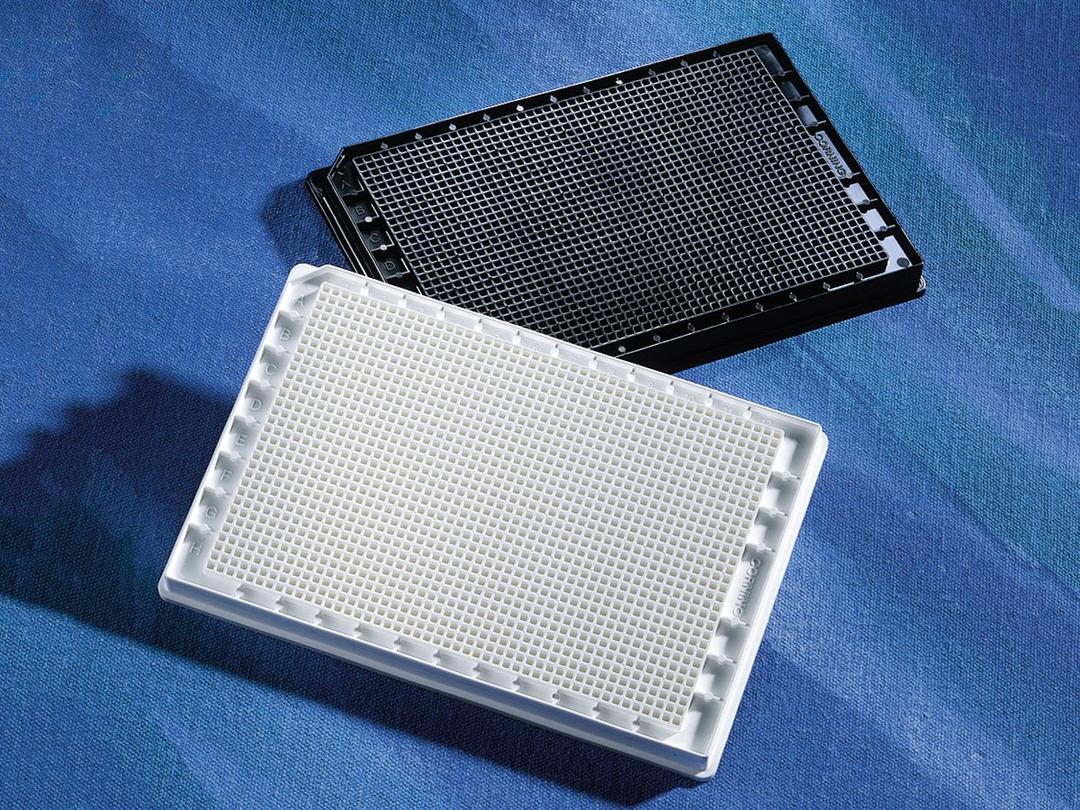
Corning® 1536-well White Polystyrene TC-treated Microplate, 10 per Bag, with Lid, Sterile
(This is the suggested replacement for 3855 and 353381)Excellent signal dynamic range due to low background fluorescence and enhanced signal intensitySuperior flatness minimizes variability within a plate and between platesFlat bottom wells are compatible with automated dispensers including the PerkinElmer FlexDrop™TC-treated for optimal cell attachmentWorking volume of up to 10 µL"

The supplier does not provide quotations for this product through SelectScience. You can search for similar products in our Product Directory.
Good 1536 plates for HTS.
Assay Development/HTS: Screening
We have used a lot of 1536 plate: Corning #3727 for our assay development and screening. For overnight incubation it's working very well. For longer than 24 hour incubation, we see edge effect. So try to avoid the edge or you can used Microclime lids to cover the plate. I tested different plates from different vendors, but I still prefer Corning 1536 plates.
Review Date: 5 Nov 2018 | Corning Life Sciences
(This is the suggested replacement for 3855 and 353381)
Excellent signal dynamic range due to low background fluorescence and enhanced signal intensity
Superior flatness minimizes variability within a plate and between plates
Flat bottom wells are compatible with automated dispensers including the PerkinElmer FlexDrop™
TC-treated for optimal cell attachment
Working volume of up to 10 µL"

High-Throughput Three-Dimensional Assay Development with Corning 1536-well Spheroid Microplates
In this application note, it is shown how the Corning 1536-well spheroid microplates allow for the formation of uniform, single spheroids in each well that are ideally suited for high-throughput 3D drug screens. Moreover, it demonstrates how the black sidewalls and clear bottom design of the Corning spheroid make it ideally suited for imaging, luminescent, and fluorescent cell-based assays.
Organoids, Disease Models and 3D Printing: The Challenges and Opportunities for 3D Cell Culture
We explore the advantages of culturing cells in three dimensions over traditional methods and look at the exciting new developments for the technology behind 3D cell culture