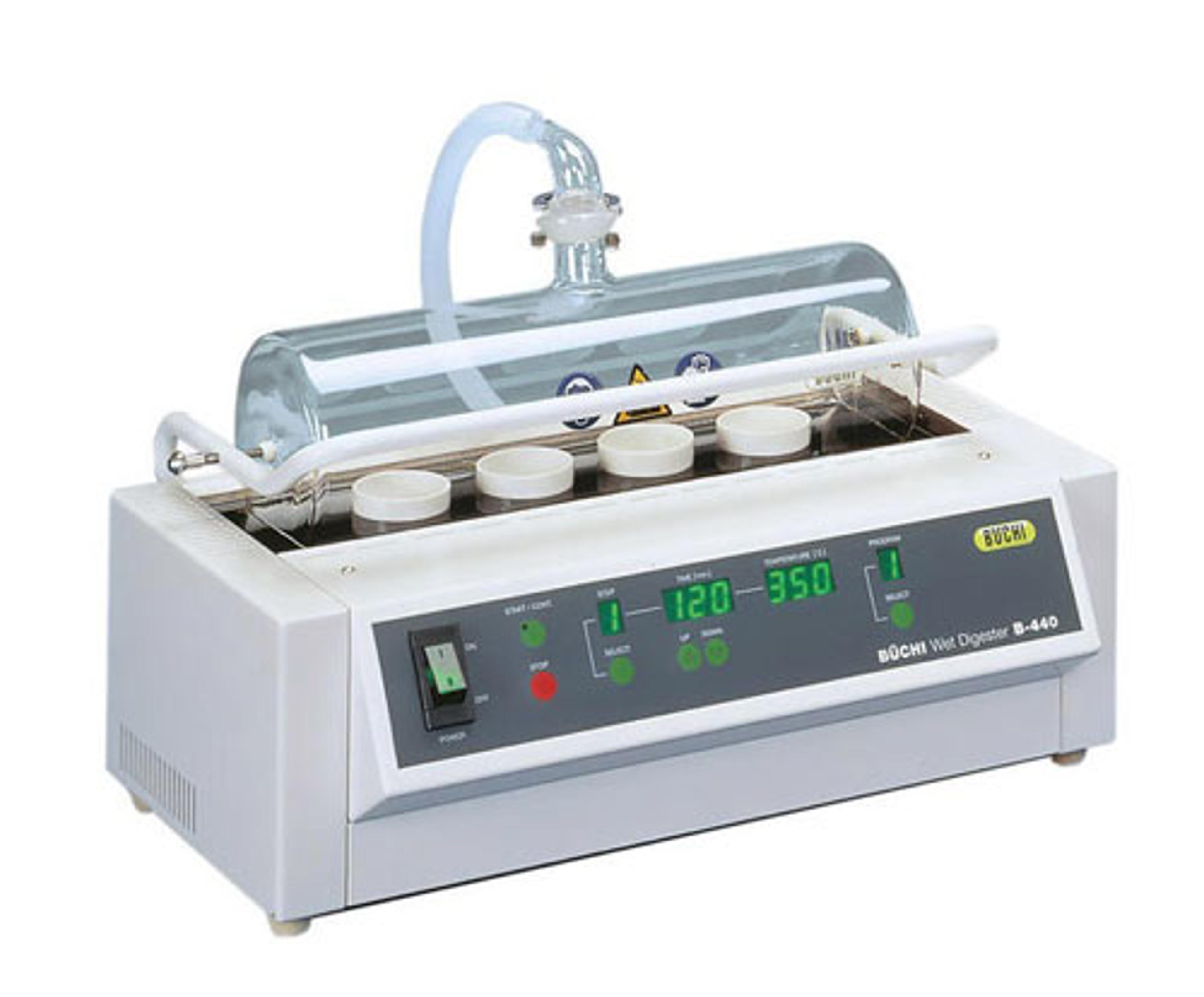
Wet Digester B-440
Pre-incineration unit for precise ash determination
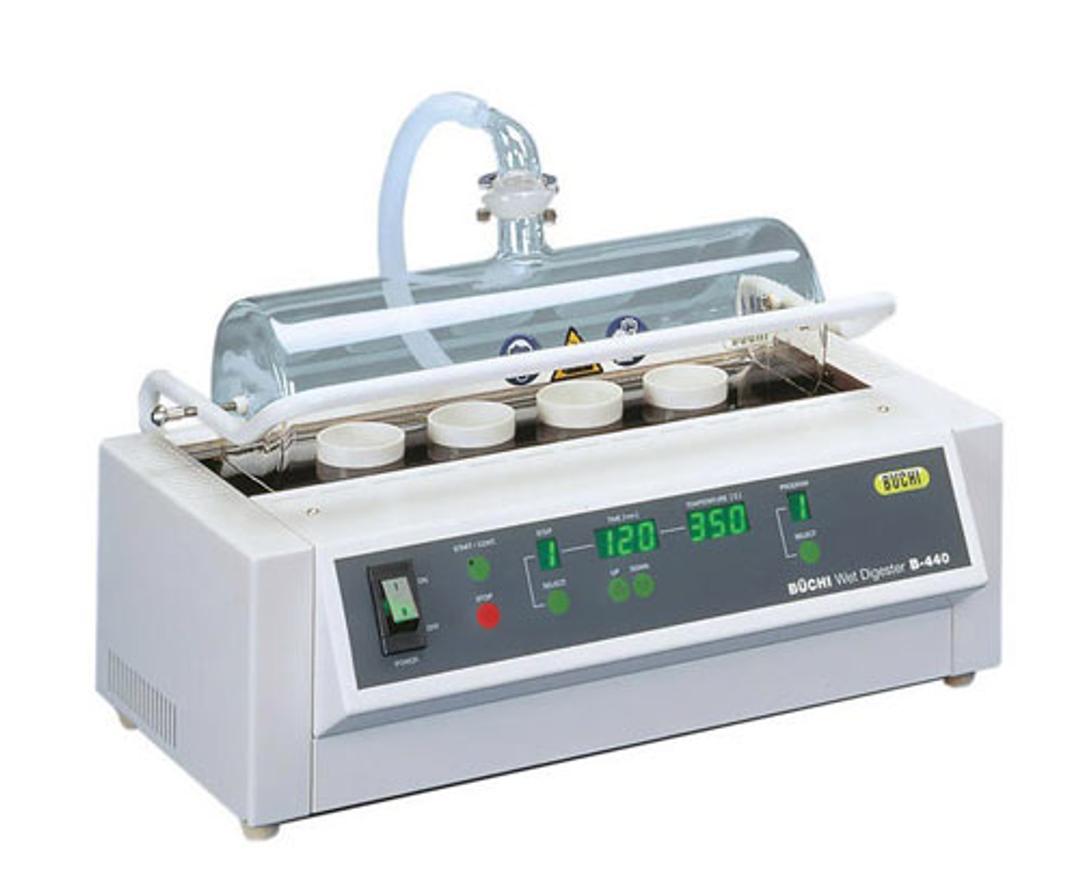
Wet Digester B-440 for ash determination with Kjeldahl

The supplier does not provide quotations for this product through SelectScience. You can search for similar products in our Product Directory.
The Wet Digester B-440 performs an environmentally friendly pre-incineration of all types of samples. Reproducible processes are guaranteed by programmable incineration ramps.
- Accurate profiles (temperature versus time) are programmed and stored
- Perfectly suited to ash and sulfated determination
- Fully compliant with European Pharmacopeia
- Increased workplace safety as acid fumes are trapped inside glass hood and removed by Scrubber K-415
- Eliminates corrosion of fume hood and environmental pollution
- Scrubber is fully controllable via digester
- Quick reach of digestion temperature in every crucible
- Wide temperature range available of up to to 600 °C
- More flexibility with differently sized crucibles

COSMETICS LAB: Discover how to develop cosmetics with care
In this magazine issue by BUCHI, discover more about:
- Latest trends in cosmetics
- Workflows for cosmetics research, development and quality control
- Ingredients used in natural cosmetics development
- Lab techniques for cosmetics innovation and much more.
Kjeldahl Proficiency Guide
The Kjeldahl Proficiency Guide from BUCHI aims to help you understand the chemical basis for various nitrogen determination processes and to carry them out. The deeper understanding of the procedure will help laboratory personnel, laboratory supervisors, students and teachers to optimize the individual method and increase the reliability of the results.
Cosmetics made with care
The world of beauty has been evolving over the years and the sector of cosmetics and personal care is expanding. Creativity in development, marketing, health and well-being is a must for any cosmetics company. In the highly competitive industry, products must differentiate and use of innovative technologies can help achieve this goal.
Guidebook to proximate analysis
A method for the quantitative analysis of the different macronutrients in food stuff is called proximate analysis. Nutritional analysis began in 1861 and since then it has have been continuously developed, modified and improved. The analysis uses combination of techniques to determine protein, fat, moisture, ash and carbohydrates that are well documented due to the need for legal declaration requirements.
Kjeldahl knowledge base: Nitrogen and protein determination
Comprehensive guide covering all aspects of theoretical and practical nitrogen and protein determination according to Kjeldahl. The guide helps you to understand the method and enables you to set up experiments correctly.
Tips & tricks from BUCHI experts
Bring your instruments up to full performance with tips and recommendations from practical experience. These tips & tricks can make your daily lab work easier, safer and more sustainable.
Food process analytics guidebook
In this application note is a view of modern food and beverage analysis methods, with a focus on incoming goods inspections and how the ‘time factor’ plays an important role. The guidebook shows you the process of incoming goods inspections and selected methods for dealing with them.