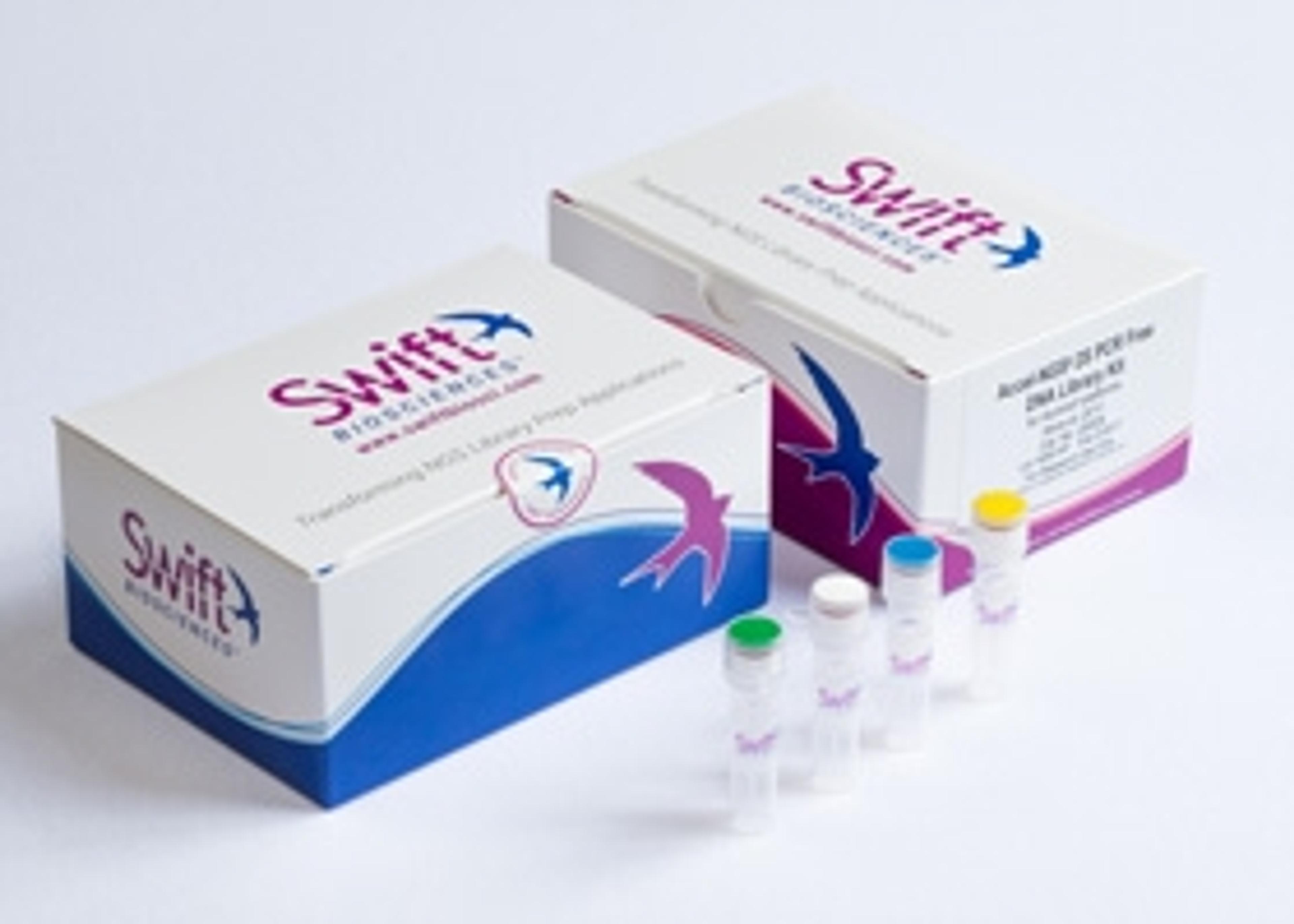
Swift Accel-NGS® 2S PCR-Free DNA Library Kit (24 reactions)
PCR-free NGS prep with highest library diversity, lowest inputs
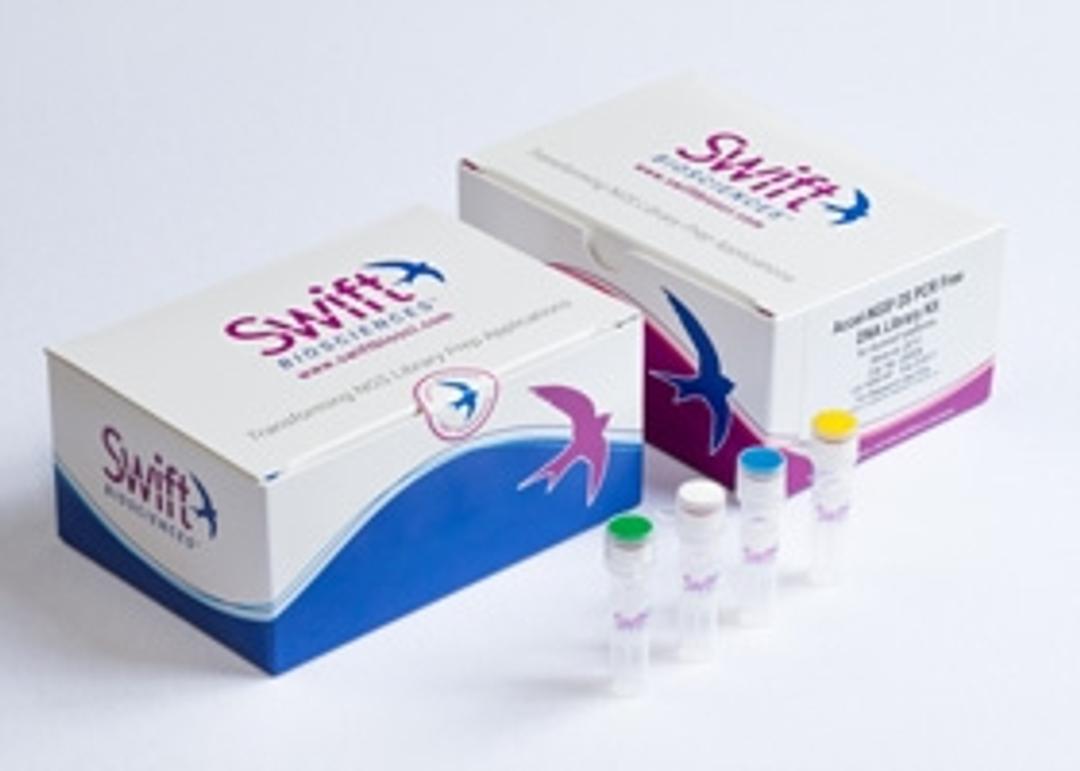
Accel-NGS® 2S PCR-Free DNA Library Kit

The supplier does not provide quotations for this product through SelectScience. You can search for similar products in our Product Directory.
Eliminate sequencing bias introduced by polymerase with PCR-free preps. Enables PCR-free preparation of high complexity NGS libraries from double-stranded DNA. The kit is designed for those who have sufficient starting material to produce libraries free of bias from polymerase and for those wishing to use a polymerase of choice for amplification. PCR primers are included for users with low inputs (10 pg to 100 ng) who wish to use a polymerase of choice.
Benefits include:
- PCR-free libraries from inputs as low as 10 ng (cfDNA)
- PCR-free libraries from inputs as low as 100 ng (physically sheared DNA)
- Excellent efficiency, data quality, and evenness of coverage
- No base composition bias from AT-/GC-rich genomes
- Optional library amplification with self-selected polymerase.
- Right choice for users seeking unbiased coverage from relatively low input samples, like circulating, cell-free DNA or FFPE samples

Accel-NGS® 2S DNA Library Kits
The application notes provides an overview of Accel-NGS® 2S DNA Library Kits. Accel-NGS 2S DNA Library Kits produce high quality libraries with an all-inclusive, easy-to-use format. Applications of the Library Kits, including use in sequencing liquid biopsy samples and Pico-Scale ChIP-Seq are also covered.
Understanding NGS Intricacy and Single-Cell Sequencing
The application note describes the sequence coverage performance and preservation of molecular complexity of next generation sequencing (NGS) libraries, generated from human and microbial genomic DNA using Accel-NGS® 2S DNA Library Kits for whole-genome sequencing (WGS) on the Illumina® platform. Comparisons to the leading commercially available methods are also presented.

Advances in Sequencing Technology Facilitate Gene Expression Analyses at the Epigenomic Level
Three leading scientists discuss their research and the benefits of ChIP-Sequencing