Sartobind STIC® salt-tolerant membrane chromatography
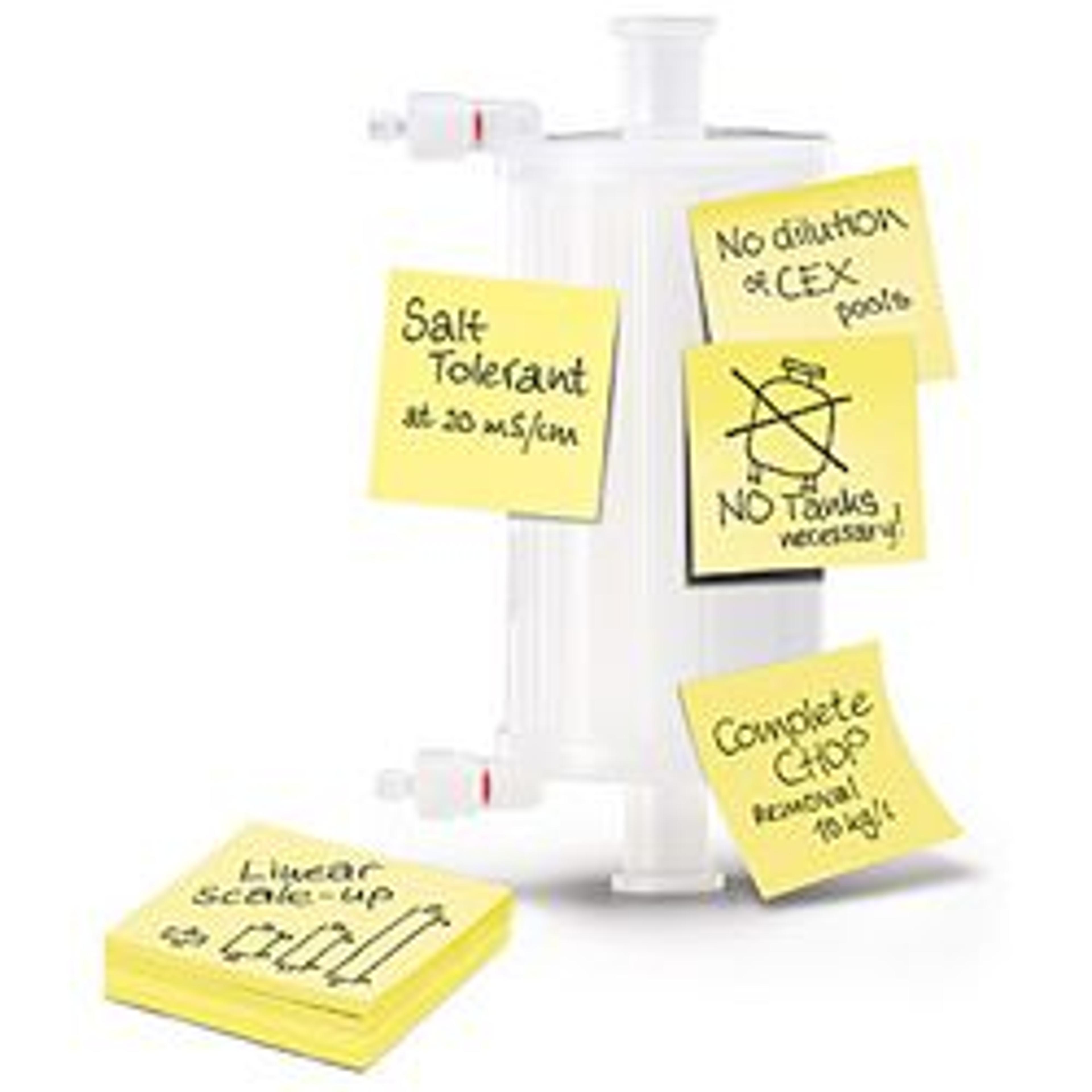
Disposable capsules with salt tolerant interaction membranes for polishing in biomanufacturing. The Sartobind STIC® adsorber speeds up the production process by high flow rate and opens new opportunities for the purification of therapeutic proteins and vaccines. Plug and play device Can be used like a filter Enhanced flexibility Reduces validation costs Recommended flow rate of up to 30 bed volumes/min

The supplier does not provide quotations for this product through SelectScience. You can search for similar products in our Product Directory.
Disposable capsules with salt tolerant interaction membranes for polishing in biomanufacturing.
The Sartobind STIC® adsorber speeds up the production process by high flow rate and opens new opportunities for the purification of therapeutic proteins and vaccines.
- Plug and play device
- Can be used like a filter
- Enhanced flexibility
- Reduces validation costs
- Recommended flow rate of up to 30 bed volumes/min

Host Cell Protein Removal with Sartobind STIC® PA Pico
This application note details a method for host cell protein removal using the Sartobind STIC® PA pico from Sartorius. Sartobind® STIC (Salt Tolerant Interaction Chromatography), is a membrane concept based on weak anion exchange chemistry that was developed to facilitate a wider design space for FT-AIEX membrane chromatography at commercial scale. Sartobind STIC PA is able to overcome the limitations of HCP removal at high conductivities, allowing for >10 times reduced sample consumption and substantial cost savings for virus validation studies.
High Throughput Screening using Membrane Chromatography
The road to success in downstream purification depends on selecting the optimal adsorbent, media, and operating parameters. Determining these factors is often an expensive and time consuming operation. In an effort to decrease the time and effort associated with determining the ideal parameters for purification, high throughput screening techniques have become essential tools in the development lab. The use of small scale adsorbent material is already well established for chromatography resins and this application note describes a screening platform developed for membrane adsorbers.
Effect of Phosphate on Binding of Proteins to Sartobind STIC® PA
This application note demonstrates the influence of various phosphate concentrations on the binding of proteins and DNA to Sartobind® STIC, which is a salt tolerant anion exchange chromatography membrane. Sartobind® STIC membranes with primary amine (PA) ligands are used during the downstream processing of recombinant proteins for the removal of contaminants such as DNA, host cell proteins, endotoxins and viruses. The anion exchange ligands are coupled to a cellulose membrane which is fitted into a plastic housing for quick handling, making ion exchange purification nearly as easy as filtration. The product is intended for single use and can be applied for contaminant removal from proteins in flowthrough mode (negative chromatography).
Purification of Adeno-Associated Virus using Affinity Chromatography with Sartobind® Membrane Adsorbers
Adeno-associated viruses (AAV) belong to the family Parvoviridae, subfamily Parvovirus, genus Dependovirus. They are used as gene delivery vectors for human gene therapy. The advantages of AAV as a vector include e.g. its lack of pathogenicity, high titer, ease of manipulation, and ability to infect non-dividing cells. This application note describes the purification of adeno-associated virus using affinity chromatography with Sartobind® Membrane Adsorbers.
Sartorius Stedim Biotech Introduces Sartobind® Cassettes
New modular membrane chromatography solution for large-scale applications
Sartorius Stedim Biotech and GE Healthcare Sign Worldwide OEM Supply Agreement
Expands GE’s start-to-finish offering for cost efficient manufacture of biopharmaceuticals and increases global access to SSB’s innovative purification technology