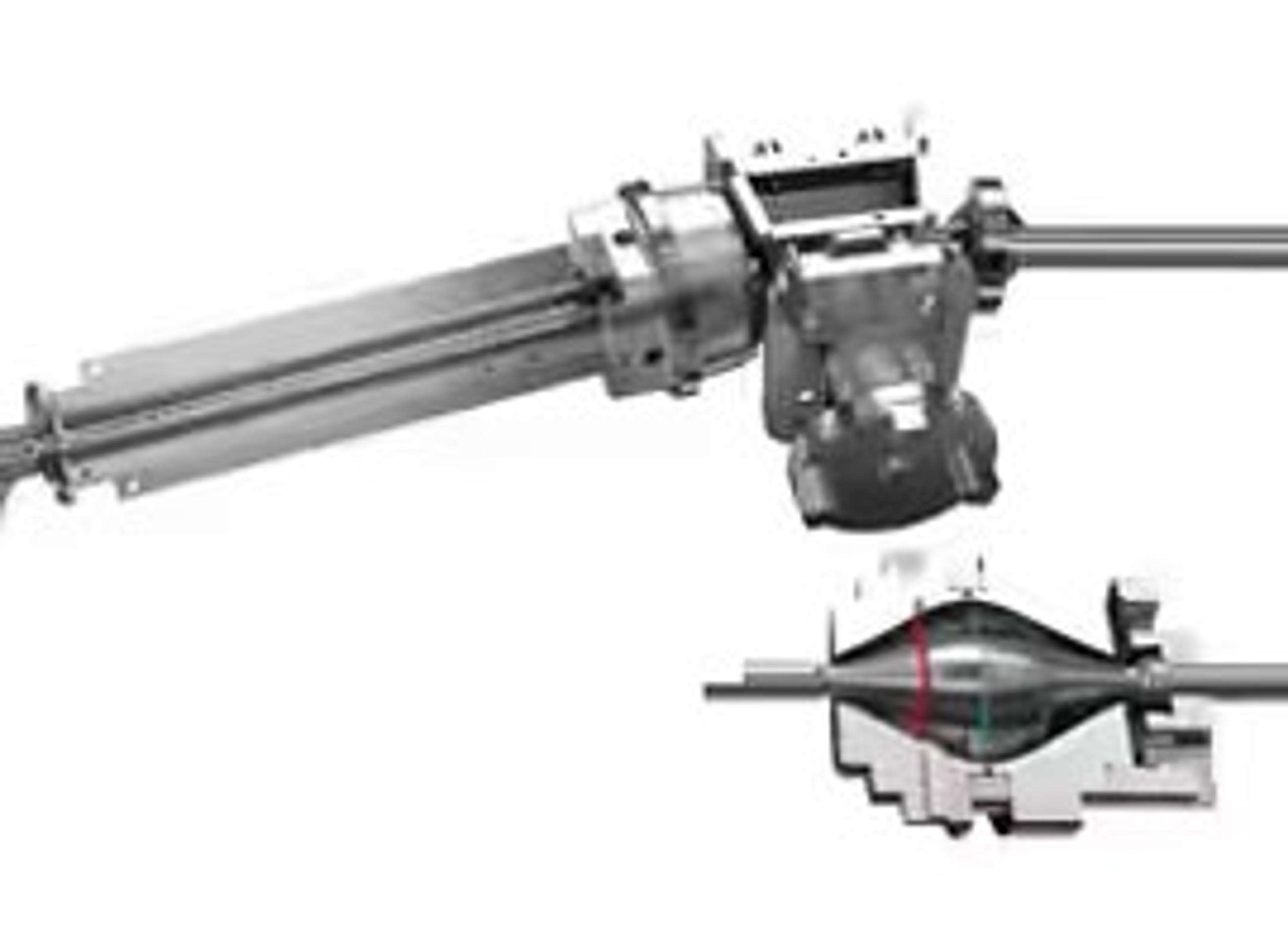
Orbitrap LC-MS
Thermo Fisher Scientific offers a wide portfolio of Orbitrap-based MS systems, including systems combined with ion traps and quadrupole mass filters, to address all your analysis needs.


The supplier does not provide quotations for this product through SelectScience. You can search for similar products in our Product Directory.
Buen rendimiento, solo mucho espacio Good performance, just a lot of space
Pharmaceutical
A la altura de los mejores cromatografos de masas At the level of the best mass chromatographs
Review Date: 24 May 2023 | Thermo Fisher Scientific
Thermo Fisher Scientific offers systems ranging from the Q Exactive MS and Orbitrap Exploris MS to the Orbitrap Eclipse Tribrid MS. Some of these Orbitrap systems not only feature a top resolution of 1,000,000 FWHM at m/z 200 but also achieve scan rates of 45 Hz.
Due to its HRAM capabilities, the Orbitrap is often the mass analyzer of choice for elucidating novel, untargeted compounds at sub-ppb concentrations and/or sub-ppm mass differences. The Orbitrap is frequently used in research applications to elucidate low-abundance, high complexity, or otherwise difficult samples, including those collected in proteomics, lipidomics, clinical research and forensic toxicology, food and beverage, and environmental laboratories. This is because high resolving power can make the difference between detecting and not detecting low concentration analytes (due to the masking effect of isobaric interferences).
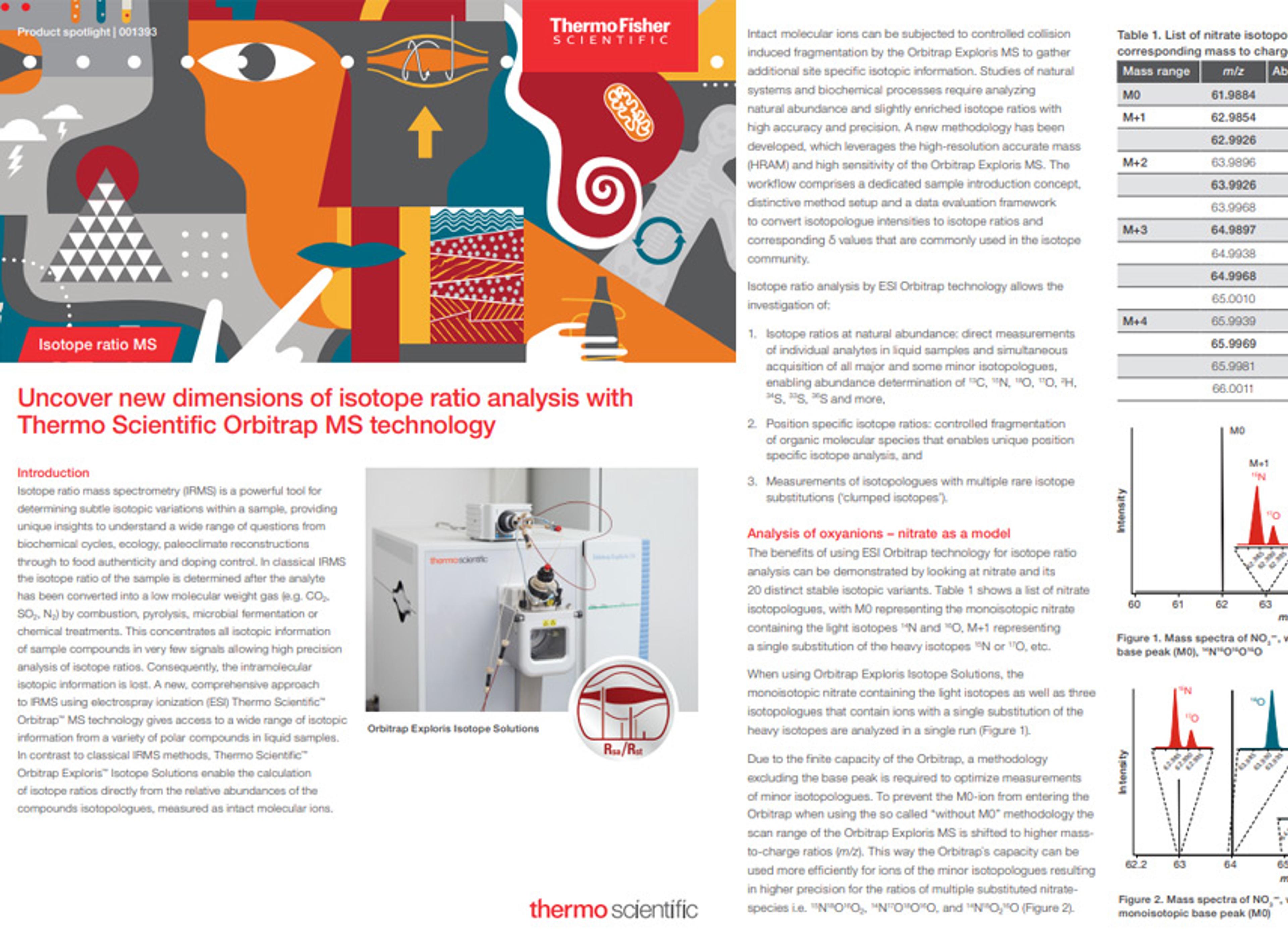
Uncover new dimensions of isotope ratio analysis with Thermo Scientific Orbitrap MS technology
Isotope ratio mass spectrometry (IRMS) is a powerful tool for determining subtle isotopic variations within a sample and works by breaking down complex molecules in simple gases. This technique can provide unique insights however important intramolecular isotopic information is often lost.
Explore a new, comprehensive approach to IRMS using electrospray ionization (ESI). Thermo Scientific™ Orbitrap™ MS technology gives access to a wide range of isotopic information from a variety of polar compounds in liquid samples. In contrast to classical IRMS methods, Thermo Scientific™ Orbitrap Exploris™ Isotope Solutions enable the calculation of isotope ratios directly from the relative abundances of the compounds isotopologues, measured as intact molecular ions.

KingMed Laboratories advances IGF-1 testing with multichannel LC and high-resolution MS
KingMed Diagnostics in Guangzhou, China, is a leading clinical laboratory, specializing in growth hormone testing using advanced technologies like multichannel liquid chromatography and high-resolution mass spectrometry. A market leader in China's Independent Clinical Laboratories (ICL) industry since 2009, KingMed focuses on global expansion. They use the Thermo Scientific™ Orbitrap™ system for accurate testing of insulin-like growth factor 1 (IGF-1) and have introduced the Thermo Scientific™ Transcend™ TLX-4 system to handle high test volumes.
Analytical food authenticity testing methods
Food and beverage fraud is a growing problem motivated by economic gain. Popular food products can easily become targets for direct adulteration, particularly if natural ingredients can be substituted by cheaper components that are difficult to detect either visually or chemically. Download this guide to analytical food authenticity testing methods to learn about the very latest techniques to combat food and beverage fraud.
In this free eBook, created in partnership with Thermo Fisher Scientific, learn about:
Authentication of food products:
• Carbohydrate analysis of agave syrup using HPAE-PAD
• Meat authentication and adulteration testing by HPLC and HRAM MS
• Authentication of spices and herbs with GC-Orbitrap analysis
Authentication of beverage and oil products:
• Determining authenticity of fruit juices and purees with LC-MS/MS
• Tracing origin of Argan oil using EA-IRMS
• Identifying adulterated coconut juice using HPLC/EA-IRMS

Cancer study emphasizes the need for non-targeted PFAS analysis
Non-targeted analysis (NTA) testing can help reveal the hidden dangers of 'forever chemicals’ following findings linking PFAS exposure to thyroid cancer