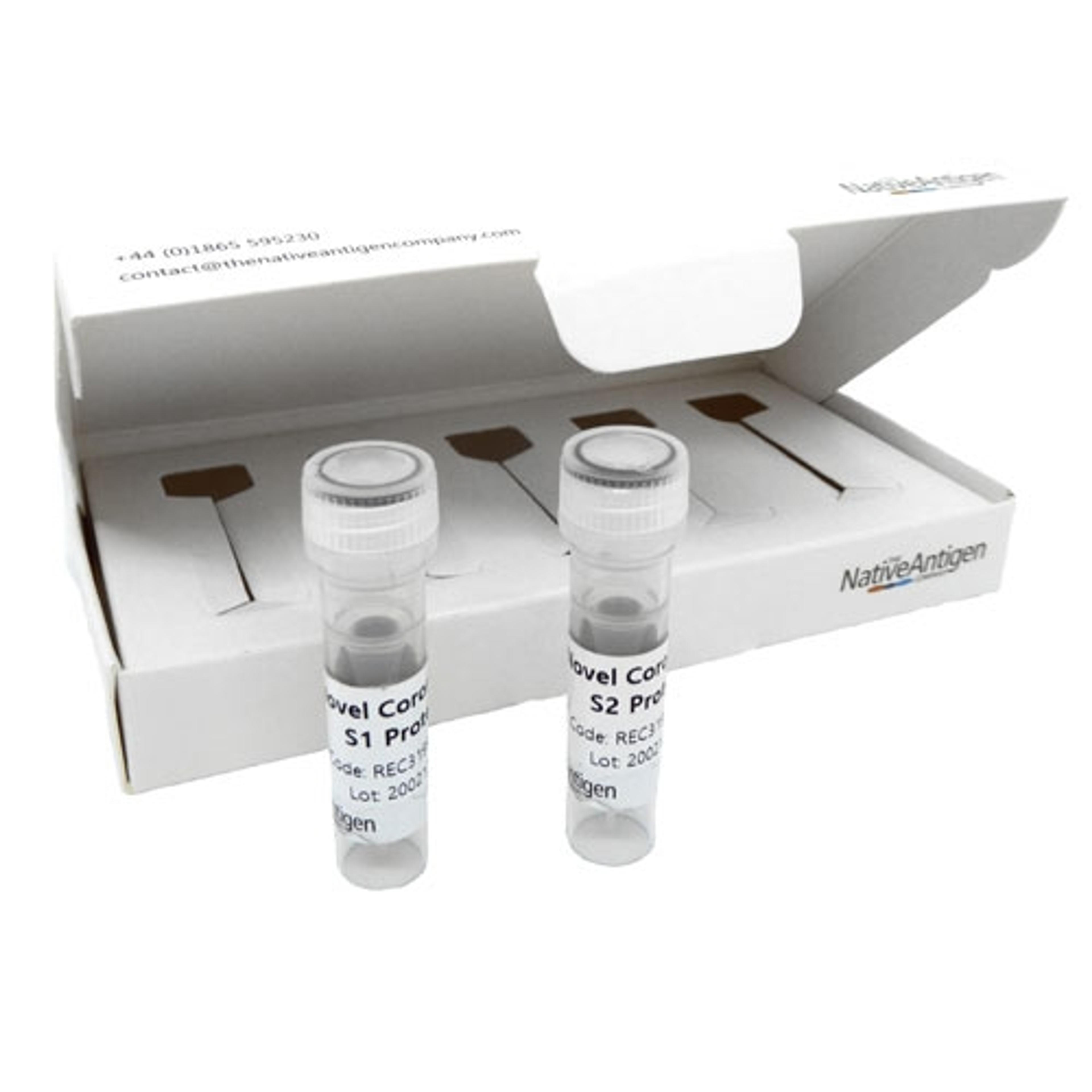
Novel Coronavirus (2019-nCoV) Spike Glycoprotein (S2), Sheep Fc-Tag (HEK293)
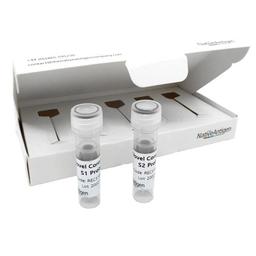
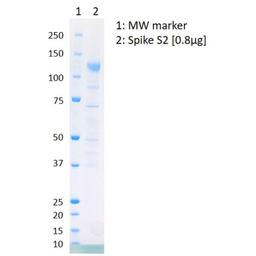
Novel Coronavirus 2019-nCoV (SARS-CoV-2) Spike Glycoprotein (S2) is a recombinant antigen which contains the Spike S2 protein, amino acids 685-1211. Spike S2 is manufactured in mammalian HEK293 cells to ensure the most authentic post-translational modifications.
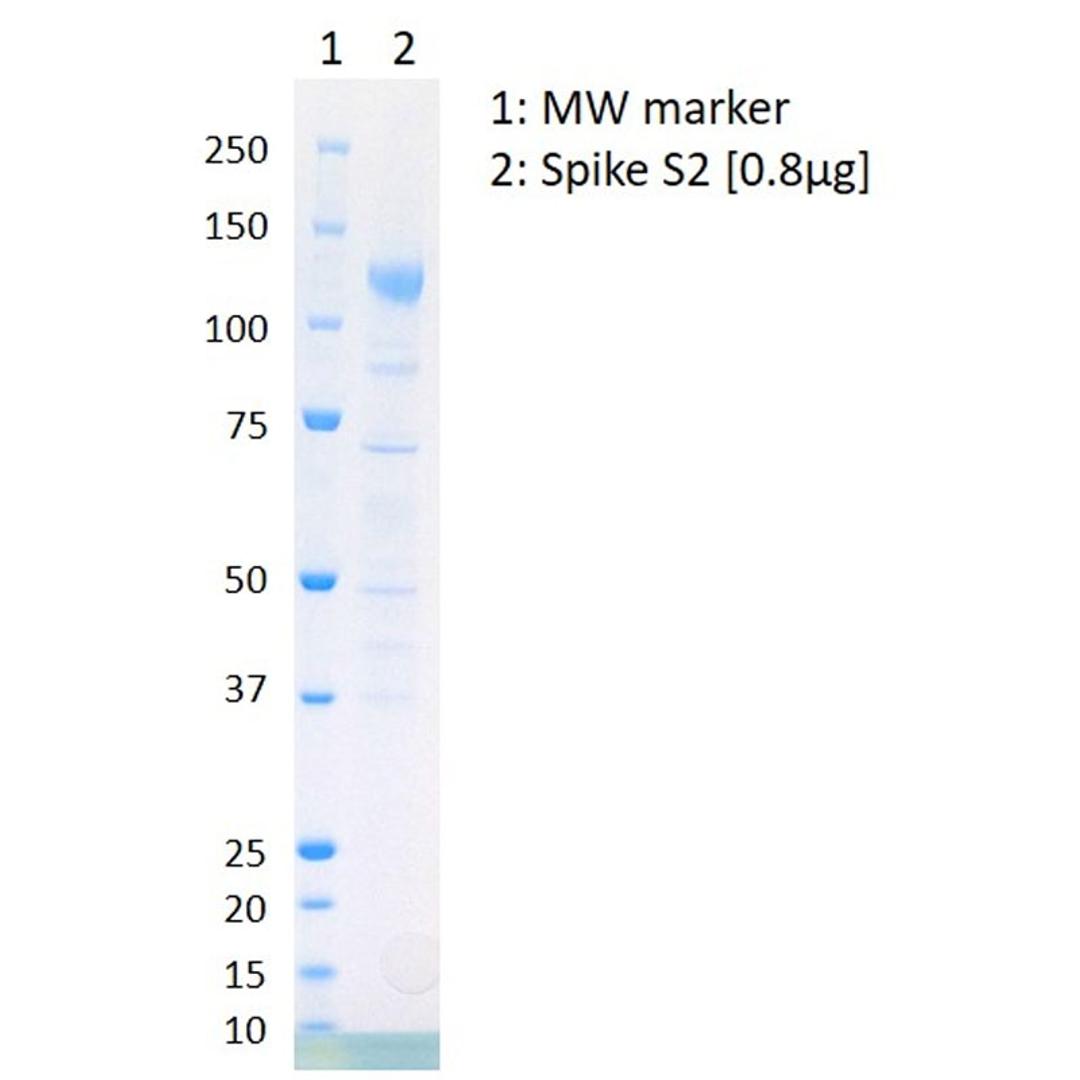
Purified 2019-nCoV Spike S2 protein
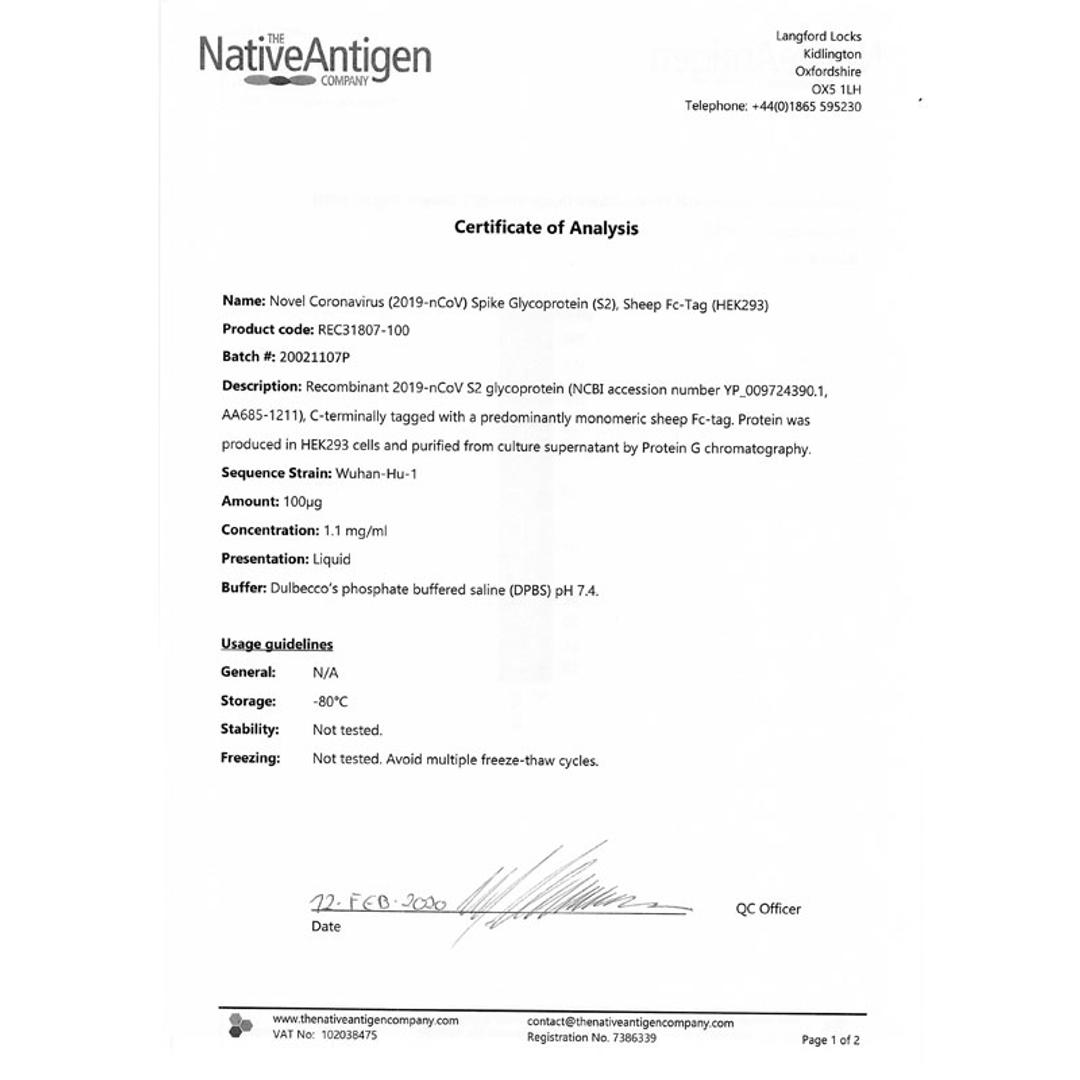
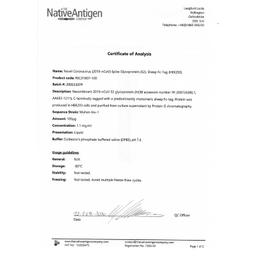
Certificate of Analysis

Receive your quote directly from the manufacturer.
NOVEL CORONAVIRUS (2019-NCOV) SPIKE GLYCOPROTEIN (S2)
Novel Coronavirus (2019-nCoV) Spike Glycoprotein (S2) is a recombinant antigen which contains the Spike protein amino acids 685-1211. Spike S2 is manufactured in mammalian HEK293 cells to ensure the most authentic post-translational modifications.
PRODUCT DETAILS – NOVEL CORONAVIRUS (2019-NCOV) SPIKE GLYCOPROTEIN (S2)
- Novel Coronavirus (2019-nCoV) Spike Glycoprotein (S2), Wuhan-Hu-1 strain.
- Recombinant protein expressed in HEK293 cells.
- Contains N-terminus of the Spike protein amino acids 685-1211, C-terminally tagged with sheep Fc.
- Purified from culture supernatant by Protein G chromatography.
- Presented in Dulbecco’s phosphate buffered saline (DPBS) pH 7.4.
BACKGROUND
In late December, 2019, a number of patients with viral pneumonia (now called 2019-nCoV acute respiratory disease) were found to be epidemiologically associated with the Huanan seafood market in Wuhan, in the Hubei province of China. A novel, human-infecting coronavirus, provisionally named 2019 novel coronavirus (2019-nCoV) and since named SARS-CoV-2, was identified by genomic sequencing (Lu et al., 2020). 2019-nCoV is closely related (88% identity) to two bat-derived severe acute respiratory syndrome (SARS)-like coronaviruses, collected in 2018 in Zhoushan, eastern China, but were more distant from SARS-CoV (~79% identity) and MERS-CoV (~50% identity). However, although bats might be the original host of this virus, an animal sold at the seafood market in Wuhan may have acted as an intermediate host (Lu et al., 2020). Relative synonymous codon usage (RSCU) analysis suggests that the 2019-nCoV is a recombinant between the bat coronavirus and an origin-unknown coronavirus, and it has been proposed that a snake could have acted as the reservoir. The recombination event occurred within the viral spike glycoprotein (Ji et al., 2020). Homology modelling shows that 2019-nCoV has a similar receptor-binding domain structure to that of SARS-CoV, despite amino acid variation at some key residues. Therefore, 2019-nCoV may be able to bind to the angiotensin-converting enzyme 2 (ACE2) receptor in humans (Lu et al., 2020).
2019-nCoV is a respiratory virus which spreads primarily through contact with an infected person through respiratory droplets generated when a person coughs or sneezes, or through droplets of saliva or discharge from the nose. The incubation period is believed to range from 2-11 days. Infection with 2019-nCoV can cause mild symptoms including a runny nose, sore throat, cough, and fever. However, it can be more severe for some people and can lead to pneumonia or breathing difficulties. The elderly, and people with pre-existing medical conditions (such as, diabetes and heart disease) appear to be more vulnerable to becoming severely ill with the virus. There are currently more than 40,000 confirmed cases from 24 countries, although the vast majority are still within China, with more than 900 deaths to date (WHO, 2020).
Coronavirus spike is a class I viral fusion protein on the outer envelope of the virion that plays a critical role in viral infection by recognizing host cell receptors and mediating fusion of the viral and cellular membranes (Li, 2016). The S glycoprotein is synthesized as a precursor protein consisting of ~1,300 amino acids that is then cleaved into an amino (N)-terminal S1 subunit (~700 amino acids) and a carboxyl (C)-terminal S2 subunit (~600 amino acids). Three S1/S2 heterodimers assemble to form a trimer spike protruding from the viral envelope. The S1 subunit contains a receptor-binding domain (RBD), while the S2 subunit contains a hydrophobic fusion peptide and two heptad repeat regions. Triggered by receptor binding, proteolytic processing and/or acidic pH in the cellular compartments, the class I viral fusion protein undergoes a transition from a metastable prefusion state to a stable postfusion state during infection, in which the receptor-binding subunit is cleaved, and the fusion subunit undergoes large-scale conformational rearrangements to expose the hydrophobic fusion peptide, induce the formation of a six-helix bundle, and bring the viral and cellular membranes close for fusion (Belouzard et al., 2012). The trimeric SARS coronavirus (SARS-CoV) S glycoprotein consisting of three S1-S2 heterodimers binds the cellular receptor angiotensin-converting enzyme 2 (ACE2) and mediates fusion of the viral and cellular membranes through a pre- to postfusion conformation transition (Song et al., 2018).
REFERENCES
- Gallagher and Buchmeier (2001). Coronavirus spike proteins in viral entry and pathogenesis. Virology. 279(2):371-4.
- Ji et al. (2020). Homologous recombination within the spike glycoprotein of the newly identified coronavirus may boost cross-species transmission from snake to human. J Med Virol. 2020;10.1002/jmv.25682. doi:10.1002/jmv.25682.Li F. (2016). Structure, Function, and Evolution of Coronavirus Spike Proteins. Annu Rev Virol. 3(1):237-261.
- Lu et al. (2015). Bat-to-human: spike features determining ‘host jump’ of coronaviruses SARS-CoV, MERS-CoV, and beyond. Trends Microbiol. 23(8):468–78.
- Lu R, Zhao X, Li J, et al. (2020). Genomic characterisation and epidemiology of 2019 novel coronavirus: implications for virus origins and receptor binding. Lancet. S0140-6736(20)30251-8. doi:10.1016/S0140-6736(20)30251-8.
- Song et al. (2018). Cryo-EM structure of the SARS coronavirus spike glycoprotein in complex with its host cell receptor ACE2. PLoS Pathog. 2018 Aug; 14(8).
- Su et al. (2016). Epidemiology, Genetic Recombination, and Pathogenesis of Coronaviruses. Trends Microbiol. 2016 Jun; 24(6):490-502.
- Novel coronavirus (2019-nCoV), World health Organisation (WHO), 2020.

Where are we at with CMV vaccine development?
The human Cytomegalovirus (CMV) is an enveloped, icosahedral 150-200nm pleomorphic virus belonging to the Herpesviridae family. In this application note, The Native Antigen Company discusses the need for a CMV vaccine, the current vaccine strategies that are in development, and introduces its range of CMV antigens and antibodies.
Influenza products and services
In this application note, The Native Antigen Company outlines its broad range of highly pure Haemagglutinin and Neuraminidase influenza A and B antigens, expressed in their proprietary mammalian VirtuE expression system, which is designed to ensure full glycosylation and proper folding.
Services for expression, purification, and scale production of proteins and immunoassays
In this application note, The Native Antigen Company provides insight into its key contracts and custom services, including: construct design and cloning, protein expression, protein purification, antibody generation, and assay development.
Diphtheria toxin: Structure, mechanism-of-action, and applications
In this application note, The Native Antigen Company describes the structure, mechanism-of-action, and applications of the Diphtheria toxin in research and medicine, including the potential immunotherapies that Diphtheria toxin has to offer.
New conjugation kits from The Native Antigen Company
In this application note, The Native Antigen Company discusses the challenges of detecting proteins with the naked eye and the resultant development of protein detection systems, highlighting The Native Antigen Company's new conjugation kits that allow highly reproducible protein conjugates.
Flavivirus: Structure, mechanisms, and diagnosis
In this application note, The Native Antigen Company describes the structure, function, and role of glycosylation of non-structural protein 1 (NS1). This application note highlights how to diagnose NS1 and the importance of NS1 in diagnosis of Flavivirus.
PCR or immunoassay? How to diagnose Ebola
In this application note, The Native Antigen Company describes how and when to diagnose Ebola with PCR or immunoassays, exploring the benefits of both techniques and the best reagents to use for rapid diagnosis.
The challenges of Zika virus diagnosis
In this application note, The Native Antigen Company discusses the structure of the Zika virus, why the virus is still prevalent, the challenges of diagnosing the Zika virus, and the new diagnostics that are in place for future outbreaks.
The need for new diagnostics to reach a safe and effective Dengue vaccine
In this application note, The Native Antigen Company discusses the need for new diagnostic tests and vaccines against Dengue virus and highlights the importance of the right diagnostic reagents.
The Native Antigen Company introduces novel Coronavirus antigens
Newly developed recombinant antigens are derived specifically from 2019-nCoV for use in infectious disease research and assay and vaccine development