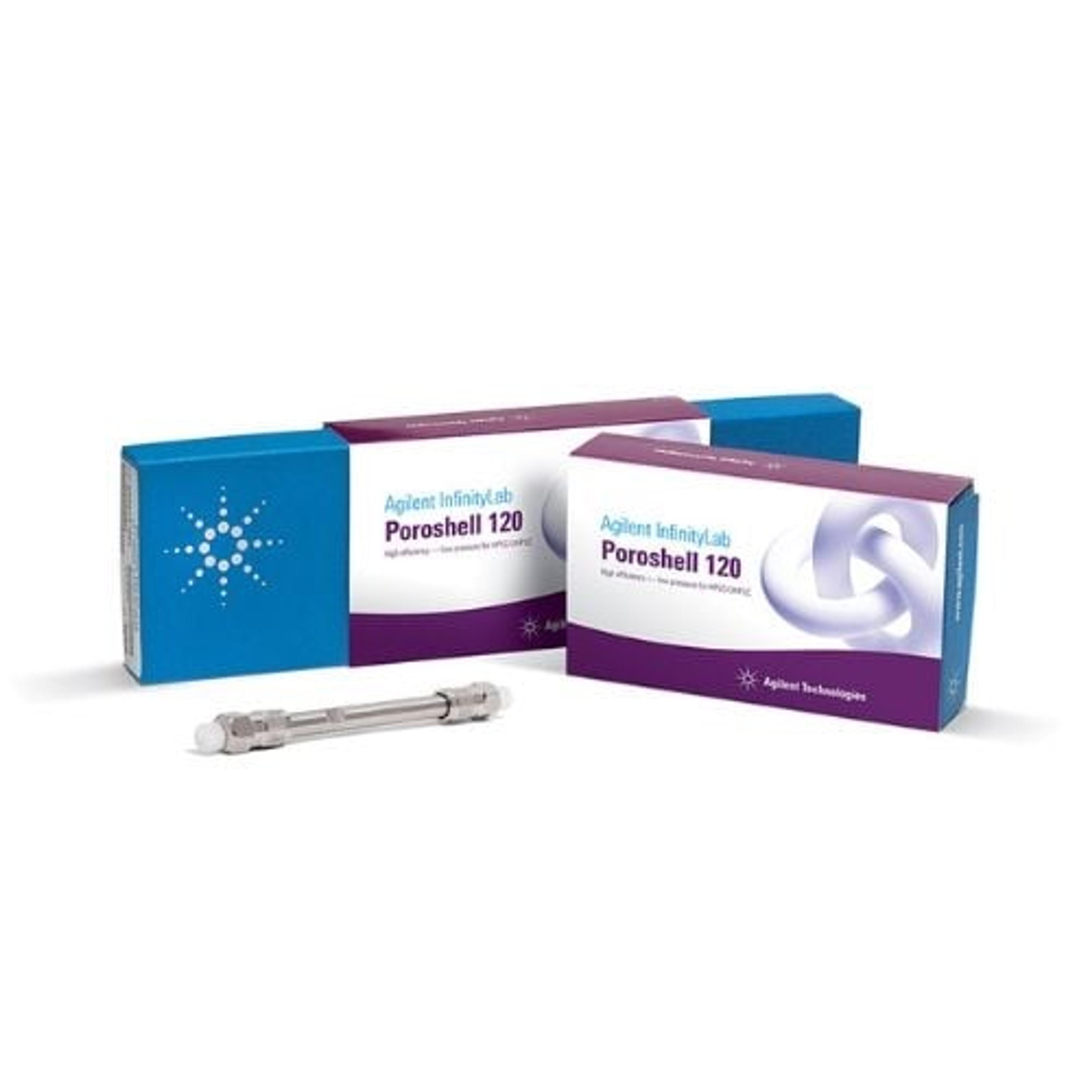
InfinityLab Poroshell 120 Aq-C18 Columns
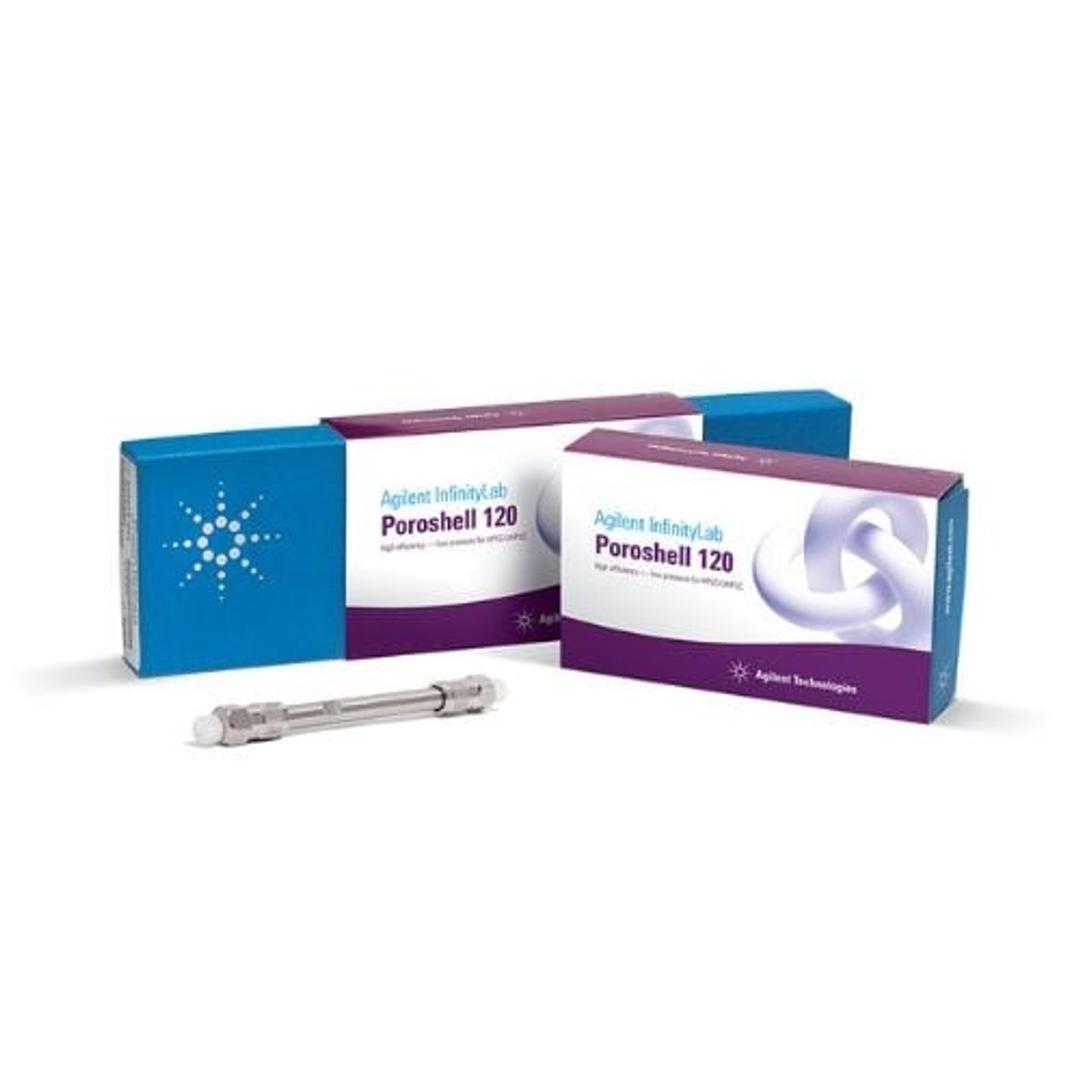
Designed to withstand 100% aqueous conditions and increased retention for polar molecules, InfinityLab Poroshell 120 Aq-C18 columns are the modern and reliable choice for HPLC and UHPLC separations. Now master your polar molecules, especially under water.

Place your order directly with the manufacturer.
Are you facing the challenge of analyzing large mixtures of compounds? With InfinityLab Poroshell 120 Aq-C18 columns, you can now develop separations that retain polar and nonpolar compounds together.
InfinityLab Poroshell 120 Aq-C18 columns provide:
- Enhanced retention of challenging polar compounds
- 100% aqueous mobile phase compatibility—without phase collapse or dewetting
- Batch-to-batch reproducibility
- Scalability across all analytical HPLC and UHPLC systems
Model numbers available: 821725-955, 695775-742, 693775-742, 691775-742, 699775-742, 823750-953, 695675-742, 693675-742, 699675-742, 820750-942, 695975-742, 693975-742, 699975-742.

A tale of two samples: Understanding the purification workflow from different perspectives (Part 1)
Reversed-phase liquid chromatography (RPLC) is often associated with quantitative or analytical-scale analysis, but it is also a useful preparative-scale tool for purification. For any purification project, there are three possible objectives: purity, yield, and throughput. These objectives are related and are commonly represented as a triangle. Two of these targets can be achieved at the expense of the third. Prioritizing the objectives of the purification project before developing the method can help clarify the path forward. Most projects center around either bulk purification (the purification of one sample over multiple injections) or high-throughput purification (the purification of small amounts of many different samples). Bulk purifications prioritize purity and yield at the expense of throughput, whereas high-throughput purifications prioritize purity and throughput at the expense of yield. This application note by Agilent Technologies is part of a two-part series that examines the workflow for each project type and how prioritization influences the preparative workflow. Part 1 focuses on the bulk purification workflow and Part 2 gives an overview of the high‑throughput purification workflow.
A tale of two samples: Understanding the purification workflow from different perspectives (Part 2)
Reversed-phase liquid chromatography (RPLC) is often associated with quantitative or analytical-scale analysis, but it is also a useful preparative scale tool for purification. For any purification project, there are three possible objectives: purity, yield, and throughput. These objectives are related and are commonly represented as a triangle. Two of these targets can be achieved at the expense of the third. Prioritizing the objectives of the purification project before developing the method can help clarify the path forward. Most projects center around either bulk purification (the purification of one sample over multiple injections) or high-throughput purification (the purification of small amounts of many different samples). Bulk purifications prioritize purity and yield at the expense of throughput, whereas high-throughput purifications prioritize purity and throughput at the expense of yield. This application note by Agilent Technologies is part of a two-part series that examines the workflow for each project type and how prioritization influences the preparative workflow. Part 1 focuses on the bulk purification workflow and part 2 gives an overview of the high-throughput purification workflow.
Separation of water-soluble vitamins on the agilent InfinityLab Poroshell 120 Aq-C18 Column
In this application note, Agilent Technologies describes how ten vitamin B compounds plus ascorbic acid and caffeine were analyzed with an Agilent InfinityLab Poroshell 120 Aq-C18 column using a phosphate buffer and acetonitrile gradient — resulting in good resolution and peak shape.
Analysis of polar compounds using an Agilent InfinityLab Poroshell 120 Aq-C18 column with improved and reliable performance
In this application note, a group of polar compounds were separated on a newly developed Agilent InfinityLab Poroshell 120 Aq-C18 column. The retention loss due to pore dewetting was investigated by comparing the new InfinityLab Poroshell 120 Aq-C18 column to the current C18 phase and other superficially porous columns from various manufacturers.