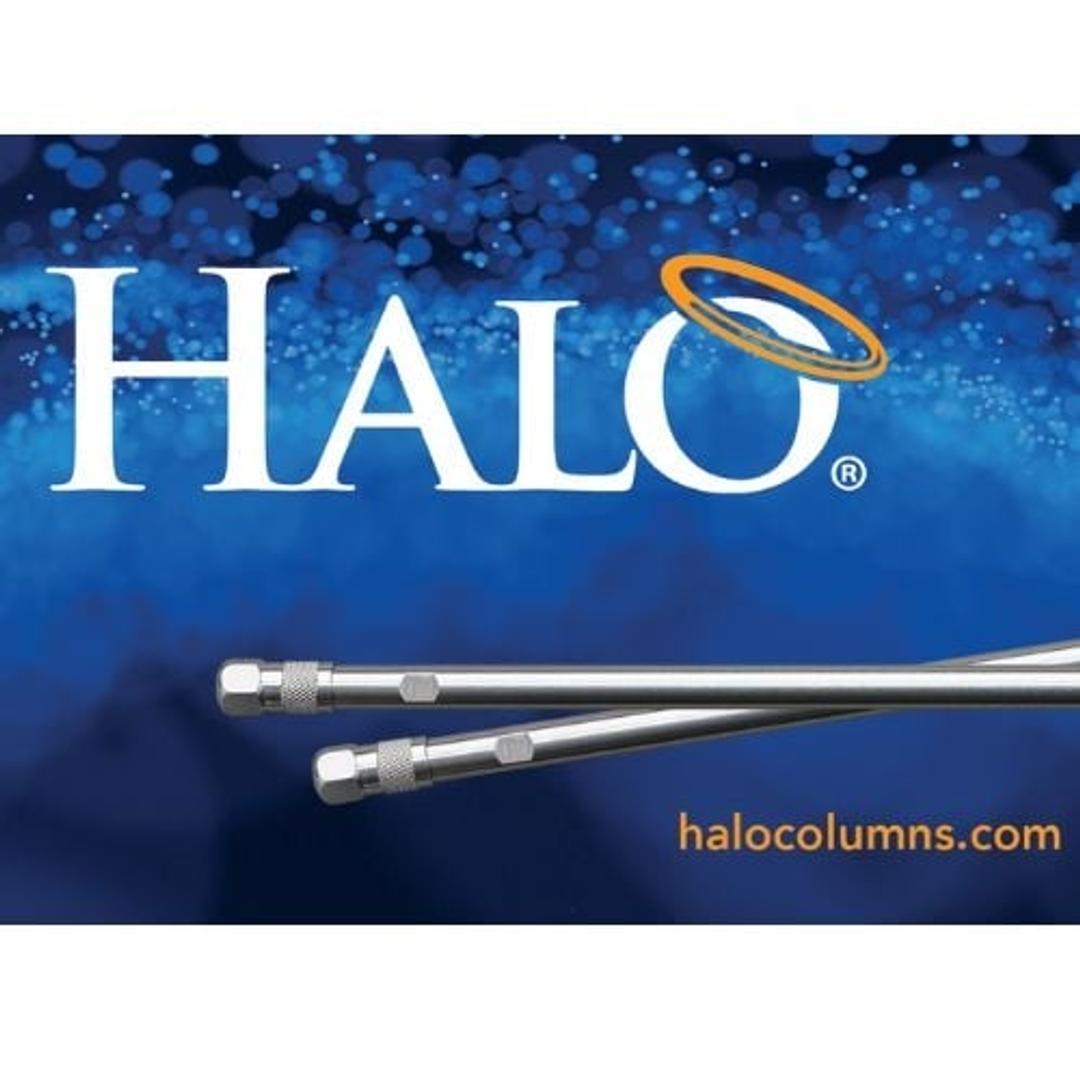
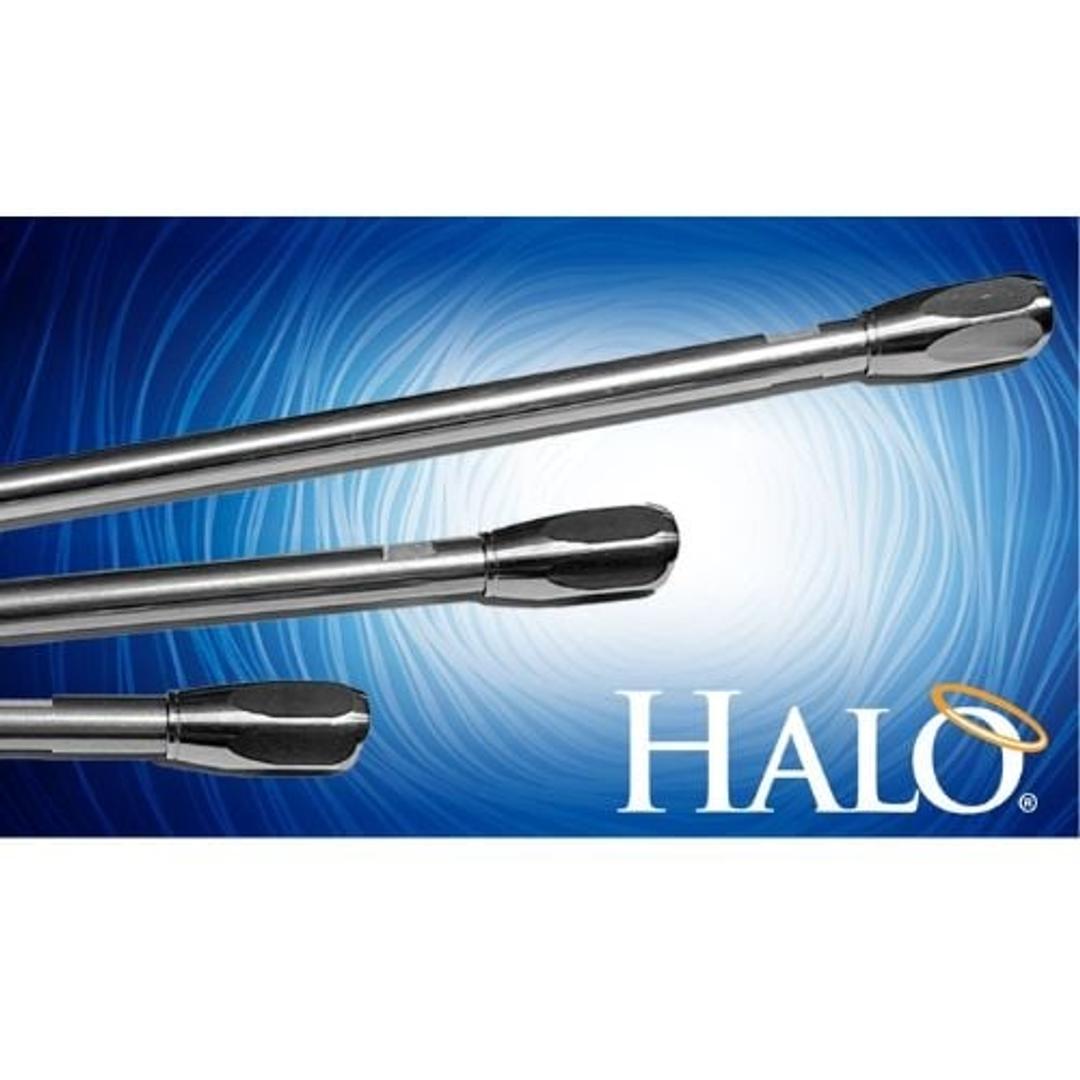
HALO® Columns
Higher Efficiencies. Faster Analysis. Reduced Back Pressures.

The supplier does not provide quotations for this product through SelectScience. You can search for similar products in our Product Directory.
Great quality at reasonable price
Development and validation of analytical methods
Great quality at a reasonable price. Tech support members are fully experienced and resolve you any doubt. The materials for bonded phases available are reversed-phase and HILIC.
Review Date: 3 Oct 2017 | Advanced Materials Technology
Good quality equipment and excellent value for money.
Review Date: 5 Aug 2011 | Advanced Materials Technology
Higher Efficiencies. Faster Analysis. Reduced Back Pressures.
HALO® LC columns take a different path towards the goal of improving separation efficiencies and more quickly, without the extreme back pressure consequence of sub 2 µm fully porous particles using their novel Fused-Core® technology.
HALO® columns are manufactured using Fused-Core® particle technology which delivers hyper-fast chromatographic separations while avoiding the reliability issues so often associated with fast HPLC.
As mobile phase flow rates are increased to speed-up a separation, the slow mass transfer of solute molecules inside the particles can limit resolving power. HALO® column particle technology with its solid core and porous shell addresses this limitation by providing an incredibly small path for diffusion of solutes into and out of the particles, thereby reducing the time solute molecules spend inside the particles and minimizing a major barrier to fast chromatographic separations.
With a wide range of innovative phase chemistries and pore size optimization, HALO® columns are designed for improving both small and large molecule separations. HALO® columns are available in multiple particle sizes to enhance performance in all LC instrumentation. They can turn a standard HPLC system into a high-speed workhorse as well as improve efficiencies from UHPLC and LCMS analysis.
This little HALO® Fused-Core® particle started one large revolution and its technology has been accepted as the modern standard in high performance LC and LCMS separations.

Optimization of rivaroxaban USP monograph using superficially porous particle technology
In this application note, Advanced Materials Technology presents experimental data on the optimization of rivaroxaban United States Pharmacopeia (USP) monograph using superficially porous particle technology. Rivaroxaban is a drug used to treat blood clots in the legs and the lungs. The associated USP method calls for a fully porous particle using a 3.0 mm ID column. The method as written requires a 45-minute run time for the separation of four impurities associated with Rivaroxaban. Following the approved USP <621> modernization guidelines, the method can be improved with the use of HALO® column technology, which is a superficially porous particle, and the use of a smaller column ID (2.1 mm) and length.
Developing hydrophilic interaction liquid chromatography (HILIC) separation methods with HALO HILIC and HALO Penta-HILIC columns
Method developers rely on reversed-phase (RP) conditions for most of their separations. However, what happens when there are polar analytes that are not well retained under reversed-phase conditions? One option is to use hydrophilic interaction liquid chromatography (HILIC). In this whitepaper, Advanced Materials Technology provides experimental data and helpful information on the development of HILIC separation methods using the HALO® HILIC and HALO® Penta-HILIC columns.
A novel screening approach for comparing LC-MS reversed-phase and HILIC methods for separations in biological matrices using amino acid examples
In this application note, Advanced Materials Technology presents experimental data on a novel screening approach for comparing LC-MS reversed-phase and HILIC methods for separations in biological matrices using amino acid examples. RPLC separations were performed on a HALO® 90 Å AQ-C18, 2.7 µm, 2.1 x 150 mm column. Download this free application note to find out the results and conclusions of these analyses.
The analysis of PFAS in bottled water
In this application note, Advanced materials technology presents experimental data on an analysis of per- and polyfluoroalkyl substances (PFAS) found in bottled water using the HALO® PFAS, 2.7 µm, 2.1 x 100 mm analytical column. PFAS are chemicals that have been known to have a deleterious environmental impact and are suspected carcinogens. In recent years however, there have been increasing instances of PFAS being detected and transitioning into the food supply. Two common sources of how contamination can be introduced is by food packaging, or through the cooking process.
Increasing sensitivity while reducing solvent consumption with HALO 1.5 mm UHPLC columns
In this application note, Advanced materials technology presents experimental data on its new HALO® 1.5 mm ID columns. These new analytical columns have been designed to deliver increased sensitivity, improved ionization efficiencies, reduced solvent consumption, and ease of use. As UHPLC column technology and instrumentation has progressed, the move to smaller ID columns has proven to be advantageous. Now novel HALO® 1.5 mm ID columns are available for those who would like the benefits of reduced column ID without the legwork needed when moving to capillary systems.
Analyses of large proteins, antibodies, and modified proteins using a new series of advanced large pore HPLC materials
In this white paper, Advanced Materials Technology presents an overview with protein analysis data of its new HALO® 1000 Å protein column series. The list of FDA-registered and commercialized therapeutic proteins continues to expand rapidly, including more than 400 biotherapeutics, such as enzymes, monoclonal antibodies (mAbs), antibody-drug conjugates (ADCs), and hybrid antigen binding structures. A key analytical approach for protein characterization remains reversed-phase HPLC (RPLC), due to the unique and informative capabilities of this method. Until very recently, researchers have used column technology for RPLC of intact mAbs, ADCs and their resulting fragments which has been fundamentally unchanged since the mid-1990s. Typically, such packing materials have consisted of 200 – 300 Å pore size, silica-based, fully porous particle (FPP) bonded phases. However, new, very wide, 1000 Å pore size superficially porous packings for RPLC of very large molecules have been developed to improve the resolution for, and the information gained from, higher resolution chromatographic separations of protein mixtures.
Rapid and high-resolution FUSED-CORE solutions for PFAS analysis
In this application note, Advanced Materials Technology introduces its new applicated PFAS delay and analytical columns, designed to mitigate the effects of PFAS contamination from instrumentation, and provide a more accurate analysis. Per- and polyfluoroalkyl substances (PFAS) are chemicals that have been used in a variety of applications including in stain and water-resistant fabrics and carpeting, cleaning products, paints, and fire-fighting foams. Their chemical structure, which includes both a hydrophobic fluorocarbon section and a hydrophilic carboxylate section, enables PFAS to have such a wide range of applications, but also contributes to their deleterious environmental effects. The hydrophilic nature of the carboxylate section, allows them to dissolve readily in water and remain largely intact in the environment, resulting in increasing levels of environmental contamination. Accumulation of certain PFAS has also been shown through blood tests to occur in humans and animals. While the science surrounding potential health effects of this bioaccumulation of certain PFAS is developing, evidence suggests it may cause serious health conditions.
Cannabinoid separations and the impact of LC column selectivity
In this application note, Advanced Materials Technology compares cannabis separation results of its new HALO® LPH-C18 phase with a competitor C18 column. With the legalization of both medical and recreational cannabis across the United States there has been a surge in cannabinoid testing. Cannabinoids are a group of compounds that can be found in the cannabis plant. Some of these cannabinoid compounds are medically significant and can be used for pain management or appetite stimulation. It is important to test for these compounds to determine whether the products are safe for medical or recreational use.
A novel approach to glycan method development for biotherapeutics using superficially porous particle technology
In this white paper, Advanced Materials Technology presents a novel method for separating and identifying glycans. Glycans are instrumental in cellular signaling, therefore a specific protein’s glycosylation can influence the effectiveness of the biotherapeutic. Given the importance of glycosylation to the overall performance of a glycoprotein, there is a need to completely characterize and then monitor these glycans for both research and manufacturing purposes.