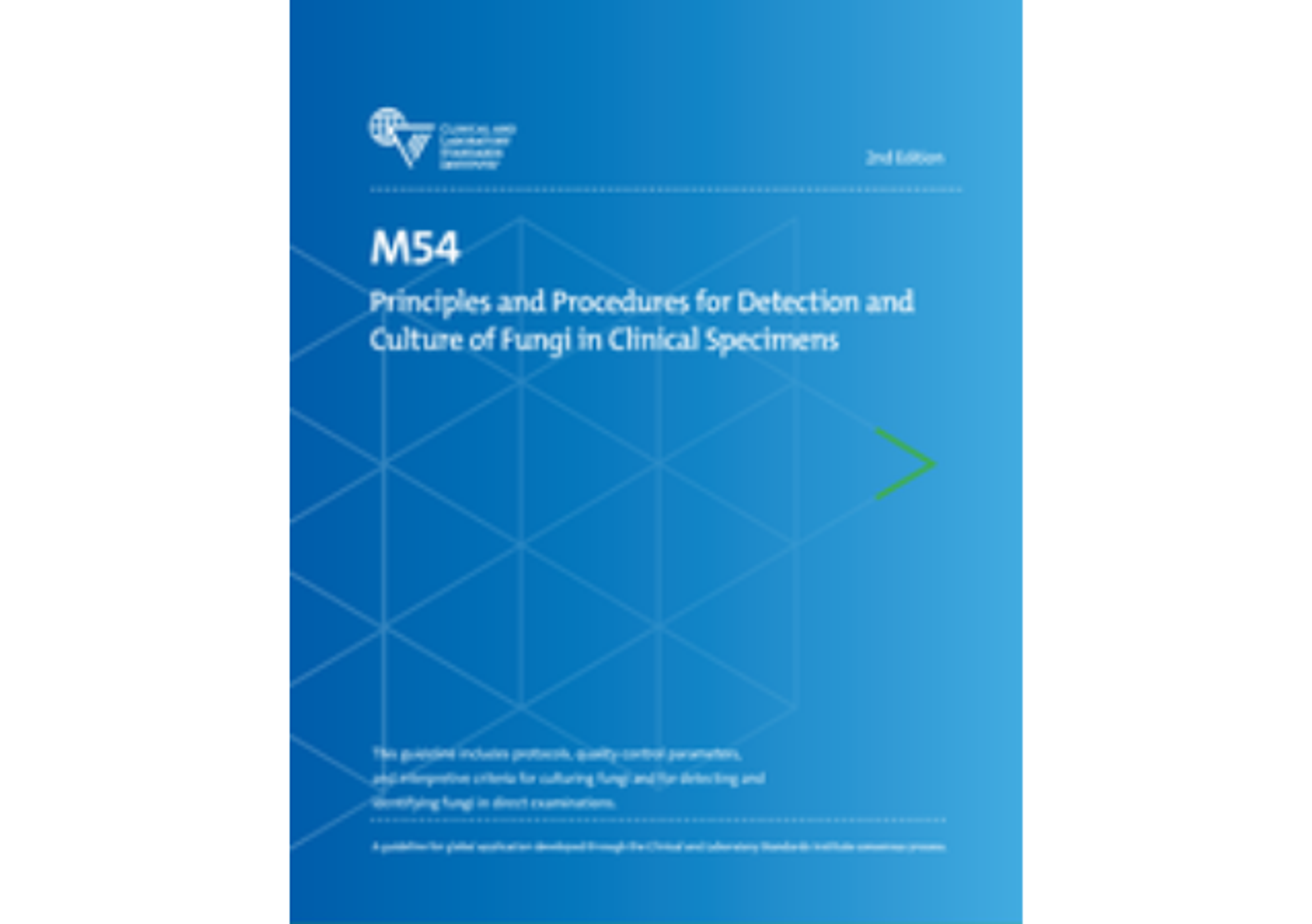
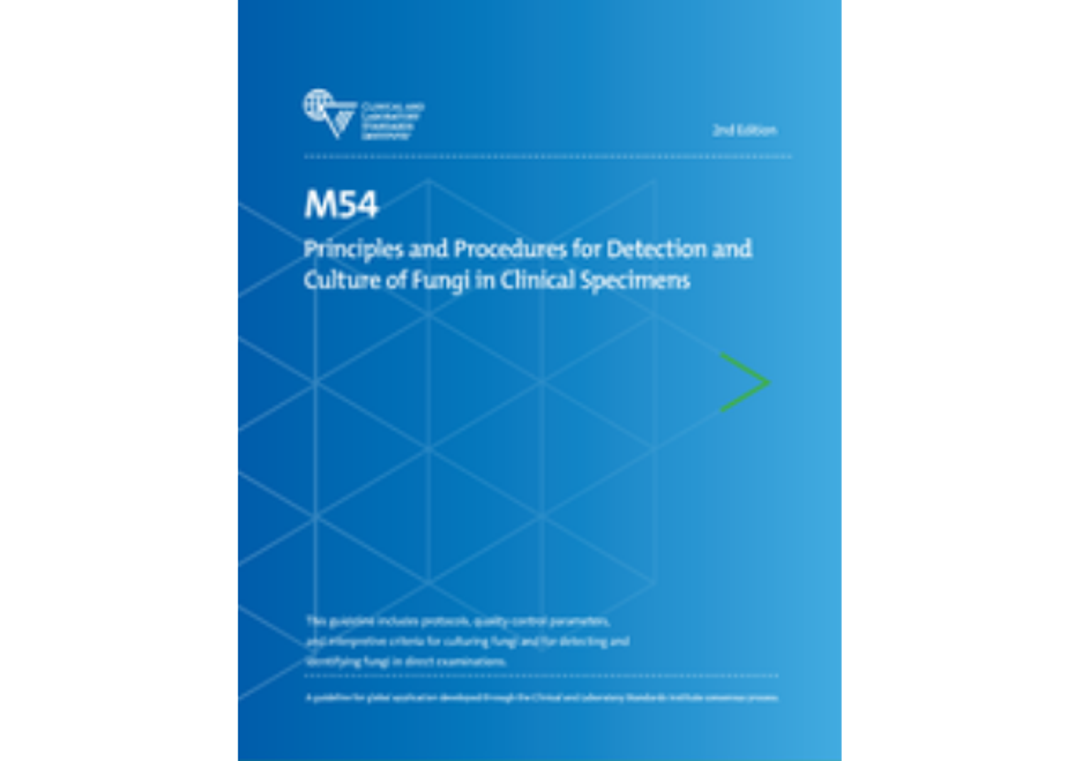
CLSI M54
Principles and Procedures for Detection and Culture of Fungi in Clinical Specimens

The supplier does not provide quotations for this product through SelectScience. You can search for similar products in our Product Directory.
This CLSI guideline provides best practices for detecting and culturing fungi, covering specimen collection, transport, processing, and examination to ensure accurate identification. It details direct microscopic examination techniques, fungal stains, serological and antigen-based testing, and molecular assays for rapid fungal detection.
M54 also includes safety considerations for mycology laboratories, media selection, incubation conditions, and culture interpretation guidelines. The document helps laboratories decide when to refer samples to more experienced facilities.
Clinical and Laboratory Standards Institute guideline M54 - Principles and Procedures for Detection and Culture of Fungi in Clinical Specimens describes recommended processes for plating and examining fungal cultures as well as principles and procedures for the direct detection of fungi in clinical specimens, including criteria for performing and interpreting direct microscopic examinations.
Safety considerations unique to mycology laboratories and a discussion of appropriate levels of laboratory service (e.g. when to refer samples to more experienced laboratories) are highlighted.
Specimen collection, transport, and processing recommendations, including rejection criteria, are provided to guide the collection of high-quality specimens for direct examinations and fungal cultures.
Fungal stains and interpretive criteria appropriate for detecting and characterizing fungal elements in direct microscopic examinations are emphasized as critical components for rapid detection of fungi.
Descriptions of serological and antigen-based testing and molecular assays are also provided. Media selection, incubation conditions, and other growth requirements for fungal cultures are provided with suggested culture examination schedules, interpretations for growth on positive cultures, and reporting criteria.