Accel-Amplicon™ 56G Oncology Panel v2 (48 reactions)
Multiplex amplicon panels for Illumina® platform.

Accel-Amplicon™ 56G Oncology Panel



The supplier does not provide quotations for this product through SelectScience. You can search for similar products in our Product Directory.
All-in-one amplicon solution.
Offers comprehensive and hotspot coverage of 56 clinically-relevant oncology-related genes, using a 263-amplicon design to generate multiplex libraries compatible with Illumina sequencing platforms. This product is a complete kit that includes all elements necessary for generating ready-to-sequence libraries, including primer pairs and indexed sequencing adapters.
Benefits include:
- Single-tube assay.
- Ready-to-sequence libraries in 2 hours.
- Inputs as low as 10 ng.
- Average amplicon size of 138 bp for compatibility with cfDNA and FFPE.
- Limit of detection as low as 1%.
- On-target specificity and coverage uniformity > 95%.
- Leverages the high fidelity performance of the Illumina platform.
- Complete library generation in a single kit.

Accel-Amplicon™ Panels
The publication describes the range of Accel-Amplicon™ Panels offered by Swift Biosciences. The panels are highly adaptable, and are especially applicable for in-depth interrogation of numerous oncology-related targets in a single run. It also highlights a publication featuring a single-tube, 2-hour workflow, using an Accel-Amplicon Panel.
Detecting Cancer Burden in Liquid Biopsies
Liquid biopsy is a non-invasive sample source that can be utilized to assess cancer burden by measuring the tumor-derived fraction of circulating, cell-free DNA (cfDNA) from plasma. The study detailed on this poster evaluates two methods to monitor cancer burden using cfDNA: whole genome bisulfite sequencing (WGBS) and targeted amplicon sequencing for 56 oncology-related genes.
A Guide to NGS Applications Using cfDNA Samples
This guide from Swift Biosciences provides an introduction to using cell-free DNA to construct NGS libraries for use in cancer research. The guide compares the range of kits available, how well they perform and their limitations.
Mutation Profiling of Uterine Lavage Fluid: Detection of Early Stage Endometrial Cancers
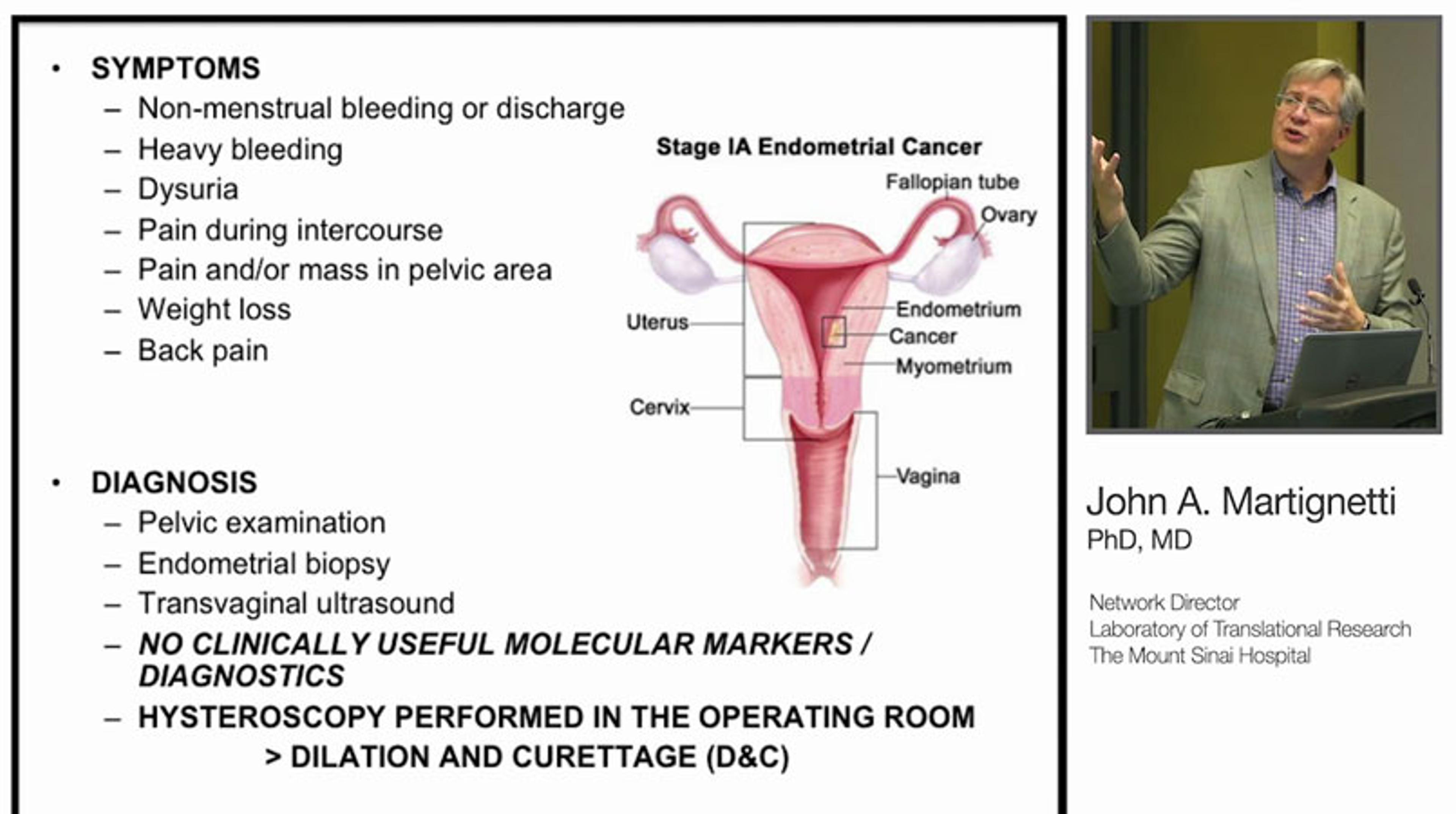
This presentation, given at AMP 2016 by John Martignetti, MD, PhD, from the Laboratory of Translational Research, The Mount Sinai Hospital, discusses the development of a tool for the early detection of endometrial cancers. John Martignetti describes his research into developing the established Molecular Signature Method (MSM) into a diagnostic tool. The presentation covers the theory behind the method, results from a prospective study and the future directions of the research.



Swift Biosciences and TATAA Biocenter Announce Strategic Partnership to Distribute NGS Products in Europe
TATAA Biocenter also to introduce Swift Biosciences’ NGS products in its popular NGS training courses

News From the Forefront of Cancer Diagnostics
SelectScience publishes breaking news from the cancer diagnostics industry

Silicon Biosystems Menarini, Swift Biosciences Announce Collaboration and CoMarketing Partnership to Unlock Genomic Information from FFPE Samples
Alliance Combines the Power of Precise Single-Cell Isolation with Next Generation Sequencing