Nanomaterials and Particle Size Analysis: Special Feature

Discover a range of cutting-edge applications and new technologies, plus, don't miss our exclusive video interview with a Nobel laureate

11 Jul 2019

Emily Adam
Publishing / Media

Editorial article

In this special feature, join us as we take a look at some of the latest techniques and emerging technologies advancing the field of nanomaterials and particle size analysis. There are useful resources to download, an expert webinar to watch at your leisure and much more as we explore a broad range of applications, from metal microstructure to food quality. Plus, be sure not to miss our exclusive interview with the 2016 Nobel Prize in Chemistry winner, Sir Fraser Stoddart.

FIB-SEM: Investigations into the Microstructure of CIGS Solar Cells


FIB-SEMs are a useful tool for the analysis of the microstructure in materials research. Download this application note to find out how the ZEISS Crossbeam can be used to analyze CIGS solar cells as a model system.
Download Guide >>

PARTICLE SIZE: Tops Tips for Particle Size Analysis Sampling


This white paper from Malvern considers a range of sampling methods for particle size analysis, such as the mass of sample required, as well as the reliability and practicality of the sampling methods.
Download Method >>

RAMAN MICROSCOPY: Discover a Non-Destructive Microscopic Solution


In this application compendium, discover the art of Raman microscopy and successful applications of the technique, along with the latest confocal and correlative Raman imaging systems from WITec GmbH.
Download eBook >>

MICROSCOPY: Efficient Microstructure Characterization of Metals


This webinar introduces a new comprehensive solution for microstructure analysis and presents standardized techniques for metallography investigation.
Watch Now >>

HOMOGENIZATION: Guide for the Optimization of Emulsion Stability


Particle size and distribution have a direct effect on the formulation stability of food products. This guide describes a method for particle size analysis following homogenization, ensuring the quality of the product.

Download Guide >>

NANO-CUBES: Nobel Prize Winning Nanomaterial to Skin Care Product


Sir Fraser Stoddart, along with Jean-Pierre Sauvage and Ben Feringa, won the 2016 Nobel Prize in Chemistry for the design and synthesis of artificial molecular machines. Learn more about his work and his hopes for the future in this video interview.

Watch Video >>

Other Useful Resources:

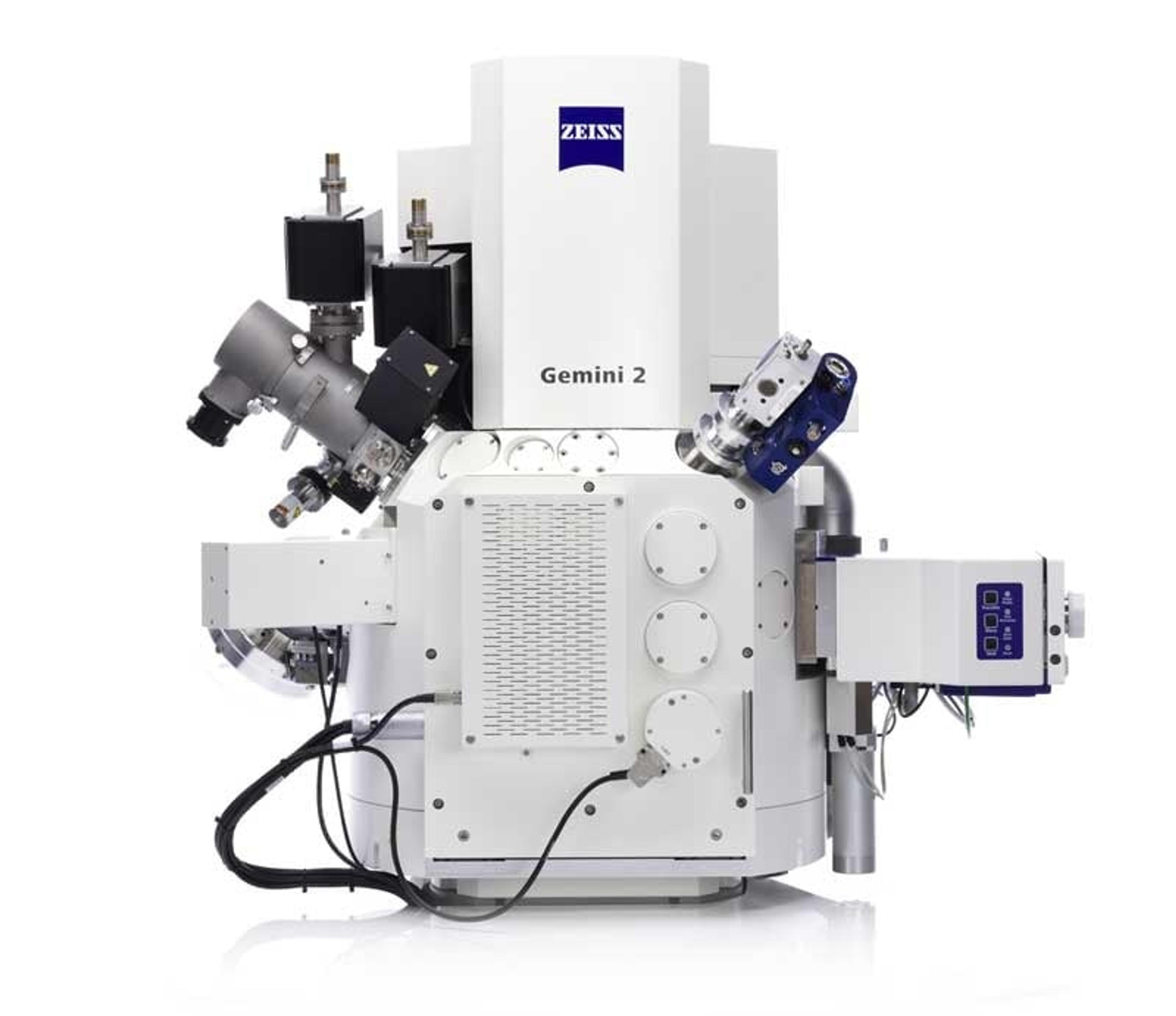
ZEISS Crossbeam Family

ZEISS Research Microscopy Solutions

Within ZEISS Crossbeam Family you have the choice between Crossbeam 340 or Crossbeam 550. Exploit the variable pressure capabilities of Crossbeam 340. Or use Crossbeam 550 for your most demanding characterizations and choose the chamber size, standard or large, that best suits your samples.

(4)

Links

Tags

Near Infrared SpectroscopyNear-infrared (NIR) spectroscopy measures the interaction of near-infrared light with a sample, including transmission, reflectance and absorbance, facilitating the identification of analytes. Measurements can be conducted using a Fourier-transform near infrared (FT-NIR) spectrometer, while there are also UV-Vis- NIR spectrophotometers that measure a broader spectrum of wavelengths. Find the best NIR spectroscopy products in our peer-reviewed product directory: compare products, check customer reviews and receive pricing direct from manufacturers.Raman SpectroscopyRaman spectroscopy is used to discern the vibrational and rotational states of molecules and hence the chemical composition of a sample by measuring the inelastic scattering of monochromatic light. Explore a range of Raman spectrometers, including handheld/portable Raman spectrometers for QC/QA labs and in situ spectrometers for processes. Conduct Raman imaging for microanalysis of mixed samples using a Raman microscope. Raman spectrographs are also available. Find the best Raman spectroscopy products in our peer-reviewed product directory: compare products, check customer reviews and receive pricing direct from manufacturers.pH and Conductivity MetersIon and pH meters, used for electrochemical techniques and measurements, measure the concentration of specific ions using electrodes (probes) and a meter. Features of ph and ion meters to consider include temperature compensation, auto-calibration, adjustable resolution, measurable range and accuracy. Meters can be handheld, portable, benchtop and modular.Particle CharacterizationParticle characterization instruments are used to determine particle size distribution, shape, surface area, zeta potential, density and porosity of particles and materials. Multiple tecchniques are available for determining particle size, shape and count including dynamic light scattering (DLS), laser diffraction, electrozone (Coulter technique), imaging particle analysis and single particle optical sensing. Determine the density of your material with a gas pycnometer or examine its surface area and porosity with gas adsorption analyzers and mercury porosimeters. Find the best particle characterization instruments in our peer-reviewed product directory: compare products, check customer reviews and receive pricing direct from manufacturers.Electron MicroscopyElectron microscopes (EM) are used to create high-resolution images of samples at the nanoscale by means of an accelerated beam of electrons as a source of illumination. Types of electron microscope include scanning electron microscopes (SEM), transmission electron microscopes (TEM), scanning transmission electron microscopes (STEM) and cryo-electron microscopes. Focused ion beam (FIB) microscopes are useful for modifying or milling a sample surface with nanometer precision, as well as imaging. Find the best electron microscopes in our peer-reviewed product directory: compare products, check customer reviews and receive pricing direct from manufacturers.Particle Size AnalysisParticle size analysis describes the size distributions from sub-nanometer to millimeter of particulate samples. Size is an important physical property and the technique is often utilized in a range of industries, such as chemical, environmental and agriculture.MicroscopyMicroscopy is a technique used to observe small objects in detail, from cells to materials, using light or electron microscopes. It enables researchers to examine structures with high resolution, aiding in fields such as biology, medicine, and materials science. With advanced microscopy techniques, scientists can gain insights into cellular processes, tissue structures, and material properties. Explore the best microscopy solutions in our peer-reviewed product directory, compare products, read customer reviews, and get pricing directly from manufacturers.NanomaterialsNanomaterials such as carbon nanotubes, fullerenes and nanoparticles are a group of materials that measure between 1-1000nm for a single unit. Analysis techniques include AFM, electron microscopy and super resolution microscopy.NanoparticlesNanoparticles are between 1-100nm in size. Nanoparticles can be used for a wide variety of applications including biomedical, catalysis and electronics.