
LGC offers regulated bioanalysis on the SCIEX TripleTOF 6600 high-resolution mass spectrometry platform
25 Nov 2020
Product news
LGC is pleased to announce the extension of its regulated bioanalytical LC-MS service through the implementation of a high-resolution mass spectrometer, the SCIEX TripleTOF® 6600 LC-MS/MS System.
With enhanced levels of selectivity and mass accuracy, this platform offers an alternative tool for the quantification of therapeutics and biomarkers from within complex biological matrices. Following a successful computerized system validation, LGC’s Drug Development Solutions team (DDS) is now able to offer high-resolution mass spectrometry as a regulated service at their GLP/GCP-accredited facility in Cambridge (Fordham), UK.
Rachel Green, Operations Director, Drug Development Solutions, LGC comments, “Bioanalytical utilization of high-resolution mass spectrometry has gained traction within the discovery space, offering benefits such as rapid generation of rich data sets and quan/qual workflows. Popularity, however, within drug development has always lagged behind. With recent technological advancements that have led to comparable sensitivity to triple quadrupole mass spectrometry; these platforms are now becoming a lot more attractive as a bioanalytical tool. We are very excited to offer this service to our customers within a regulatory environment in support of their drug development programs.”
“For more than 50 years, SCIEX has been a proven leader in bioanalysis quant,” says Mani Krishnan, vice president and general manager, CE & Biopharma, SCIEX. “The TripleTOF® 6600 Accurate Mass System is a powerful, flexible and reliable platform, which will expand LGC’s capabilities, and enhance their ability to help customers accelerate drugs to market.”
Rob Wheller, Associate Scientific Director, Drug Development Solutions, at LGC adds, “With the enhanced selectivity of high-resolution mass spectrometry, we are able to eliminate more interferences from our targeted analysis approaches, which we’ve found can lead to greater assay detection limits. Nowhere is this more pertinent than with protein digestion workflows, pushing the limits of sensitivity closer to those achievable with more complex immunoaffinity purifications. In addition, it opens the door to middle-down and top-down quantitation approaches, which are gaining popularity within the industry, through their ability to shed more light on the in vivo fate of dosed biotherapeutics and protein biomarkers. This platform is a fantastic addition to our toolkit and boosts our capability as a Protein LC-MS Centre of Excellence.”
Do you use LGC services in your lab? Write a review today for your chance to win a $400 Amazon Gift Card>>
Related products
Request Quote for All Products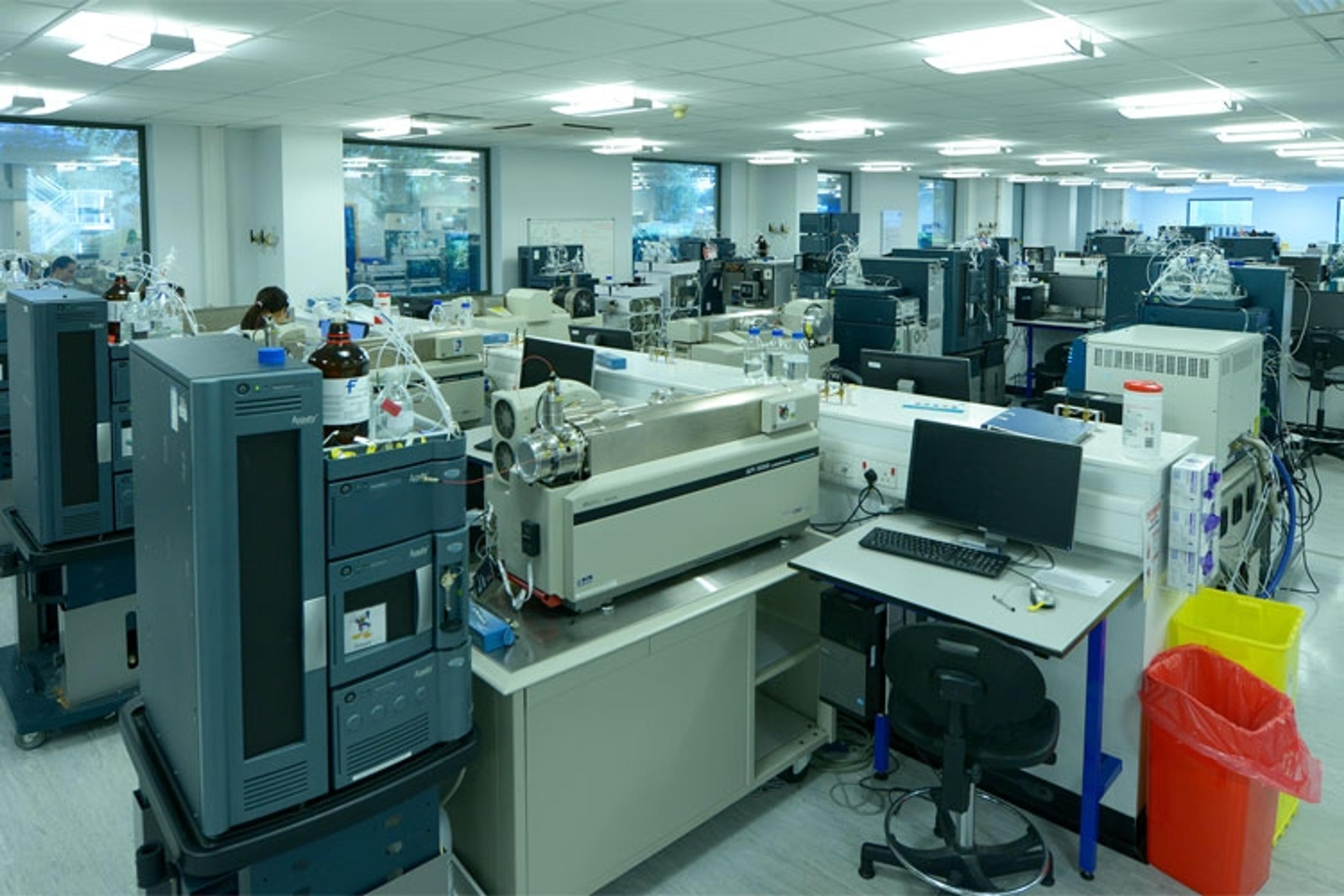
Small Molecule Bioanalysis Service
ResolianFocused strategic science team, and one of the largest purpose-built bioanalytical facilities in Europe.
Biomarker testing service
ResolianBiomarker strategy is critical to success. Our personalized biomarker solutions help drive your development to market. The expert biomarker teams support non-clinical and clinical biomarker method development, validation, and sample analysis.