
Collaboration in cannabis testing to innovate research

Find out how Emerald Scientific is bringing together analytical scientists to advance cannabis science

16 Sept 2019


Sarah Thomas
Associate Editor

Editorial article

Wes Burk, President of Emerald Scientific

As the regulatory framework for the cannabis testing industry evolves, there is a growing need to bring together analytical scientists working in this field to help implement quality standards, as well as provide a unified approach to the advancement of cannabis science.

One company dedicated to the cause is Emerald Scientific. Co-founded by Wes Burk and Ken Snoke in 2013, Emerald Scientific is a California-based distributor of quality scientific equipment, supplies and reference materials exclusively for the cannabis industry. The company also offers proficiency testing for cannabis laboratories - The Emerald Test™ - and is the organizer of the Emerald Conference – a technical scientific meeting which highlights discovery science and technologies advancing cannabis science, from cultivation to pre-clinical research.

In this interview, SelectScience speaks to Wes Burk, President of Emerald Scientific, to learn more about the impact of The Emerald Test™, the latest technologies advancing cannabis science, and for a sneak preview of what to expect from the Emerald Conference 2020.


Why is it so important to set testing benchmarks for cannabis testing?

WB: One of the biggest reasons is that we in this space tend to all be champions of the plant and its potential. On this path to legitimizing the plant and its use, we all have a responsibility to bring good science to the mix, and that includes creating a scenario for predictability and dependability when it comes to its use and results. So, the better the analytical segment in the industry does, the more reliable the products that are created based on that information, and the more positive experiences and exposure we can have in the press. We feel like supporting good science in the industry is a very strong way of advocating the evolution of legitimacy for the plant in general.

How has the Emerald Test impacted the cannabis testing industry?

WB: As the regulatory framework evolves in the cannabis industry, as well as the accreditation segment, proficiency testing is required. Back in 2014 when we developed the test, no one was offering proficiency testing for the cannabis industry. In delivering that service, we really expedited the labs' capacity to stay in regulatory compliance and to achieve accreditation that many of the labs sought in the space.

How does the varied state-to-state legislation affect the way the testing works?

WB: That is still a very challenging paradigm. The scientific community in most other industries generally follow a federal course of regulation, and that doesn't exist for cannabis. One example is that from state to state, there are requirements for different analytes within a testing class – pesticides, for example. California has a very different list of required analytes to test for pesticides versus Oregon, versus Washington. That creates a challenge because an organization like Emerald Scientific, who is trying to provide certified reference material or standards for these tests, is challenged with — rather than having one standard off-the-shelf blend that meets the federal regulatory guidelines — having to attempt to compile specific products for each of the state requirements across each of the required product testing categories.
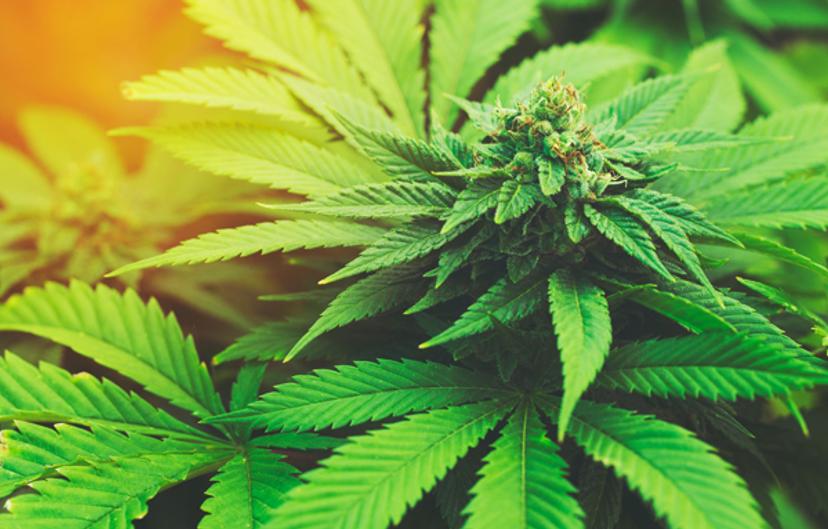
Collaboration between testing laboratories is key to advancing the field of cannabis science. Image © epicstockmedia 123rf.com

Tell us about the history of the Emerald Conference

WB: Our first conference was in 2014, in San Francisco. It became very clear that there were a lot of bright minds in cannabis science that were becoming rather frustrated due to isolation - they found themselves practicing all alone and without viable avenues for collaboration. The Emerald Conference was the first time that these scientists, a lot of them analytical scientists, had a forum where they could come together and collaborate.

We feel like there was a turning of the corner at that point — up until then, there was a pretty aggressive attitude about the science being conducted in the space and we feel like the Emerald Conference was the launching point for a shift towards a more collaborative spirit in the analytical sciences in cannabis. We embraced that philosophy and really have tried to continue to build the conference around that core value of collaboration.

We feel like the Emerald Conference champions cutting-edge technology and science and offers scientists in the space a venue where they can not only collaborate, but really keep their finger on the pulse of the latest in terms of tech, trends, research, and clinical work.
The 6th Annual Emerald Conference will take place in San Diego, CA, USA, February 26-29, 2020. Register for the conference & keep up to date here>>

What are the key themes for the Emerald Conference 2020?

WB: Evolution is a big theme for the conference. By that, we mean to highlight how things have changed in the industry over the past five to eight years — we went from a place where just performing simple potency tests was wrought with challenges, to now, where the industry is radically more sophisticated. We also see lots of scientists coming together and working on projects, and that's really accelerating the evolution of science in the space.

What are some of the latest innovations in the cannabis testing industry that you expect to see highlighted at the conference?

WB: One technology that we've been watching for several years that we think is finally getting close to market-ready is point-of-use analytics – equipment for testing, for example, in a hemp field. The science has been a little bit slow in getting there, but we think that's one area that we're going to see some really exciting products brought to market in the next six to 12 months.

In general, we’re also seeing a nice spike in clinical and preclinical work. So, we think that the science is going to start to become more reliable. There's also a move away from strain name nomenclature, and there are lots of vehicles that are becoming viable to do a better job in predictability of outcome - and that's an extraordinarily exciting place to be, and frankly, long overdue.

Finally, what are you most excited about in the cannabis testing industry right now?

WB: I think that for cannabis in general, the rapid adoption of hemp, and therefore the exposure to the common consumer to CBD, is really a momentum changer. I think ultimately, that is probably about the most exciting thing that's going on in the industry right now, and I think it will really expedite the evolution towards federal adoption of both hemp and, more broadly, cannabis.


For more information visit the Emerald Conference 2020 website or the Emerald Scientific website. Plus, if you’re in Canada, you can now visit Emerald Scientific’s new website dedicated to serving the scientific community in Canada.

Visti the SelectScience Cannabis Testing special feature for more information on the technologies advancing this field.

Links

Tags

Gas ChromatographyGas chromatography (GC) is an analytical technique used to separate and quantitate mixtures of small and volatile compounds. Gas chromatographs or GC systems include components such as GC columns, detectors, pumps and autosamplers. Choose from packed or capillary GC columns, flame ionization (FID), photoionization (PID) electron capture detectors and selective or non-selective detectors. Find the best gas chromatographs in our peer-reviewed product directory: compare products, check customer reviews and receive pricing direct from manufacturers.UHPLC and HPLCHigh performance liquid chromatography (HPLC) and ultra high performance liquid chromatography (UHPLC), also known as UPLC, are analytical techniques used to separate, identify and quantitate components of complex mixtures including biological samples such as proteins and lipids as well as chemical mixtures of pesticides, drugs and oils. Both techniques are liquid chromatographic methods but differ by operating pressures (HPLC < 6000 psi < UHPLC ). Components of HPLC and UHPLC systems include columns, detectors, pumps, autosamplers and column heaters. Explore a range of UHPLC and HPLC columns for your specific sample needs including reverse phase, normal phase, ion exchange, HILIC, ion exclusion and size exclusion columns. For more specialized HPLC, explore FPLC, countercurrent LC and simulated moving bed systems. Find the best UHPLC and HPLC equipment in our peer reviewed product directory: compare products, check customer reviews and receive pricing direct from manufacturers.Sample PreparationSample preparation can improve the quality and speed of separation techniques. Products to assist sample preparation include filtration equipment, evaporators, membranes and sieves.Infrared / IR SpectroscopyInfrared (IR) spectroscopy measures the interaction of infrared light with a sample, including transmission, reflectance & absorbance, facilitating the identification of analytes. Equipment used for quantitative analysis includes Fourier-transform infrared (FTIR) spectrometers, infrared cameras, FTIR gas analyzers, as well as attenuated total reflectance (ATR) accessories and pellet or film presses. Find the best IR spectroscopy products in our peer-reviewed product directory: compare products, check customer reviews and receive pricing direct from manufacturers.LC-MSLC-MS (liquid chromatography-mass spectrometry) systems and equipment are used for separation and quantitative analysis of complex mixtures, combining liquid chromatography and mass spectrometry. Quantify proteins, contaminants, pesticides or screen for drug metabolites with a high level of sensitivity. LC-MS systems and equipment include reverse phase, normal phase and specialized columns integrated with various MS detectors such as time-of-flight (TOF), quadrupole, orbitrap or ion trap mass analyzers. LC-MS/MS instruments equipped with a qTOF or triple quadrupole analyzer give greater sensitivity and resolving power to your analysis. Find the best LC-MS equipment in our peer-reviewed product directory: compare products, check customer reviews and receive pricing direct from manufacturers.Mass SpectrometryMass spectrometry (MS) is a powerful analytical technique used to identify and quantify molecules based on the mass-to-charge ratio of gas-phase ions. It provides detailed information about the structure, composition, and properties of compounds and is widely used across fields such as environmental monitoring, materials science, drug discovery and development, food and beverage testing, and wider chemical research. Key MS techniques include tandem mass spectrometry (MS/MS), liquid chromatography–mass spectrometry (LS-MS) and inductively coupled plasma (ICP-MS). Choosing from these wide range of techniques and technologies can be a daunting task, so keep up to date with scientific applications, performance expectations, and customer reviews here all in one place. Visit our product directory to receive quotes direct from the manufacturer. Near Infrared SpectroscopyNear-infrared (NIR) spectroscopy measures the interaction of near-infrared light with a sample, including transmission, reflectance and absorbance, facilitating the identification of analytes. Measurements can be conducted using a Fourier-transform near infrared (FT-NIR) spectrometer, while there are also UV-Vis- NIR spectrophotometers that measure a broader spectrum of wavelengths. Find the best NIR spectroscopy products in our peer-reviewed product directory: compare products, check customer reviews and receive pricing direct from manufacturers.UV-Visible SpectroscopyUltraviolet-visible (UV-Vis) spectrophotometers are used to measure the interaction of UV and visible light with a sample, including transmission, reflectance & absorbance. The two major instrument classes are single-beam or double-beam spectrophotometers. More specialized equipment includes colorimeters, spectroradiometers and refractometers. Portable and microvolume spectrophotometers are also available. For the modular spectroscopy lab, explore a range of light sources for combination with a spectrograph/spectrometer and optics. Find the best UV-Vis spectroscopy products in our peer-reviewed product directory: compare products, check customer reviews and receive pricing direct from manufacturers.Preparative ChromatographyPreparative chromatography equipment is used for purification purposes, separating and collecting compounds eluted from a mixture which can then be subsequently used for further purposes. This can be done in large quantities or small. Preparative chromatography systems are usually low to medium pressure liquid chromatographs that are semi-automated. Explore a range of preparative columns and fraction collectors. Find the best preparative chromatography equipment in our peer-reviewed product directory: compare products, check customer reviews and receive pricing direct from manufacturers.Environmental Monitoring and TestingEnvironmental monitoring and testing uses handheld portable analyzers, kits, spectrometers or chromatography systems for air, water, soil, food and other sample testing. Useful features of analyzers such as BOD and COD include portability, easy calibration, automation and sensitivity.  Environmental test kits for pH, water, moisture, etc, should be accurate, sensitive, reliable, fast and easy to use.Solid-Phase ExtractionSolid-phase extraction (SPE) is used for clean-up, extraction and concentration of semi-volatile or non-volatile analytes from complex mixtures including blood, urine and food samples. Multiple formats are available for conducting SPE, including prepacked SPE cartridges, disks and microplates, as well as SPE sorbent powders for manual packing. SPE systems can be used to automate the process and extract multiple samples at once. Solid-phase microextraction (SPME) and supported liquid extraction (SLE) products are also available in the same formats. Find the best SPE, SLE and SPME equipment in our peer-reviewed product directory: compare products, check customer reviews and receive pricing direct from manufacturers.Toxicology / Drugs of Abuse TestingToxicology and Drugs of Abuse Testing is the investigation into toxic and illegal substances found at the scene of a crime or from a suspect and / or victim associated with a scene of a crime. Analyzers, immunoassays and drugs of abuse test kits and presumptive test kits are an essential aspect of toxicology investigation.GC-MS GC-MS (gas chromatography-mass spectrometry) instruments and equipment are used to separate, quantify and identify mixtures of small and volatile compounds, such as polycyclic aromatics, fatty acids and alcohols. Often used in drug detection, forensic investigation and environmental analysis for pesticides and contaminants, GC-MS is a powerful addition to your lab’s analytical capabilities. GC-MS/MS instruments equipped with a qTOF or triple quadrupole analyzers can give greater sensitivity and resolution to your analysis. Find the best GC-MS instruments and equipment in our peer-reviewed product directory: compare products, check customer reviews and receive pricing direct from manufacturers.Cannabis