
Abbott receives European and Canadian approval for Amplatzer
The first-of-its-kind steerable delivery system is designed to seal the left atrial appendage in people who are at increased risk of stroke due to atrial fibrillation
17 Jun 2021
Abbott has announced it has received CE Mark and Health Canada approval for its Amplatzer™ Steerable Delivery Sheath, which is used with the company's market-leading Amplatzer Amulet™ Left Atrial Appendage (LAA) Occluder. Now available in Europe and Canada, the new device is the first steerable delivery sheath that has been developed specifically for minimally invasive LAA occlusion (or closure) procedures to treat patients diagnosed with atrial fibrillation who are at risk of ischemic stroke.
Often referred to as AF or AFib, atrial fibrillation is the most common sustained cardiac arrhythmia. It occurs when the upper chambers of the heart (atria) beat out of coordination with the lower chambers (ventricles) and contract rapidly and irregularly. The LAA is a small pocket (or recess) connected to the upper left chamber of the heart that, in people with AF, can allow blood to pool and increase the likelihood of a clot forming and traveling to the brain to cause a stroke. For patients with AF who are unable to take blood thinning medication long term, physicians may perform closure procedures where the device is threaded through a vein in the leg and then implanted in the heart where it seals off the LAA, preventing blood clots from forming in the LAA and reducing the risk of stroke.1,2
"Abbott's Amplatzer Amulet has long been the LAA occlusion device of choice in Europe and Canada to reduce the risk of stroke and eliminate the need for blood thinning medication in patients with atrial fibrillation," said Réda Ibrahim, M.D., Montréal Heart Institute, who completed one of the first global procedures with the new system. Jacqueline Saw, M.D., Vancouver General Hospital, who completed additional first procedures, added, "Physicians performing occlusion procedures on the LAA can now easily and precisely place the device in a broad range of anatomies with an enhanced delivery system that shortens procedure time and enhances efficiency."
To improve physician ease-of-use, the Amplatzer Steerable Delivery Sheath features bi-directional steering and an "auto-lock" setting for more accurate alignment with the LAA. The sheath also includes a hemostasis valve designed to stabilize blood flow and minimize blood loss during the procedure. The new design additionally reduces the need for catheter manipulation or exchanges, which can slow down procedure time or cause further blood loss.
"This innovation advances the performance of our Amplatzer Amulet device and offers patients a much-needed treatment option to help manage stroke risk from atrial fibrillation," said Michael Dale, senior vice president of Abbott's structural heart business. "At Abbott, we are continually looking for new and better ways to address structural heart diseases, and this approval is another step forward in helping people achieve better health."
The Amplatzer Steerable Delivery Sheath and Amplatzer Amulet LAA Occluder are not approved for use in the U.S.
Want the latest science news straight to your inbox? Become a SelectScience member for free today>>
References
1. Landmesser U, et al. EuroIntervention 2017.
2. Lewalter T. Europace 2013.
Related products
Request Quote for All Products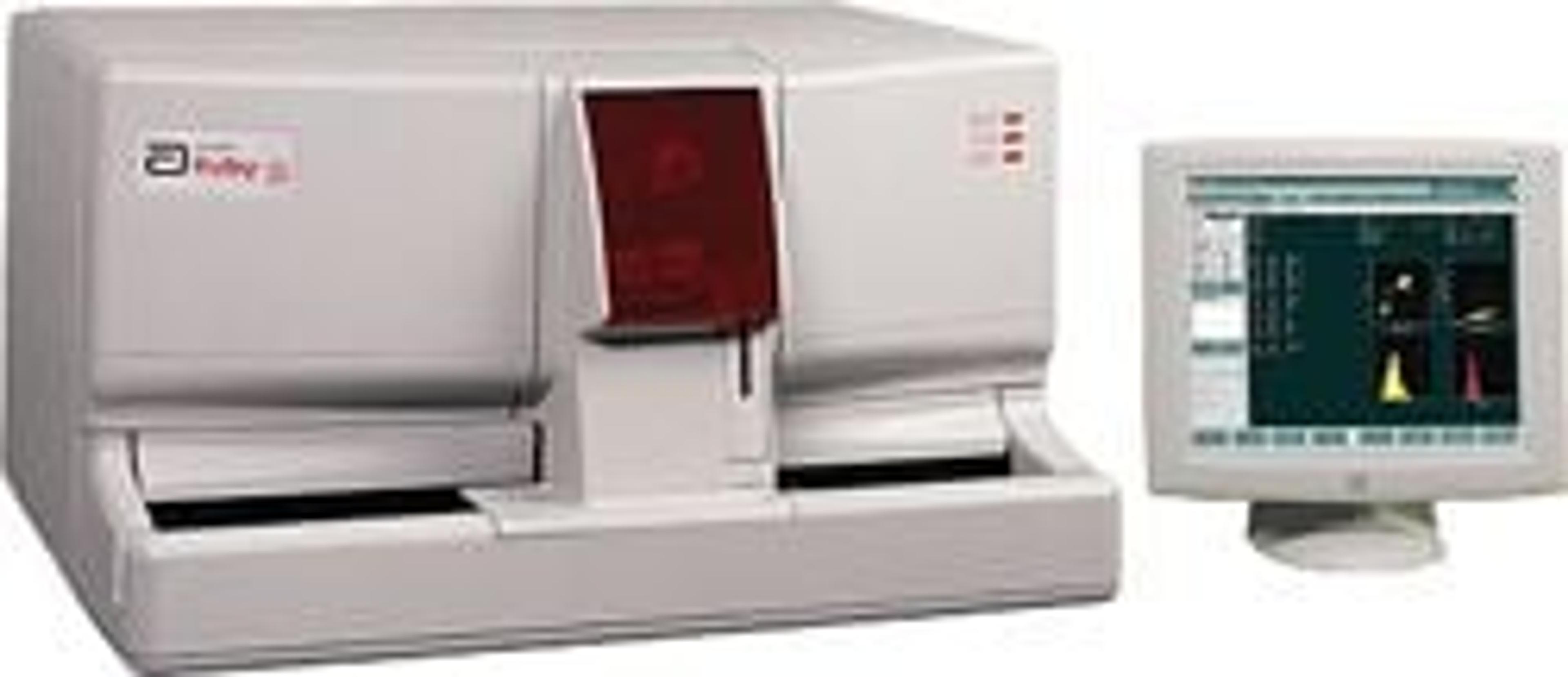
CELL-DYN Ruby Hematology Analyzer
AbbottThe CELL-DYN Ruby System* is a multi-parameter automated hematology analyzer designed for in vitro diagnostic use in medium volume clinical laboratories. This instrument uses MAPSS technology to perform cell by cell analysis from a single dilution to enumerate and differentiate White Blood Cells and provide the performance needed for patient samples. Additionally, the instrument uses optical laser light scatter analysis, without the need to reflex to another test mode, to provide both the Red Blood Cell and Platelet counts. First Pass Efficiency** More reportable WBC and WBC differential results on the first run. •MAPSS (Multi-Angle Polarized Scatter Separation) technology to provide accurate optical readings for WBCs with 5-part WBC differential. •Cell by cell analysis using hydrodynamic focusing. •Accurate WBC enumeration and identification using 4 angles of light scatter on up to 10,000 events per cycle. •Multiple scatter plot analysis for identification of abnormal cells and interfering substances. First pass optical platelets. •Dual angle optical light scatter accurately enumerates and sizes platelets to reduce manual counts and blood smear reviews. •Available full time with no need to repeat the sample in another test mode. RBC analysis. •Red Blood Cell counts including indices using 3 angles of light scatter, cell sphering and hydrodynamic focusing for accuracy. Only three reagents for complete CBC with 5-part WBC differential analysis. •WBC lyse •HGB lyse •Diluent/sheath * Please see the CELL-DYN Ruby Operator's Manual for product labeling, including warnings, limitations and precautions. ** Many factors affect efficiency. Your results may vary. Intended Use The CELL-DYN Ruby System is a multi-parameter, automated hematology analyzer intended for in vitro diagnostic use in the clinical laboratories. Easy to use software