How-to-buy eBookLife Sciences

How to Buy Next Generation Sequencing Technology

8 May 2026

Charlie Carter
Life Sciences Editor

Due to remarkable advances in genetic sequencing technology, researchers now have an abundance of tools at their disposal. From first-generation Sanger sequencing to next-generation or massively parallel sequencing, your choice of technique and technology must first and foremost complement your chosen application and help answer your specific research questions.
How to Buy Next Generation Sequencing Technology

How-to-buy ebook

Choose the best NGS equipment for your lab
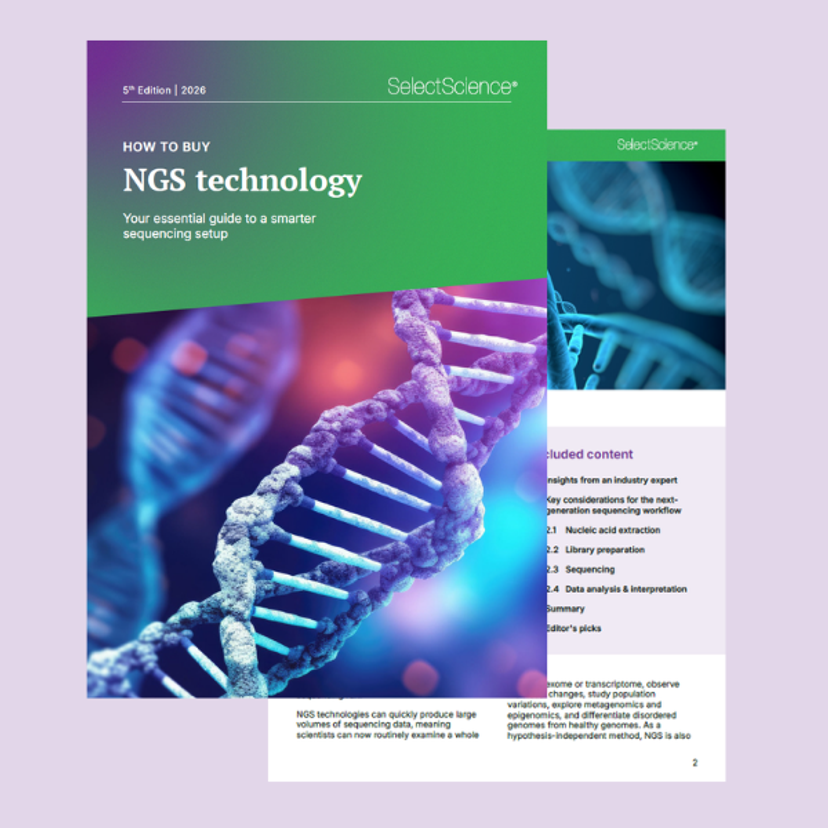
SelectScience NGS eBook

As sequencing technology continues to evolve at an unprecedented speed, its potential to inform disease research, diagnostics, therapeutics, and patient care is only increasing. If you are looking to invest in NGS technology to upgrade your research, this buying guide will provide you with the essential information you need to assist your decisions.

Learn about the key platform technologies, considerations for sample preparation, NGS software, key application areas, the future for NGS, and insights from the NGS experts. Download to explore key NGS considerations:

  • Nucleic acid extraction
  • Library preparation and quality control
  • DNA sequencing and RNA sequencing
  • NGS data analysis and interpretation
  • NGS automation

Resource details:

  • Document type: SelectScience guide
  • Page count: 19
  • Read time: 29 mins
  • Edition: 5th

Links

Tags

Next Generation SequencingNext-generation sequencing (NGS), also known as whole-genome sequencing, high-throughput sequencing and massive parallel sequencing, produces and analyses thousands to millions of nucleotide sequences at once. Sequencing systems operate via varying technologies depending on the manufacturer, including sequencing by synthesis, ligation, pyrosequencing, ion semiconductor and single-molecule real-time sequencing. For NGS, library preparation is paramount to successful sequencing. In this section, explore a range of library preparation kits, from targeted, amplicon-based or hybridization-based kits including epigenomic, transcriptomic and genomic workflows to fragmentation kits. Find the best next-generation sequencing products in our peer-reviewed product directory: compare products, check customer reviews and receive pricing direct from manufacturers.Sample PreparationSample preparation can improve the quality and speed of separation techniques. Products to assist sample preparation include filtration equipment, evaporators, membranes and sieves.DNA SequencingDNA sequencing, such as sanger sequencing, is a biological technique that determines the precise order of nucleotide bases in a fragment or template of DNA. DNA sequencers and genetic analyzers are based on capillary electrophoresis, where labeled DNA fragments are electrophoretically separated by size as they migrate through a polymer. Find the best DNA sequencing products, including DNA sequencing kits, genomic libraries and genetic identity kits in our peer-reviewed product directory: compare products, check customer reviews and receive pricing direct from manufacturers.NGS SoftwareNGSNGS AutomationNGS automation streamlines next-generation sequencing workflows, increasing throughput, accuracy, and reproducibility. Automated solutions enhance productivity in genomic research, clinical diagnostics, and personalized medicine. Browse peer-reviewed tools to compare products, read reviews, and get pricing.Liquid HandlingLiquid handling involves the precise transfer, mixing, and dispensing of liquids in laboratory settings. It is essential for accurate and consistent results in biological, chemical, and pharmaceutical research. Automated liquid handling systems improve efficiency and reduce human error in sample preparation and analysis. Explore liquid handling tools in our peer-reviewed product directory; compare products, read customer reviews, and get pricing directly from manufacturers.Library PreparationLibrary preparation is a critical step in sequencing workflows, where DNA or RNA samples are converted into libraries for high-throughput, next generation sequencing. This step ensures accurate results and minimizes biases. Explore library preparation kits in our peer-reviewed product directory; compare products, check reviews, and get pricing directly from manufacturers.Cancer ResearchAlthough cancer is often referred to as a single condition, it actually consists of more than 100 different diseases. Microscopy, mass spectrometry, high throughput sequencing and flow cytometry are some of the most common techniques employed in cancer research labs.Molecular DiagnosticsMolecular diagnostics use an individual’s genetic code and gene expression to diagnose and monitor diseases. The technique is used increasingly in the field of infectious diseases and oncology, as well as areas such as coagulation, HLA typing and pharmacogenomics. Molecular diagnostics plays a pivotal role in personalized medicine.