
The cloud chromatography data system driving global operational efficiency at Amway
Discover how international consumer products company Amway is transforming its chromatography data management using new cloud technology
27 Sept 2020
Editorial article

Fast-moving consumer goods are big business. Testament to this is the number of large multinational companies plying their trade across the globe in everything from beauty and personal care products to nutrition and homecare. These products contribute to our health and quality of life, and require rigorous testing to meet quality assurance (QA) standards. Ensuring that they contain what they say they contain and that they do what they are supposed to do on reaching the customer, requires the best analytical technology and data management software. Headquartered in Ada, Michigan in the U.S., Amway Corporation manufactures and distributes nutrition, beauty and homecare products in over 100 countries across six continents. Testing products and achieving QA compliance across multiple sites involves coordinating chromatography work and harnessing the latest technology for remote chromatography data management. Caryn Weiss is a senior research scientist in the Innovation and Sciences Division at Amway, who bridges the gap between scientists and IT. With over nine years’ experience in the chromatography sciences group, she has helped Amway implement and use cloud technology to improve real-time data management.
The global product testing challenge
Amway utilizes a variety of chromatographic methods in the testing of its products, including reverse phase chromatography, normal phase LC, LC-MS and also GC. All of which generates a huge amount of data from across territories and different time zones. Amway’s adoption of one data management technology, in particular, has been transformative – Waters Empower™ Cloud Chromatography Data System, which is rapidly becoming a staple among scientists in multiple disciplines. “Before we were using the cloud, we had local Empower™ database servers held at different locations,” Weiss says. “We could not be sure we were doing everything the same across all of the different laboratories.”
With testing laboratories located across the globe, data sharing was a challenge, as Weiss attests: “If we wanted to talk with any of these labs, we had to have them back up their data and send us the files, usually through a file share because they were often too large for us to be able to send back and forth by email.”
But all that changed as Amway began to integrate Waters Empower™ Cloud Software in its global workflows.
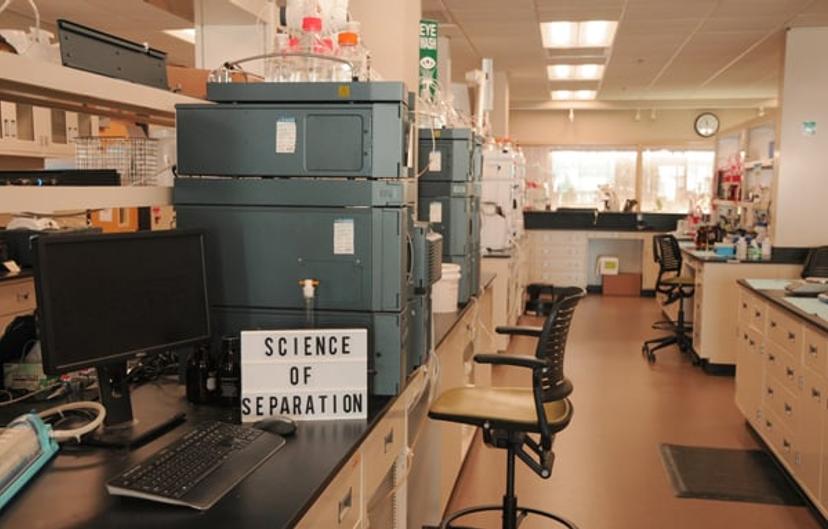
Transformative technology for scientists worldwide
Weiss describes how the company set about introducing the cloud technology: “We wanted to consolidate all of our local servers into one server. We first implemented the cloud in Ada, with most of our challenges involving alignment of the application’s functionality with our internal IT security standards, and then we started rolling it out from there,” she says.
Amway then moved on to its Buena Park facility, establishing a single U.S.-based server that its Ada and Buena Park facilities both use. Weiss adds that, “we utilize workspaces along with that so we don’t have any lag issues in terms of performance based on the geographic distance.”
Once Amway was comfortable with the setup, implementation snowballed across the globe. “Then we deployed a second server. Having validated the U.S.-based server, we took a snapshot of that validated system and implemented it in Singapore. Then we physically went to India and China to show them the system,” Weiss says.
And so now it does not matter where Amway’s scientists are. They can all access the servers for troubleshooting and transferring methods between laboratories. “We can have them log into workspaces remotely, work with us and see the data easily and in real time,” Weiss adds.
This is one of the biggest advantages of the cloud software. Workspaces are directly linked to the servers so “it’s as if you’re sitting right in front of the instrument,” she says. “There are no huge delays from a network perspective – you can pull up and process your data. Everything is happening in the cloud, but it feels like it’s happening on your personal PC, which has been phenomenal.”
Weiss also alludes to major cost savings, asserting that: “We saw considerable cost savings going to the cloud-based model which became the tipping point for our company. We were going to have to validate six individual servers, but instead we were able to validate one, take a copy of it, deploy it globally, and maintain it remotely.”
Accelerating into the cloud
Weiss speaks highly of Amway’s implementation journey with Waters, when she says: “It was a great relationship working through all the issues and they were there step-by-step helping us through.” As for what the future may hold for cloud technology in her industry, Weiss concludes: “I see the cloud technology expanding exponentially here in the near future, especially with the pandemic when everybody who can work from home is working from home. Utilizing cloud technology in partnership with Waters’ Empower application opened Amway’s eyes to the potential of putting other systems in the cloud and how well that could work.”
Find out more about how Waters Empower™ Chromatography Data System could help you.
Read more interviews with the scientists using Waters Empower™ Chromatography Data System
- Achieving compliance in pharmaceutical manufacturing with cutting-edge data management: An interview with Rachod Thakolsri, Managing Director, Biolab Thailand and Dr. Aleem Ahamed, SM Biomed
- Streamlining chromatography and data management for FDA approval: An interview with Dr. Anna Razynska, Director of Analytical Sciences and Dr. Satya Ganti, Vice President of R&D, WES Pharma
Related products
Request Quote for All Products
Empower™ Chromatography Data System
WatersThe Empower Chromatography Data System is Waters’ compliance-ready chromatography data software (CDS) for advanced data acquisition, processing, and reporting that simplifies the management of chromatography test results.