
Achieving compliance in pharmaceutical manufacturing with cutting-edge data management
Discover how pharma companies are harnessing the latest chromatography data management tools for quality control and compliance to meet global regulatory standards
26 Oct 2020
Quality control (QC) is king if you are in the pharmaceutical manufacturing business and looking to achieve regulatory compliance. Additionally, if you are working with U.S. and European markets, you have to meet compliance targets for the U.S. Food and Drug Administration (FDA) and EU Good Manufacturing Practice (GMP). This not only requires validation of the right analytical methods, but also the right data management software that brings integrity and security to the business. This builds regulatory confidence and, in turn, customer confidence and trust in the company.
SM Biomed and Biolab are two pharma sector companies, operating out of Malaysia and Thailand respectively, trying to do just that to work with global markets including the U.S. and EU. Biolab is dedicated to the development, formulation, and manufacturing of generics, and offers contract manufacturing services – its Managing Director of 30 years, Rachod Thakolsri, knows just what it takes to achieve QC and assurance in a pharma setting. Similarly, at SM Biomed, which focuses on producing and exporting synthetic macrolide antibiotics, Dr. Aleem Ahamed has spent his last four years in the QC department at the company working on the manufacture of FDA-approved active pharmaceutical ingredients. Both have been using the latest chromatography data management software from Waters to help drive their businesses forward.
An empowering data management solution
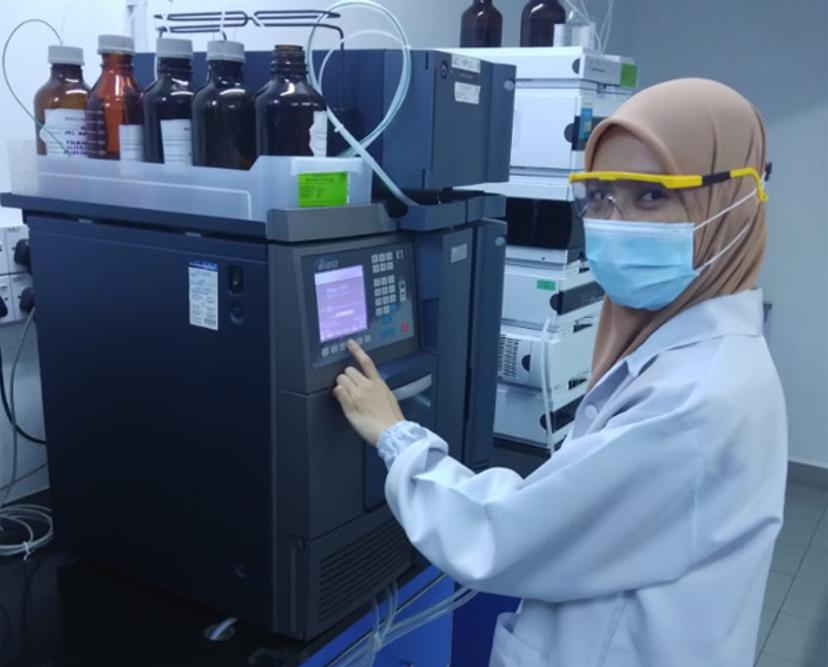
SM Biomed and Biolab have now adopted Waters Empower™ Chromatography Data System (CDS), but both Ahamed and Thakolsri have prior experience of the challenges presented by standalone chromatography without Waters’ software, as Thakolsri in particular attests: “We had almost 30 standalone HPLCs to manage, without the central software like Empower. Before, when we ran any testing for HPLC, each of our operators was loading up their method of validation and it was difficult to control this without software.”
Achieving data integrity was the major issue in keeping up with new FDA requirements, and SM Biomed had a similar experience. For SM Biomed, the adoption of Waters Empower™ Software came from Ahamed’s prior experience using the Empower at his previous company and convincing management was straightforward. However, for Biolab, there were considerations around its integration with its Laboratory Information Management System (LIMS). “It was to our advantage to choose Empower since it can provide us with connectivity to our future LIMS,” Thakolsri says. “We found that the Empower has been in business for a long time and that it’s highly reliable software.”
Business advantages from the empowered approach
The adoption of Waters Empower™ Software by SM Biomed has changed the way the company deals with regulatory compliance. “After implementing Empower™ Software and taking adequate measures, we responded to the FDA with our corrective actions,” Ahamed explains. “In 2018, the FDA inspectors visited the facility and were satisfied with our implementation activities.”
He adds that “we can better segregate the analytical activities according to business need and Empower has many advantages such as detecting anomalies and attributing relationships through its database. It is now very easy to meet global data integrity expectations.” And that regulatory confidence builds customer confidence and the ability to market products.
At Biolab in Thailand, Thakolsri is very clear where the business advantages lie – in the ability to manage big data. “Data from the Empower system will be transferred to our business intelligence system and that’s when we start doing trend analysis. Everyone who is responsible for this quality of the product will know early if it is out of trend, making it easier to manage before it’s out of spec,” he explains.
A great working relationship
Both companies have come to realize the benefits of Waters Empower™ Software, but behind that success lies the care and attention of an experienced technology provider. At SM Biomed, Ahamed attests to the excellent support he has known from Waters both currently and in his previous position. “There’s tremendous support in terms of applying or implementing new advances or new findings from the Waters team. I look for good service, and with that service you can enhance your business opportunities,” he says.
Meeting regulatory compliance targets is a main aim for every pharmaceutical company and at Biolab, Thakolsri explains how Waters’ educational webinars are greatly valued: “They give us good updates on trends in new regulation. With the webinars, we can have real experts educating our staff and we can foresee the new regulation and how to cope with it,” he says.
Future developments in pharma manufacturing
Thakolsri concludes with some exciting thoughts on where he sees the future of formulation method development, as companies like Biolab seek to accelerate its processes. “Artificial intelligence or machine learning for data analysis will be a future trend. Speed to market is of great concern and so anything that helps with this will reduce our costs,” he asserts.
At SM Biomed, Ahamed looks to the nearer future when he predicts that increasing automation will be required in QC methodology. “The biggest thing the regulator is looking for is reducing human intervention,” he says. “The frequently changing regulatory landscape requires an attitude of continuous improvement throughout your organization, backed up by right product design,” he concludes.
Find out more about the work of SM Biomed and Biolab Thailand, and how Waters Empower™ Chromatography Data System could help you.
Read more interviews with the scientists using Waters Empower™ Chromatography Data System
- Streamlining chromatography and data management for FDA approval: An interview with Dr. Anna Razynska, Director of Analytical Sciences and Dr. Satya Ganti, Vice President of R&D, WES Pharma
- The cloud chromatography data system driving global operational efficiency at Amway: An interview with Caryn Weiss, Senior Research Scientist, Innovation and Sciences, Amway
Related products
Request Quote for All Products
Empower™ Chromatography Data System
WatersThe Empower Chromatography Data System is Waters’ compliance-ready chromatography data software (CDS) for advanced data acquisition, processing, and reporting that simplifies the management of chromatography test results.