
Overcoming the challenges in your gene editing workflow
Learn how Thermo Fisher Scientific can support your gene editing research
6 Jul 2022
Editorial article
Gene editing has seen great progress in recent years, with improved efficiency and understanding. But there are still many challenges for the development of new gene editing techniques at all stages. Thermo Fisher Scientific not only provides genome editing products and services but can also provide support as a trusted partner when challenges present themselves.
Dr. Jason Potter, Director of Cell Biology R&D at Thermo Fisher Scientific, speaks to SelectScience® about advances in gene editing, the barriers that exist for developers, and how Thermo Fisher Scientific can support your workflow.
The challenges of gene editing
Although great advancements have been made in the field of gene editing, there are still gaps in our knowledge and technical capabilities. Potter explains some of the challenges facing gene editing research, “Gene editing is really good at knocking out genes so if you’re looking to turn off a gene, or make small changes, that is pretty efficient. Challenges arise when you're trying to do larger changes. Applications like CAR-T, when you're trying to drop in a cassette, that's one to five KB in size – a lot of things can happen there. You might make a cut, and nothing goes in, but the gene is disrupted. You might make a cut and part of your gene goes in, but you're trying to get the whole thing in. That's still very challenging.”
Working to overcome these challenges, build understanding, and drive improvement is the bread and butter of Potter’s lab’s work. They work on optimizing processes and developing new ways to perform gene editing.
For example, the advancements in efficiency and success in gene editing has been largely due to the development of CRISPR/Cas tools1,2 – something that Thermo Fisher is at the forefront of. “We were one of the first labs to really promote and make available the protein Cas9 system,” attests Potter. “We also have a GMP-manufactured Cas9 protein and a high fidelity Cas9 protein that are the best performers in the market based on our analysis.”
Thermo Fisher Scientific is also working on tools to improve gene editing success and methods for the future, including non-CRISPR gene editing processes and those that use non-viral vectors. “We're using virus orphans, AAV, as a donor to help increase the efficiency. But there appears to be increasing concerns that viral strategies might pose a risk that is too high. There's effort in the field to try and figure out systems that are both very efficient, but also do not use virus as a source. Still, there's the issue of off target, making sure that what's going on isn't hurting something about the cell,” explains Potter. “We have a TAL Nuclease System that works as efficiently as CRISPR does, and it does not have sequence limitation. We call it TALXcell™ and we’ve only recently released it. I think that will have an opportunity for expanded impact in the field. At the moment, if you don't have a PAM, you're very limited in what you can do at those target locations. That’s not the case with this TAL system.”
We also have a GMP-manufactured Cas9 protein and a high fidelity Cas9 protein that are the best performers in the market based on our analysis.
Dr. Jason Potter Thermo Fisher Scientific
They are also working to understand the stresses and challenges placed on cells during gene editing and to find ways to edit genes with less disruption to treated cells’ integrity. “Things like electroporation, the chemical delivery, taking the cells out of the body to be able to process them, double strand cuts – all of these puts stress on the cells, and so making sure that those cells after you've done the processing, are still viable and are going to be an efficient therapy, that's still a challenge,” explains Potter. “We have suite of tools to be able to really characterize the cells that we've edited and understand if we're doing just what we expected, or if there's other off target events, or even on target events that are undesired happening. We also offer the CTS Xenon Electroporation System, a large scale electroporation instrument that can support superior delivery of gene editing reagents through electroporation into primary cells.”
Understanding the underlying mechanisms involved has delivered great progress. As Potter elaborates, “As we have come to understand the repair mechanisms, the delivery mechanisms, and what's happening throughout the process since these gene editing tools have become much more widespread, there's been huge advances.”
Using expertise to support development
In addition to developing innovative products, Thermo Fisher Scientific has also developed tools to simplify the design of genome editing experiments. “We have an online software tool, Invitrogen™ TrueDesign™ Genome Editor, that is freely available and allows people to walk through the entire experiment,” shares Potter. “It designs the guides, the donors, any analysis primers, and then gives the protocols to support that. It’s a very easy walkthrough where you can design out the experiment in only a few minutes. All of that information is brought together and you can download a comprehensive report and order directly.”
Challenges with developing successful gene editing protocols for therapeutic applications includes a number of processes that are often out of the scope of companies’ expertise.
“A lot of smaller companies aren't familiar with regulatory processes, they're not familiar with sourcing or how to scale up,” explains Potter. “It's not a technical problem, but a process problem. Partnering with a company like Thermo Fisher Scientific can be a benefit. We understand the supply chain, and we have a lot of the tools and the instruments to go through the whole process. We really can partner with people, as opposed to just being someone that they ordered one thing from. We've built up that expertise, so we can give a lot more guidance and support a collaboration now.”
Through the whole workflow, Thermo Fisher Scientific can utilize their years of experience and offer support in this difficult, competitive landscape. As Potter concludes, “Thermo Fisher is uniquely positioned. We don't just make the enzymes or the guides, we make everything. When we're developing systems, we're evolving the enzymes and the guide RNA and the donor systems as far as how to get the new material into the cell. But we're also developing the instrumentation, the supporting media, and the full workflow. And so, the solutions that we can provide are very optimized – it’s a complete package.”
References:
1. Maule, G., Arosio, D. & Cereseto, A. (2020). Gene Therapy for Cystic Fibrosis: Progress and Challenges of Genome Editing. Int J Mol Sci. 2020 Jun; 21(11): 3903. doi: 10.3390/ijms21113903
2. Pickar-Oliver, A. & Gersbach, C.A. (2019). The next generation of CRISPR–Cas technologies and applications. Nat Rev Mol Cell Biol. 2019 Aug; 20(8): 490–507. doi: 10.1038/s41580-019-0131-5.
Related products
Request Quote for All Products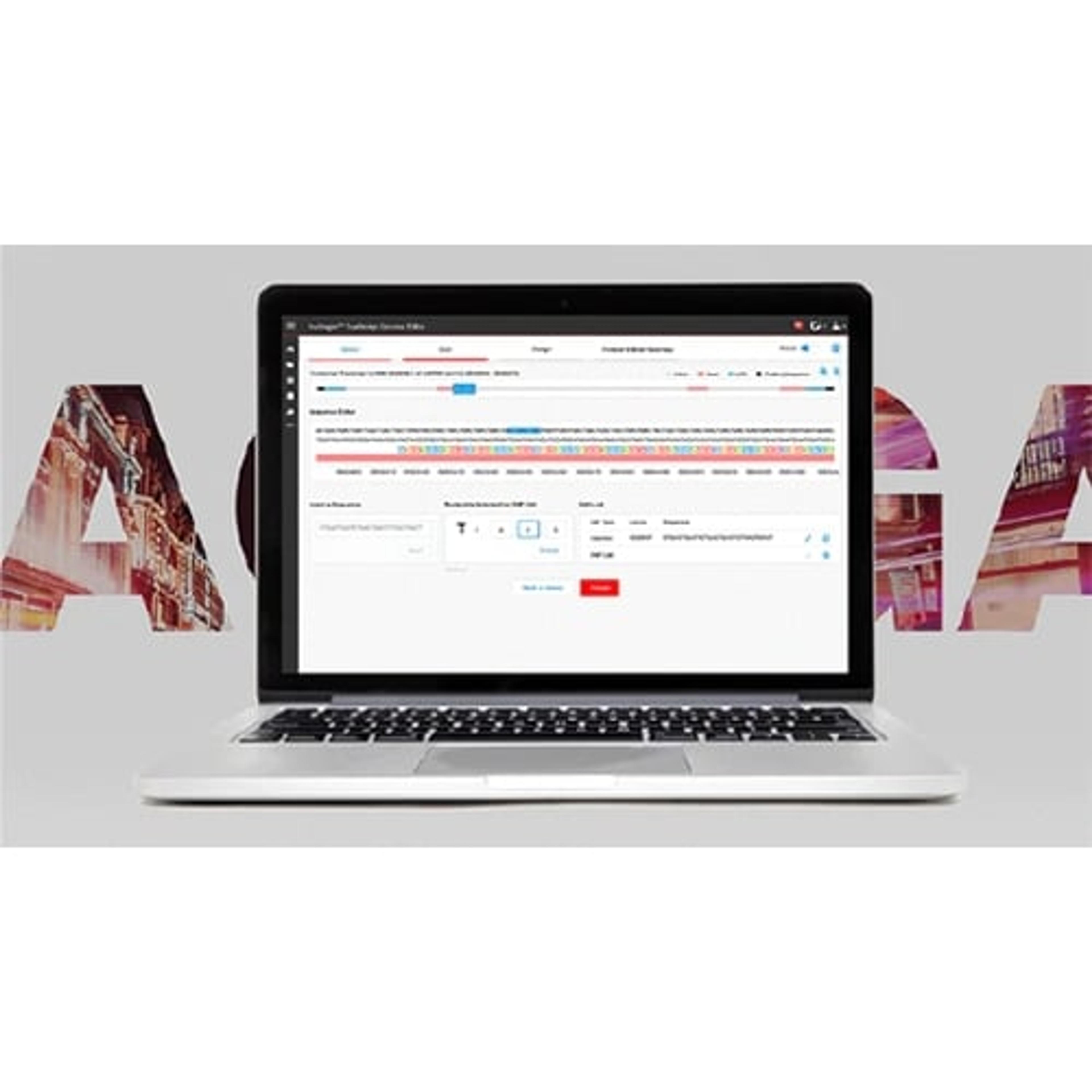
Invitrogen™ TrueDesign™ Genome Editor
Thermo Fisher ScientificFree online tool enables researchers to easily design, select, and order reagents for precise gene editing experiments
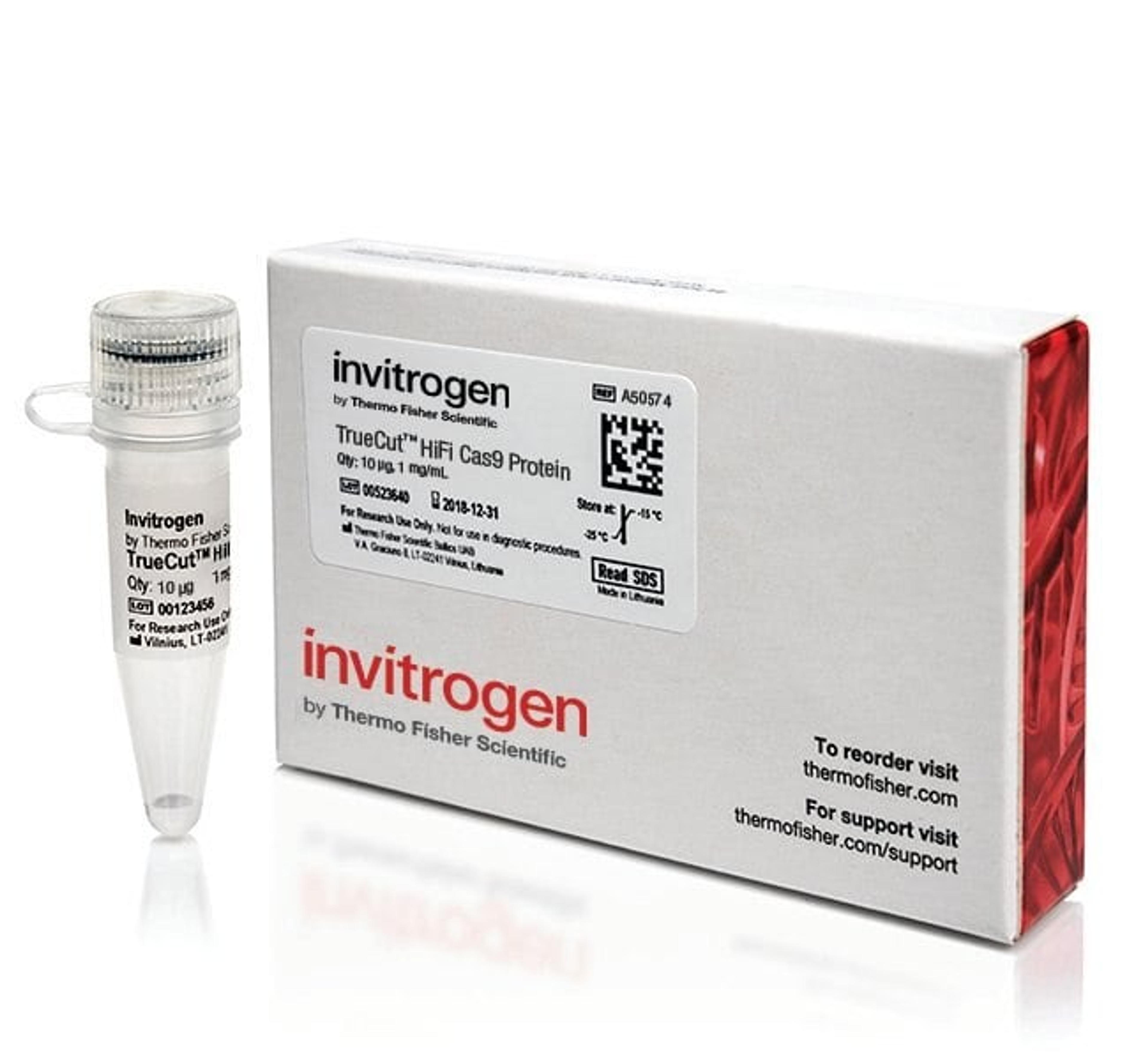
Invitrogen™ TrueCut™ HiFi Cas9 Protein
Thermo Fisher ScientificHigh fidelity Cas9 protein engineered to significantly reduce off-target effects while maintaining high editing efficiency