Meet the experts speaking at the Virtual Analytical Summit 2021

Watch our curated collection of The Scientists' Channel interviews from some of the experts joining us at this year's summit

16 Feb 2021


Edward Carter
Publishing / Media

Editorial article

As the SelectScience® Virtual Analytical Summit 2021 rapidly approaches, we look forward to welcoming an outstanding lineup of world-class speakers, including some familiar faces. In this article, we've pulled together a comprehensive collection of exclusive The Scientists' Channel interviews from some of the experts joining us at this year's summit. The Virtual Analytical Summit will cover a diverse range of technologies, applications, and topics spanning the fields of food security, materials, life sciences, pharma, biopharma, and more, through expert talks, live Q&As, virtual resource hubs, and dedicated networking sessions – all completely free of charge. For a sneak peek at the expertise you can expect at this year's summit, take a look at the video interviews below.

Food safety: Prof. Chris Elliott, Queen's University Belfast

Professor of Food Safety and founder of the Institute for Global Food Security at Queen's University Belfast, Prof. Chris Elliott will join us as a keynote speaker at this year's summit, where he will discuss how to uncover the causes of major food safety incidents by the application of analytical chemistry. Explore Elliott's previous work in his interviews on The Scientists' Channel >>
Watch videos

Biopharmaceutical analysis: Dr. John Kellie, Associate Fellow at GSK

Our second keynote speaker, Dr. John Kellie, will demonstrate a multi-tier mass spectrometry platform for the in vivo monitoring of bispecific antibodies. To find out more about how Kellie uses high-resolution mass spec for the quantitation of whole molecule biopharmaceutical candidates in this exclusive interview >>

Watch video

Analytical sample preparation: Dr. Diane Turner, Anthias Consulting

Founder and Director of Anthias Consulting, Dr. Diane Turner is once again joining us for the Virtual Analytical Summit to explain how to choose an automated sample prep technique to match your specific analytes and matrices. Watch her exclusive interview with The Scientists' Channel to explore the latest advances and integrated technology revolutionizing gas chromatography.
Watch video

Molecular phenomics: Prof. John McLean, Vanderbilt University

Join Prof. John McLean, Stevenson Professor of Chemistry at Vanderbilt University and returning speaker at the Virtual Analytical Summit, to learn more about high-dimensional molecular phenomics. Find out more about the exciting technological advancements and ever-growing potential of mass spectrometry in McLean's collection of video interviews with The Scientists' Channel >>
Watch videos

Next-generation polymers: Prof. Tim Long, Virginia Tech University

From the Macromolecules Innovation Institute at Virginia Tech University, Prof. Tim Long will be joining us as a speaker at the summit to discuss how dynamic mechanical analysis and rheological measurements are accelerating the discovery of next-generation polymers. Hear Long discuss his work with next-generation polymers in further detail inthis exclusive interview >>

Watch video

AAV gene therapy: Dr. Mimi Roy, BioMarin Pharmaceutical

Join Dr. Mimi Roy, Senior Director of Analytical Chemistry at BioMarin Pharmaceutical Inc., at this year's summit to explore the strategic processes and analytical developments for AAV gene therapy. Plus, watch her exclusive interview with The Scientists' Channel to find out how mass spectrometry is accelerating rare disease research.

Watch video

Explore all our exclusive video interviews on The Scientists' Channel and don't forget to register for the SelectScience® Virtual Analytical Summit 2021 to hear from these expert speakers.

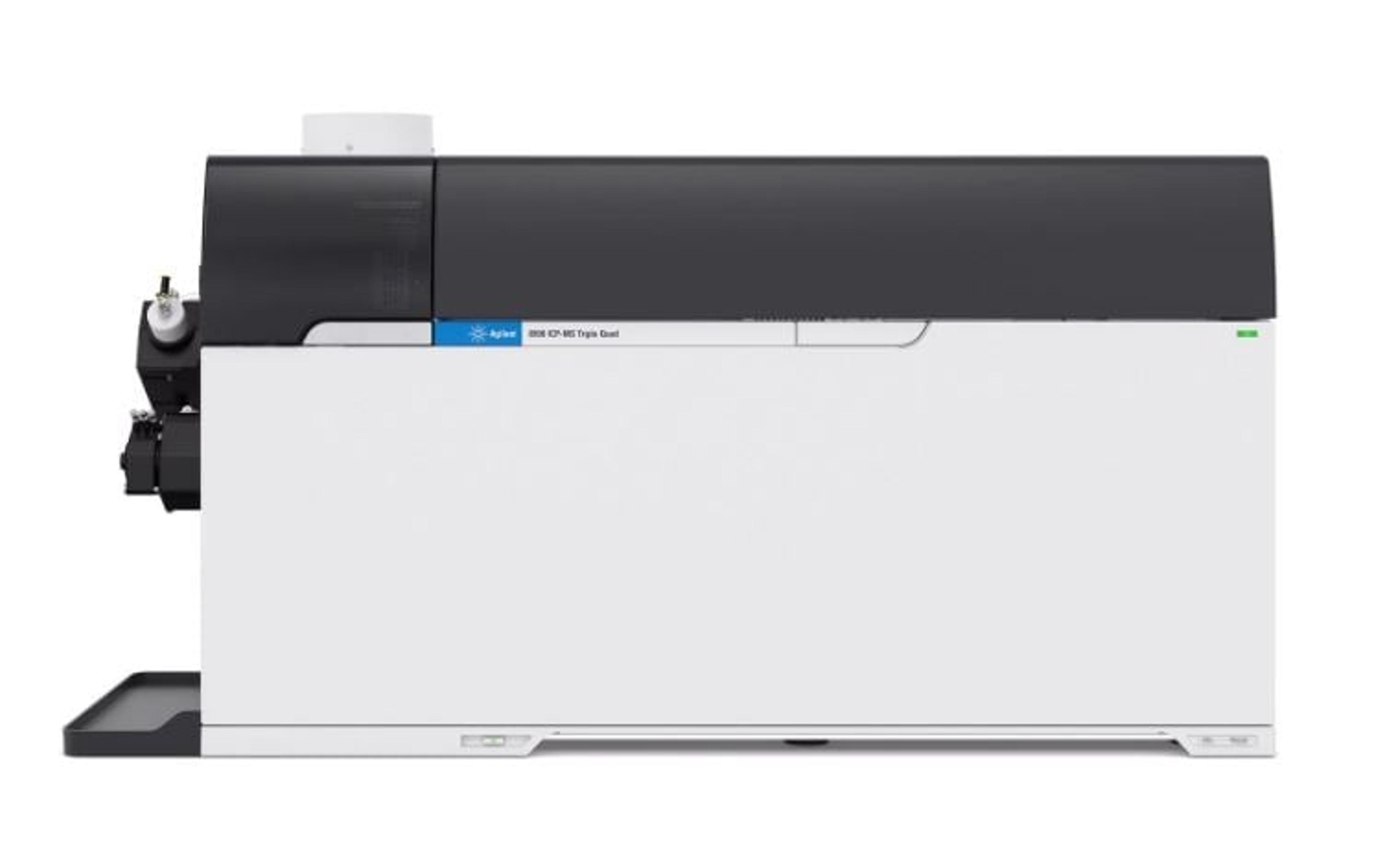
8900 Triple Quadrupole ICP-MS

Agilent Technologies

The Agilent 8900 triple quadrupole ICP-MS (ICP-QQQ) is the world’s most successful and widely used tandem ICP mass spectrometer. Available in a range of configurations to cover applications from routine contract analysis to advanced research and high-purity materials analysis, the Agilent 8900 ICP-QQQ redefines ICP-MS performance, delivering results you can trust.
(12)

6545 Q-TOF LC/MS

Agilent Technologies

Raising the standard for mid-range Q-TOF instruments, the Agilent 6545 Accurate-Mass Q-TOF LC/MS system offers higher resolving power and sensitivity that is on the order of five times higher than our earlier workhorse instruments. Incorporating the new fast and powerful SWARM autotune feature, the 6545 enables every user to the get the best results—whether your lab is focused on profiling metabolomics or lipidomics, screening food and environment samples, or pharmaceuticals.

(9)

Links

Tags

Gas ChromatographyGas chromatography (GC) is an analytical technique used to separate and quantitate mixtures of small and volatile compounds. Gas chromatographs or GC systems include components such as GC columns, detectors, pumps and autosamplers. Choose from packed or capillary GC columns, flame ionization (FID), photoionization (PID) electron capture detectors and selective or non-selective detectors. Find the best gas chromatographs in our peer-reviewed product directory: compare products, check customer reviews and receive pricing direct from manufacturers.UHPLC and HPLCHigh performance liquid chromatography (HPLC) and ultra high performance liquid chromatography (UHPLC), also known as UPLC, are analytical techniques used to separate, identify and quantitate components of complex mixtures including biological samples such as proteins and lipids as well as chemical mixtures of pesticides, drugs and oils. Both techniques are liquid chromatographic methods but differ by operating pressures (HPLC < 6000 psi < UHPLC ). Components of HPLC and UHPLC systems include columns, detectors, pumps, autosamplers and column heaters. Explore a range of UHPLC and HPLC columns for your specific sample needs including reverse phase, normal phase, ion exchange, HILIC, ion exclusion and size exclusion columns. For more specialized HPLC, explore FPLC, countercurrent LC and simulated moving bed systems. Find the best UHPLC and HPLC equipment in our peer reviewed product directory: compare products, check customer reviews and receive pricing direct from manufacturers.Ion ChromatographyIon chromatography, also known as ion exchange chromatography, is a high-performance liquid chromatographic technique used for the separation and identification of ions or polar molecules in a sample, including proteins, nucleotides and amino acids. Equipment includes ion exchange columns, ion exclusion columns, ion chromatography systems, pumps, and detectors. Find the best ion chromatography equipment in our peer-reviewed product directory: compare products, check customer reviews and receive pricing direct from manufacturers.Sample PreparationSample preparation can improve the quality and speed of separation techniques. Products to assist sample preparation include filtration equipment, evaporators, membranes and sieves.Size Exclusion ChromatographySize exclusion chromatography (SEC) is a liquid chromatographic technique used to separate and identify molecules based on their size, including polymers, proteins, nanoparticles & nucleic acid. SEC is further subdivided into gel filtration chromatography (GFC) and gel permeation chromatography (GPC) when an aqueous or organic mobile phase is used respectively. HPLC-based SEC systems and columns are available for analytical separation alongside SEC spin columns or filters to prep samples for many protocols. Find the best size exclusion chromatography equipment in our peer-reviewed product directory: compare products, check customer reviews and receive pricing direct from manufacturers.Fluorescence SpectroscopyFluorometers and spectrofluorometers (also called fluorescence spectrometers) are used to measure the intensity and wavelength of fluorescent light emitted from a sample after excitation by illumination. Spectrofluorometers utilize monochromators to select the desired wavelengths, whereas filter fluorometers employ a set of filters. Spectrofluorometers for measuring steady-state fluorescence and lifetime fluorescence (or time-resolved fluorescence) are available, as well as fluorescence microscopes and microplate readers. Find the best fluorescence spectroscopy products in our peer-reviewed product directory: compare products, check customer reviews and receive pricing direct from manufacturers.LC-MSLC-MS (liquid chromatography-mass spectrometry) systems and equipment are used for separation and quantitative analysis of complex mixtures, combining liquid chromatography and mass spectrometry. Quantify proteins, contaminants, pesticides or screen for drug metabolites with a high level of sensitivity. LC-MS systems and equipment include reverse phase, normal phase and specialized columns integrated with various MS detectors such as time-of-flight (TOF), quadrupole, orbitrap or ion trap mass analyzers. LC-MS/MS instruments equipped with a qTOF or triple quadrupole analyzer give greater sensitivity and resolving power to your analysis. Find the best LC-MS equipment in our peer-reviewed product directory: compare products, check customer reviews and receive pricing direct from manufacturers.Mass SpectrometryMass spectrometry (MS) is a powerful analytical technique used to identify and quantify molecules based on the mass-to-charge ratio of gas-phase ions. It provides detailed information about the structure, composition, and properties of compounds and is widely used across fields such as environmental monitoring, materials science, drug discovery and development, food and beverage testing, and wider chemical research. Key MS techniques include tandem mass spectrometry (MS/MS), liquid chromatography–mass spectrometry (LS-MS) and inductively coupled plasma (ICP-MS). Choosing from these wide range of techniques and technologies can be a daunting task, so keep up to date with scientific applications, performance expectations, and customer reviews here all in one place. Visit our product directory to receive quotes direct from the manufacturer. Near Infrared SpectroscopyNear-infrared (NIR) spectroscopy measures the interaction of near-infrared light with a sample, including transmission, reflectance and absorbance, facilitating the identification of analytes. Measurements can be conducted using a Fourier-transform near infrared (FT-NIR) spectrometer, while there are also UV-Vis- NIR spectrophotometers that measure a broader spectrum of wavelengths. Find the best NIR spectroscopy products in our peer-reviewed product directory: compare products, check customer reviews and receive pricing direct from manufacturers.NMR and EPR SpectroscopyNuclear magnetic resonance (NMR) spectroscopy is used to resolve the local chemical environment of atomic nuclei with spin, revealing information on molecular structure, dynamic processes and chemical reactions of organic molecules, from proteins to synthetics. Electron paramagnetic resonance (EPR) also known as electron spin resonance (ESR) spectroscopy is used to detect and quantify paramagnetic species in a sample, including free radicals as transition metal ions. By immersing the sample in a strong magnetic field, both NMR and EPR spectrometers probe the sample with either radio waves or microwaves respectively. A range of benchtop, solid-state and time domain NMR spectrometers & EPR spectrometers are available, as well as NMR tubes, NMR solvents, software, coils, and magnets. Find the best NMR & EPR equipment in our peer-reviewed product directory: compare products, check customer reviews and receive pricing direct from manufacturers.Raman SpectroscopyRaman spectroscopy is used to discern the vibrational and rotational states of molecules and hence the chemical composition of a sample by measuring the inelastic scattering of monochromatic light. Explore a range of Raman spectrometers, including handheld/portable Raman spectrometers for QC/QA labs and in situ spectrometers for processes. Conduct Raman imaging for microanalysis of mixed samples using a Raman microscope. Raman spectrographs are also available. Find the best Raman spectroscopy products in our peer-reviewed product directory: compare products, check customer reviews and receive pricing direct from manufacturers.UV-Visible SpectroscopyUltraviolet-visible (UV-Vis) spectrophotometers are used to measure the interaction of UV and visible light with a sample, including transmission, reflectance & absorbance. The two major instrument classes are single-beam or double-beam spectrophotometers. More specialized equipment includes colorimeters, spectroradiometers and refractometers. Portable and microvolume spectrophotometers are also available. For the modular spectroscopy lab, explore a range of light sources for combination with a spectrograph/spectrometer and optics. Find the best UV-Vis spectroscopy products in our peer-reviewed product directory: compare products, check customer reviews and receive pricing direct from manufacturers.Preparative ChromatographyPreparative chromatography equipment is used for purification purposes, separating and collecting compounds eluted from a mixture which can then be subsequently used for further purposes. This can be done in large quantities or small. Preparative chromatography systems are usually low to medium pressure liquid chromatographs that are semi-automated. Explore a range of preparative columns and fraction collectors. Find the best preparative chromatography equipment in our peer-reviewed product directory: compare products, check customer reviews and receive pricing direct from manufacturers.Supercritical Fluid ChromatographySupercritical Fluid Chromatography (SFC) is used for the rapid separation and analysis of complex mixtures. SFC systems require injectors, pumps, columns, ovens and detectors. The SFC retention method uses a supercritical fluid, usually CO2. There are a number of different SFC detector types including UV / VIs, ECD, mass spectrometry and fluorescence.X-Ray Diffraction and SpectroscopyX-Ray diffraction & spectroscopy are used in material characterization to discern the structure and elemental composition of a sample. X-Ray diffractometers (XRD) are superior instruments in elucidating the dimensional atomic structure of crystalline materials, including powders, thin films and single crystals. For large unit cells or ordered macromolecules, consider small-angle X-ray scattering (SAXS). X-ray spectroscopic techniques include X-ray fluorescence (XRF) and X-ray photoelectron spectroscopy (XPS), both providing simple and accurate methods for determining the elemental composition of a material. Energy dispersive (EDXRF) and wavelength dispersive (WDXRF) XRF spectrometers are available, as well as handheld/portable devices. High-resolution, 3D microstructure characterization of materials can be achieved with X-ray microscopes combining sub-micron resolution imaging with 3D computed tomography. Find the best XRD and XRF spectrometers in our peer-reviewed product directory: compare products, check customer reviews and receive pricing direct from manufacturers.
Meet the experts speaking at the Virtual Analytical Summit 2021