Webinar Highlights - Novel Approaches for Peptide Analyses Using Traditional and Innovative Reversed-Phase Chromatography

19 Sept 2016

Alex Waite
Editorial Assistant

Expert insights


Stephan M. Koza, PhD Principal Scientist at Waters Corporation

Dr. Brooke M. Koshel, Senior Scientist at Waters Corporation


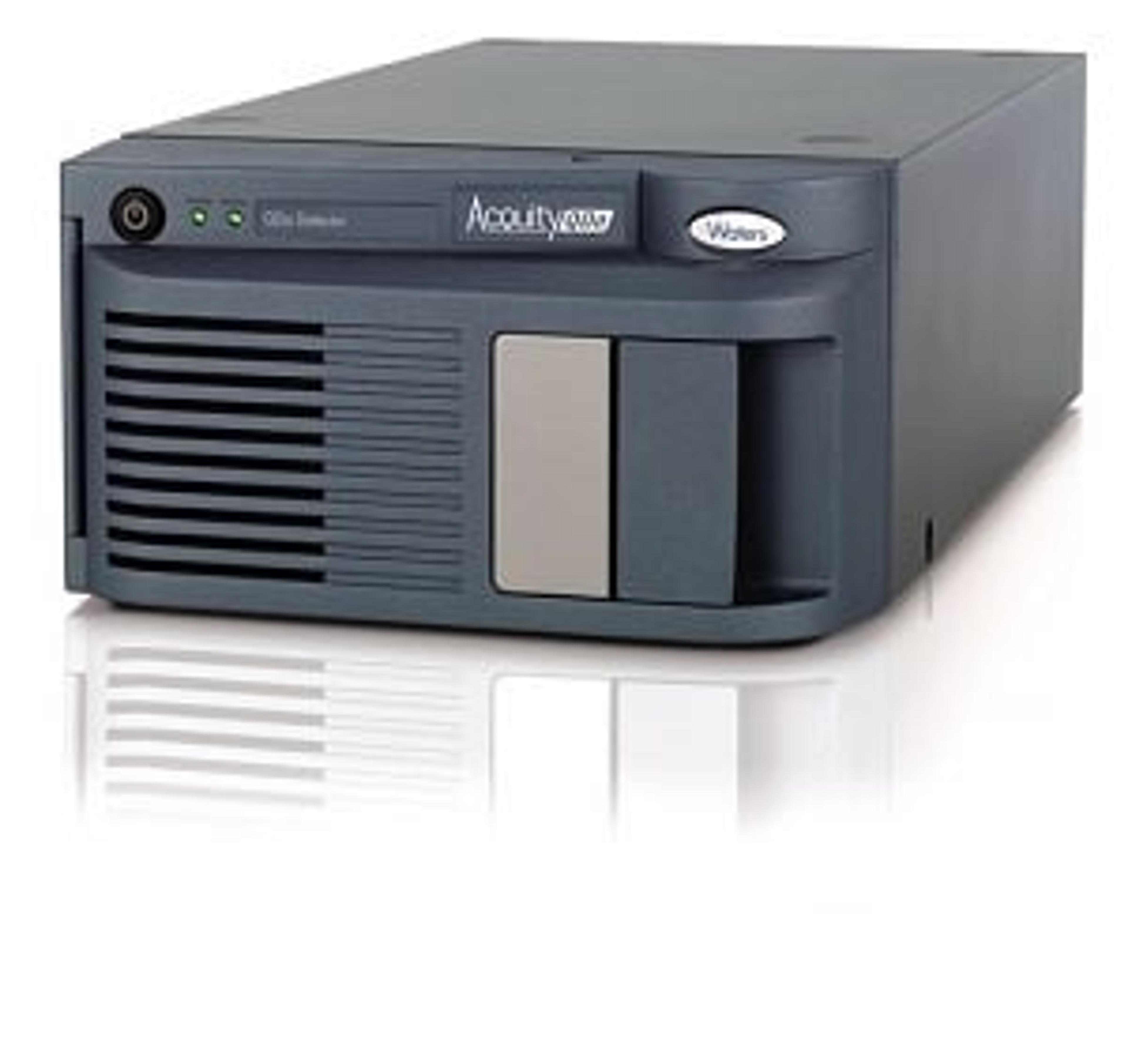
Dr Brooke Koshel and Stephan Koza from Waters Corporation presented a webinar discussing the methods available for peptide analysis. They explain the importance of column loadability for accurate detection and quantitation of low abundant peptide species, how to take advantage of selectivity and retentivity differences offered by different reversed-phase column chemistries, and the benefits of using the ACQUITY QDa Detector. Read on for highlights of the webinar Q&A session and, if you missed it, watch the full webinar here.

Q: How important is the column size for these separations?

Stephan: The length of the column can be really critical for these separations in the sense that the more plates you add, the more resolution you can get. As you get down to 2-micron particle sizes, an optimum column length is around 100 to 150 mm.

The column internal diameter (ID) is also a critical factor, one thing to consider is what system you are using. The amount of system dispersion will dictate what that column ID is going to be. So, if you have a low dispersion system, such as an ACQUITY system, running a 2 or even a 1 mm ID might be possible. If you have a higher dispersion system, like an Alliance system, you might have to resort to 4.6 mm ID or maybe 3 mm.

Q: What would you advise for collating peptides?

Stephan: Changing the selectivity of the separation to try to pull those peptides apart is probably the easiest first step to try. However, remember that if you change the selectivity of certain critical pairs, you are going to lose the resolution of other critical pairs.

Brooke: The key with using a QDa is having peaks that are different in mass. The mass accuracy of the QDa is ± 0.2 daltons (Da), so if you are working with close masses, the QDa is not applicable. However, if you have quotas that have a different mass, you can monitor that.

Q: What particle size was used for the separations shown in the presentation?

Stephan: The majority of the data I showed used 1.7-micron particle size, there was also some data that used a 2.5-micron particle size.

Brooke: I generally used the 1.7-micron particle size as well.

Q: I deal with proteins in 30 - 100 kilodalton (kDa) range for drug product formulation. Can the QDa molecular range handle my analytes?

Brooke: That depends on what the charge profile looks like, the mass range of the QDa is 30 - 1250 kDa. I have looked at protein subunits before, heavy and light chains, which are around 50 kDa and I was able to cover partial charge envelopes. At higher molecular weights, it would depend on the charge.

Q: Is it possible to protect post-translational modification at the peptide or protein level?

Stephan: Certainly, it would be possible.

Brooke: Again it depends what you’re looking at. That’s not an application that I’ve looked at myself, but it’s something that would certainly be applicable.

Q: Does the optimum wavelength for the protection of peptides and glycopeptides vary for HPLC, and if so how?

Stephan: In general no. We are focused on the UV detection at the 214 nm wavelength for checking the backbone of the peptide. If the peptide has tyrosine or tryptophan as part of the amino acid sequence, absorbance at 280 nm can also be used. However, it would be the same wavelength regardless of whether it’s a glycopeptide or not.

Q: I am separating a mix of large proteins, 47 proteins for drug production. Is it possible to do this in the 30 – 72 kDa range, with high throughput, without carryover?

Stephan: There are certainly tricks that you can take into account to try to increase the range of separation but the CSH column is not ideal for larger proteins. The positive charges and mega charges, particularly the mega charges on the larger proteins, can interact with the positively charged CSH surface. Ultimately, the most important thing to consider is temperature control. Putting different additives in the mobile phase can also be helpful, such as butanol and other large chain alcohols.

Q: Do you have any suggestions for reducing optical UV noise and shallow gradients of 0.1% of formic acid water ACN for peptide separations on an ACQUITY UPLC?

Stephan: There will always be a difficulty in doing that. One of the things you notice when you run a formic acid is at the very beginning, there is a hump in the baseline. A lot of that is actually the eluted formic acid from the surface of the reverse phase column. So, using the cleanest mobile phases you can get and using the cleanest formic acid are the two main ways to try to reduce the noise. You could also slightly raise the wavelength and that would reduce noise, for example 220 nm as opposed to 214 nm.

Watch the full webinar on demand here.

Do you use any of the technology mentioned in this article?

Share your experiences with our worldwide community and write a review today.

ACQUITY QDa Mass Detector

Waters

The ACQUITY QDa® Mass Detector gives you certainty above all else. You can minimize the risk of unexpected coelutions or components and confirms trace components with the analytical confidence of mass detection. The ACQUITY QDa® Detector is a mass detector built around the needs of analytical scientists for chromatographic analysis. Robust, reliable and requiring no sample adjustments, it just integrates with your current LC, ACQUITY UPLC, ACQUITY UPC2 and purification systems. You'll enhance the analytical value and productivity of each analysis, and you won't need to run all the additional assays or time-consuming alternative techniques or even wait for results from specialist labs that cost your laboratory productivity. With the ACQUITY QDa® Detector, you now have information-rich mass spectral data to complement data from your current Waters® optical detectors, including the ACQUITY UPLC PDA, TUV, ELS, and FLR detectors, as well as the ACQUITY UPC² PDA Detector. This mass spectral information integrates seamlessly into the same workflow; routinely giving you more complete separation characterization. Features: Intuitive operation More information from every sample Effortless integration Increased efficiency Resolving complexity Applications: Food & Environment Life Sciences and Pharmaceuticals Chemical

(20)

Links

Tags

AutosamplersAutosamplers are automated sample loaders used with a number of separation and analytical techniques. HPLC autosamplers use automated partial or full-loop injection systems and place samples in vials or microplates for analysis. Autosamplers can also be used for elemental analysis. Features to consider include repeatability, syringe capacity, footprint and temperature controls.  UHPLC and HPLCHigh performance liquid chromatography (HPLC) and ultra high performance liquid chromatography (UHPLC), also known as UPLC, are analytical techniques used to separate, identify and quantitate components of complex mixtures including biological samples such as proteins and lipids as well as chemical mixtures of pesticides, drugs and oils. Both techniques are liquid chromatographic methods but differ by operating pressures (HPLC < 6000 psi < UHPLC ). Components of HPLC and UHPLC systems include columns, detectors, pumps, autosamplers and column heaters. Explore a range of UHPLC and HPLC columns for your specific sample needs including reverse phase, normal phase, ion exchange, HILIC, ion exclusion and size exclusion columns. For more specialized HPLC, explore FPLC, countercurrent LC and simulated moving bed systems. Find the best UHPLC and HPLC equipment in our peer reviewed product directory: compare products, check customer reviews and receive pricing direct from manufacturers.Sample PreparationSample preparation can improve the quality and speed of separation techniques. Products to assist sample preparation include filtration equipment, evaporators, membranes and sieves.LC-MSLC-MS (liquid chromatography-mass spectrometry) systems and equipment are used for separation and quantitative analysis of complex mixtures, combining liquid chromatography and mass spectrometry. Quantify proteins, contaminants, pesticides or screen for drug metabolites with a high level of sensitivity. LC-MS systems and equipment include reverse phase, normal phase and specialized columns integrated with various MS detectors such as time-of-flight (TOF), quadrupole, orbitrap or ion trap mass analyzers. LC-MS/MS instruments equipped with a qTOF or triple quadrupole analyzer give greater sensitivity and resolving power to your analysis. Find the best LC-MS equipment in our peer-reviewed product directory: compare products, check customer reviews and receive pricing direct from manufacturers.Mass SpectrometryMass spectrometry (MS) is a powerful analytical technique used to identify and quantify molecules based on the mass-to-charge ratio of gas-phase ions. It provides detailed information about the structure, composition, and properties of compounds and is widely used across fields such as environmental monitoring, materials science, drug discovery and development, food and beverage testing, and wider chemical research. Key MS techniques include tandem mass spectrometry (MS/MS), liquid chromatography–mass spectrometry (LS-MS) and inductively coupled plasma (ICP-MS). Choosing from these wide range of techniques and technologies can be a daunting task, so keep up to date with scientific applications, performance expectations, and customer reviews here all in one place. Visit our product directory to receive quotes direct from the manufacturer. UV-Visible SpectroscopyUltraviolet-visible (UV-Vis) spectrophotometers are used to measure the interaction of UV and visible light with a sample, including transmission, reflectance & absorbance. The two major instrument classes are single-beam or double-beam spectrophotometers. More specialized equipment includes colorimeters, spectroradiometers and refractometers. Portable and microvolume spectrophotometers are also available. For the modular spectroscopy lab, explore a range of light sources for combination with a spectrograph/spectrometer and optics. Find the best UV-Vis spectroscopy products in our peer-reviewed product directory: compare products, check customer reviews and receive pricing direct from manufacturers.ProteomicsProteomics is the systemic bioinformatics study of proteins and amino acids, including their structure, size, function and identification. Tools used in proteomics include chromatography, blotting and gels, protein arrays, mass spectrometry and ELISA and associated analysis software. Analyzers and proteomic systems should be sensitive, high resolution, fast and may be automated for high-throughput.Compound AnalysisCompound analysis is used to discover specific compounds that could be promising candidates for pharmaceutical use. This potential is identified when compounds have the desired effect, such as interaction with a target protein, during high throughput screening.Protein BiologyThe analysis of protein expression, identity and function is vital for many areas of life science research and drug discovery. Some of the most commonly used techniques in protein analysis include Western blotting, electrophoresis and mass spectrometry.Method DevelopmentMethod development is the process of creating and optimizing experimental techniques and protocols to achieve reliable, reproducible results. This is essential in various fields, including pharmaceuticals, environmental science, and diagnostics. Browse our peer-reviewed product directory to find the best method development solutions, compare products, check reviews, and get pricing directly from manufacturers.Protein SeparationChromatographyChromatography is a powerful technique used to separate and analyze components of mixtures based on their chemical properties. It is widely used in fields like biochemistry, pharmaceuticals, and environmental analysis. By exploiting differences in the interaction of substances with a stationary phase and a mobile phase, chromatography enables precise purification and quantification of compounds. Whether you're working with complex biological samples or industrial chemicals, chromatography is essential for obtaining high-quality results. Browse our peer-reviewed product directory to find the best chromatography systems, compare products, read customer reviews, and get pricing directly from manufacturers.PeptidesPeptides are short chains of amino acids that play key roles in biological processes, including signaling, immune responses, and enzyme regulation. Peptide research is critical in drug discovery, diagnostics, and vaccine development. Browse our peer-reviewed product directory to find the best peptides and peptide-related products, compare options, check reviews, and get pricing directly from manufacturers.Peptide Chemistry