
Utilizing new and unique GC column selectivities for optimal separation of dioxins, PCBs, and PAHs in environmental and food matrices
Watch this on-demand webinar to discover new GC solutions for environmental and food testing of persistent organic pollutants
17 Jan 2022

Modern regulations emphasize analytical methods that can separate critical analyte pairs for identification and quantitation. To meet experimental separation goals and exceed regulatory requirements, new gas chromatography (GC) column selectivities are now essential.
In this SelectScience webinar, now available on demand, Dr. Ramkumar Dhandapani, global product manager at Phenomenex, explores advances in GC column selectivities and provides method development tips to help solve challenging chromatographic separations. Dhandapani highlights new analytical methods for the analysis of dioxins, PCBs, and PAHs in challenging environmental and food matrices.
Watch on demandThink you’d benefit, but missed the live event? Register now to watch the webinar at a time that suits you or read on for highlights from the Q&A session.
Which line style would you recommend for dioxin analysis?
RD: Many times, when we talk about critical separations, people think about columns, but the liner also has an equally important part. Specifically for GC, the first place where the sample meets the instrument is at the liner. It's important to have a liner that is of premium deactivation such as Zebron PLUS GC inlet liners which are premium deactivated liners, which are available in multiple geometries. Depending on the goal of the analysis, you could either choose a liner that has a larger internal volume, or you can go for a liner that has a narrow focusing effect and enhance the separation.
I'll give you two specific examples. I had a customer that was working on a larger volume injection where the larger volume of the liner helped them send more sample into the column. While we also had another customer that had very efficient sample preparation. They had the analytes preconcentrated, and all they needed was a narrow-focused band onto the column. So, for them, we used a smaller internal diameter (ID) liner, a two-millimeter liner, which helped them enhance the peak focusing.
My current analysis is 50 minutes long for PAHs. What are the parameters to consider for fast analysis?
RD: The primary optimization parameters that you might want to consider are the column dimensions. When you go for a shorter column ID, you get shorter runtimes. If you choose a shorter column dimension, make sure you have the same phase-volume ratio replicated on the shorter column dimension as well. For example, if you're currently using a 30- or 60-meter column, use the same phase-volume ratio on a 10-meter column. Because of the smaller ID, you will get higher efficiency and you can cut the length of the analysis to half or less and get shorter runtimes. If you're using a traditional 5MS type phase, go for a stationary phase that has this unique separation ability to recognize aromatics. The third aspect is also the carrier gas. If you go for hydrogen as a carrier gas, you get better, faster runtimes because of the kinetics of hydrogen as a carrier gas. Another piece of advice I would give is don't settle on a method just by injecting the standards. When you are in the optimization process, especially for shorter runtimes, also introduce actual metrics to see how well the resolutions are on a shorter run providing column.
I've seen some scientists run two different methods for dioxins and PCBs. Why not run a single method?
RD: These are two different classes of compounds, and both in dioxins and furans, as well as in PCBs, there are critical pairs. If your column selectivity and your mass spec can resolve them and give you the optimal separation, then there's no doubt we can do a single analysis. Sometimes I have also seen people use two methods but use a single column. One method would be optimized for the dioxin, which would have a longer runtime, while they would have a PCB with a shorter runtime on a single Zebron ZB-Dioxin column. Utilize the selectivity that gives you a good recognition of critical pairs, and then you can optimize both the methods on a single column. A big benefit you will see with using a single column or method is you will reduce the instrument downtime and you don't have to switch columns between runs. Specifically with mass spectrometry, when you must vent down the mass spectrometer and then reinstall another column, it's half a day compromised just for the switching.
To learn more about GC solutions for testing of persistent organic pollutants, Watch the full webinar here>>
SelectScience runs 10+ webinars a month across various scientific topics, discover more of our upcoming webinars>>
Related products
Request Quote for All Products
Zebron ZB-Dioxin
Phenomenex IncBy switching to the unique selectivity of ZB-Dioxin you will gain enhanced resolution of 2,3,7,8-TCDD and 2,3,7,8-TCDF from its isomers in one run, and only need a single ZB-Dioxin GC column as your SINGLE column solution for Dioxin analysis. Upgrade your existing GC column for Dioxin analysis to a Zebron ZB-Dioxin GC column and get all the analytical benefits and productivity gains of a single column solution.
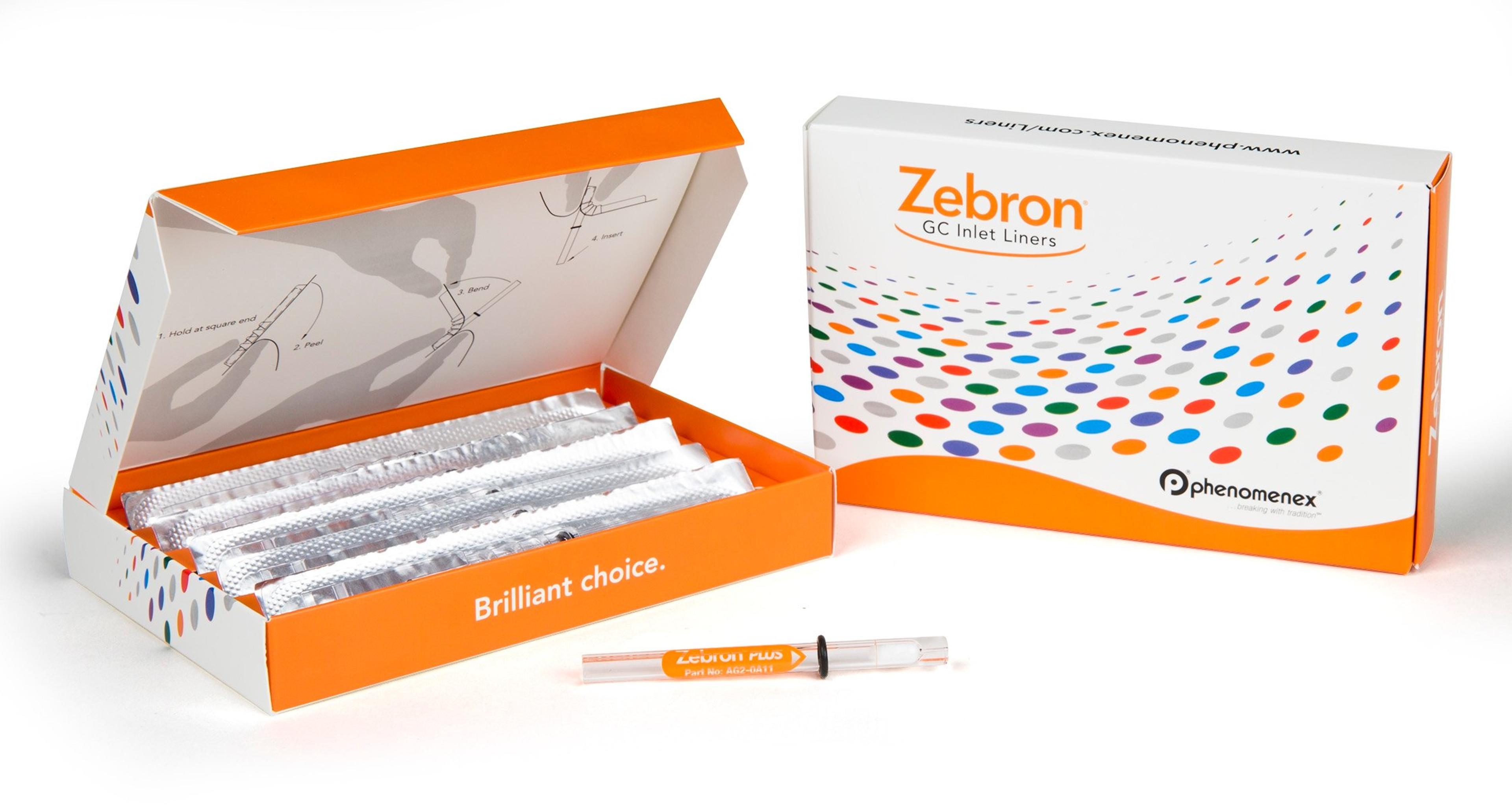
Zebron™ PLUS GC Inlet Liners
Phenomenex IncIntroducing ZebronTM PLUS GC Inlet Liners Zebron PLUS Liners Optimized for trace and active compound analysis, Zebron PLUS GC liners undergo a unique chemical deactivation treatment resulting in a remarkably inert GC inlet liner. Zebron Essential Liners Zebron Essential liners undergo a vapor deposited deactivation process resulting in a thin film liner that is ideal for routine analysis. Why Use Pre-Packed Liners? Though the upfront cost of self-packing your liner may seem attractive, the time and headaches caused by resulting tailing or irreproducible peaks can be sizeable! Self-packed wool fibers commonly break during installation and any existing deactivation on the liner can also be scratched or damaged. Pre-packed Zebron PLUS liners undergo the deactivation process with the quartz wool already in place, which ensures that any active sites that form during packing are not exposed. Zebron PLUS liners Advantage Remarkably Inert GC inlet liners for superior sample protection Easy to install, touchless packaging allows you to protect yourself from cuts or breakage Eliminates contamination that may occur during the installation process.