
Unlocking the power of analytics in the discovery, development, and manufacturing of bioconjugates
Nick Pittman, Waters Corporation, offers a practical overview of the analytical tools supporting modern bioconjugate development and manufacturing in this guest editorial
7 Jul 2026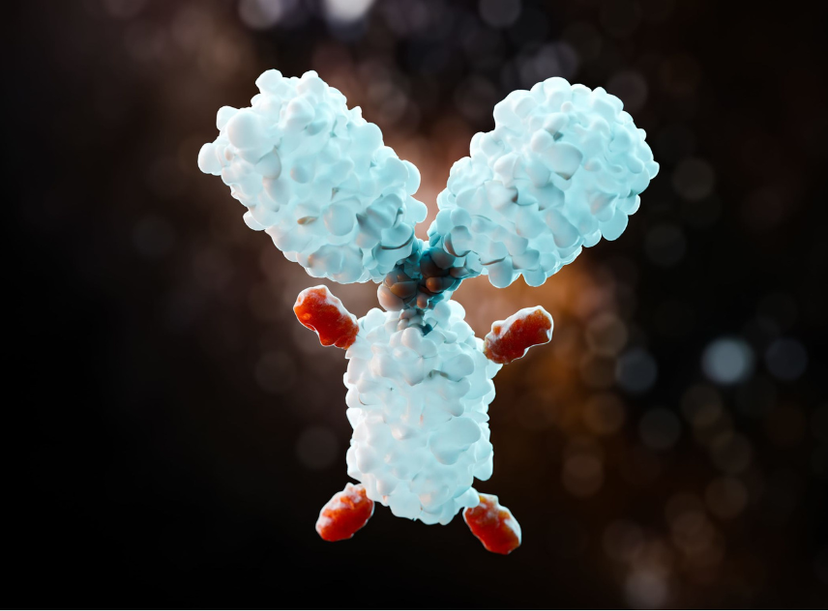
As organizations increasingly move towards bioconjugates as cancer and rare‑disease therapeutics, advanced analytics are vital to progressing candidates from discovery through commercialization.
Bioconjugated proteins, including antibody–drug conjugates (ADCs), protein–oligonucleotide conjugates, and other next‑generation modalities, are transforming modern biopharmaceutical pipelines. These molecules promise extraordinary therapeutic precision, yet their inherent complexity introduces equally formidable analytical challenges. From understanding conjugation heterogeneity to controlling aggregation, structure, and potency, success hinges on a robust toolkit of orthogonal analytical technologies.
Across discovery, development, and manufacturing, a differentiated ecosystem of LC, LC‑MS, LC‑MALS, and particle analysis solutions can simplify complex workflows and accelerate decision‑making. As the industry pushes toward higher molecular complexity and regulatory expectations intensify, these tools become essential for ensuring product quality and process consistency.
The rising complexity of bioconjugates
Bioconjugates often combine multiple functional components, antibodies, linkers, payloads, oligonucleotides, resulting in highly heterogeneous structures. ADCs, for example, require accurate measurement of critical quality attributes (CQAs) such as drug‑to‑antibody ratio (DAR), conjugation sites, aggregation state, and product‑related impurities. Comprehensive analytical workflows are required to reliably characterize these molecules, as their complexity challenges traditional techniques and demands integrated, molecule-specific approaches.
As organizations increasingly move towards bioconjugates as cancer and rare‑disease therapeutics, advanced analytics are vital to progressing candidates from discovery through commercialization.
The foundation of bioconjugate characterization
Liquid chromatography remains the backbone of bioconjugate analysis and plays a pivotal role in resolving bioconjugate variants, including:
- Unconjugated antibodies
- Low‑ and high‑DAR species
- Aggregates and fragments
- Linker‑related impurities
Modern LC systems and consumables provide high‑resolution separations tailored for complex proteins and conjugates. These platforms offer the robustness required for both development and QC environments, delivering exceptional reproducibility and minimizing variability across global operations.
LC-MS: Deep structural insight with high‑resolution mass spectrometry
To fully understand conjugation patterns and molecular heterogeneity, LC alone is not enough. High‑resolution mass spectrometry (HRMS) delivers the structural and mass‑based insights needed for confident characterization—especially during discovery and early development.
HRMS platforms provide streamlined, high‑quality LC‑MS data for intact mass, subunit analysis, peptide mapping, and site‑specific conjugation measurements. Systems are designed to simplify complex workflows, integrating seamlessly with data management and analysis tools—empowering scientists with intuitive, compliant‑ready reporting and automated interpretation.
For bioconjugates, LC‑MS offers unmatched capability in characterizing:
- Conjugation sites
- Modification profiles
- Payload distribution
- Linker stability
- Degradation pathways
This level of detail supports faster candidate ranking, informed molecular design, and confident progression to development phases.
LC‑MALS: Absolute molecular weight and aggregation without the guesswork
While LC‑MS gives detailed structural insights, it cannot directly measure absolute molar mass in solution, or size. Multi‑angle light scattering (MALS) fills this gap by providing orthogonal, quantitative characterization of molecular mass, size, aggregation state, and higher‑order structure.
SEC‑MALS is especially valuable for:
- Monitoring aggregation, which strongly impacts safety and efficacy
- Measuring absolute molecular weight of conjugates and multimers
- Assessing conjugation‑induced structural changes
- Supporting regulatory expectations for orthogonal characterization
As an example, the integration of MALS into Waters’ portfolio, through Wyatt Technology™, has created a uniquely powerful LC‑MALS ecosystem. Seamless digital synchronization between LC systems and MALS detectors, enables a unified interface for control, acquisition, and analysis. This eliminates manual workflows, reduces human error, and elevates confidence in SEC‑MALS measurements for large molecules, including ADCs and complex protein conjugates.
Particle analysis (BMI): A critical quality attribute for bioconjugates
Subvisible and visible particles remain a major concern in bioconjugate manufacturing. Conjugation steps, high‑potency payloads, and complex chemistries can increase the risk of particulate formation, impacting both safety and regulatory acceptance.
Advanced particle analysis helps manufacturers detect, characterize, and mitigate particles across the development pipeline. This includes subvisible particle detection for contaminants, aggregates, and formulation‑related particulates, supporting QC release, comparability, and stability testing requirements.
Data integration: The next frontier in bioconjugate analytics
As analytical complexity grows, data integration becomes critical for efficiency and compliance. Waters is working to lead this shift by unifying LC, MS, and MALS analytics under shared software platforms such as Empower™, Waters_connect™, and HPLC CONNECT™. These advances simplify training, streamline workflows, and reduce operational costs, which are key benefits for biopharma organizations scaling conjugate development and manufacturing.
Unified analytics allow teams to:
- Access all data within a consistent interface
- Reduce manual data handling and transcription errors
- Implement standardized, automated reporting
- Accelerate cross‑site and cross‑team collaboration
This integration strengthens data integrity while supporting the rapid pace of modern biologics programs.
Conclusion
The global demand for complex bioconjugated proteins continues to rise, bringing new challenges in characterization, development, and manufacturing. Waters’ differentiated suite of LC, LC‑MS, LC‑MALS, and particle analysis technologies equips scientists with a comprehensive, integrated toolkit to navigate this complexity with confidence.
From deep structural insight to real‑time process analytics, Waters enables a clearer, more complete understanding of bioconjugates—accelerating discovery, enhancing development efficiency, and ensuring manufacturing robustness. As modalities grow more sophisticated, the synergy of these analytical platforms will remain essential for unlocking the full therapeutic potential of bioconjugated proteins.
Guest editorial written by Nick Pittman, Senior Principal, Global Biopharma Marketing, Waters Corporation
Want the latest science news straight to your inbox? Become a SelectScience member for free today>>
Related products
Request Quote for All Products
Empower Software Solutions
WatersRun samples and produce meaningful results without downtime with Empower Software Solutions, comprised of Waters industry-leading Empower Chromatography Data System (CDS) and Empower Lab Management System (LMS).
Tags
Frequently asked questions
Show frequently asked questions
How are bioconjugated proteins such as antibody–drug conjugates (ADCs) transforming modern biopharmaceutical development?
Bioconjugated proteins, including ADCs and protein–oligonucleotide conjugates, enable highly precise therapeutics for cancer and rare diseases. Their complex, heterogeneous structures demand advanced analytical workflows to control critical quality attributes like drug‑to‑antibody ratio, aggregation, structure, and impurities across discovery, development, and manufacturing.
What analytical technologies does Waters provide for comprehensive bioconjugate characterization?
Waters offers an integrated ecosystem of LC, LC‑MS, LC‑MALS, and particle analysis solutions. These platforms support intact mass analysis, conjugation site mapping, aggregation and molecular weight assessment, particle detection, and real‑time CQA monitoring, helping biopharmaceutical organizations ensure product quality, process consistency, and regulatory compliance.
How does data integration with Empower, Waters_connect, and HPLC CONNECT improve bioconjugate analytics?
Waters unifies LC, MS, and MALS data within shared software platforms such as Empower™, Waters_connect™, and HPLC CONNECT™. This integration reduces manual data handling, minimizes transcription errors, standardizes automated reporting, and accelerates cross‑site collaboration, strengthening data integrity for complex bioconjugate and ADC development programs.