
Top 10 Tips For Running a Greener Lab
18 Jun 2015
Did you know that the annual energy use of life science research labs is almost four times that of a typical commercial building?
While life science research has the potential to improve the lives of billions through the discovery of new tools, technologies and treatments, it’s also energy intensive. However, with careful use of your research tools and equipment, you can minimize your environmental footprint and also, save money.
Keep on reading to find out how a few simple steps can help make your lab a little greener today...
Sustainable science needn't cost the earth. Click on the link to enlarge the image
So while it may seem counter-intuitive, scientific progress also comes at a cost to society and the environment. How can we work to maximize the benefit of our science while minimizing the environmental impact?
In truth, much of this energy consumption can’t be avoided – it is the necessary cost of good science. However, there are many ways that you can improve your lab practices and make your work more environmentally friendly, without taking up valuable time or over-stretching your research funding.
In fact, making your lab more eco-friendly can actually save you money in the long run. For example, closing or switching off fume hoods when not in use can save you as much as $3,000 per year, per hood. The reduction in background noise levels can also help to encourage conversation between you and your colleagues.
Make every experiment a green experiment
Purified water is the ever-present reagent, needed for most experiments in the lab. By optimizing how you use and store water, you can make nearly every study you carry out more environmentally-friendly. Consider the following:
- Waste as little water as possible – store excess water using intermittent recirculation tanks. These use minimal amounts of energy and guarantee the purity of your water.
- Minimize environmental impact by using consumables such as filters and deionization cartridges that have been designed to be recycled.
- Select purification systems with low energy consumption components and power-saving features that shut down when not in use.
- If you are still using energy-gobbling water stills, it may be time to switch to the newest generation water purification systems to save on energy bills and reduce environmental impact.
- Use the right level of purity. After all, are you washing glassware, preparing media or carrying out HPLC? Not every application needs Type 1+ ultrapure water – learn which level of purity you need here.
Ten more ways to save energy (and money)
Switch off unused equipment.
Turn off the lights when you’re not in the room.
Select greener products and equipment – many companies now offer environmentally-conscious kits and equipment, housed in recyclable packaging and produced using sustainable practices.
Swap hazardous chemicals for more friendly alternatives – MIT offers a Green Chemical Alternative Wizard database, helping you to swap dangerous chemicals (which are usually more difficult to safely produce, transport and store, and therefore more expensive) for friendlier, often cheaper, alternatives.
Run a green office – the modern scientist spends nearly as much time on their computer as at their bench these days, so be sure to apply these green principles in both your lab and your office space. The easiest win is to set your computer to sleep whenever you are away for more than five minutes at a time.
Recycle – glass, plastic and paper are just some of the things that can be recycled in the lab. Make sure you have plenty of well-labeled recycle bins around.
Revisit your green practices from time to time. Running a green lab is an ongoing process. Stay on top of latest developments in lab equipment and reagents – maybe these new tools could further reduce your environmental footprint and save you money and time in the future.
Reduce your transport footprint by planning ahead and consolidating all of your orders with each supplier into one shipment where possible.
Empty your freezers and fridges – while we’re in the freezer (or fridge), are there any samples or reagents you can safely store at room temperature (or even throw away)? This could free up space and reduce the number of storage units you need.
Organize your -80°C freezer better – whenever you have to dig around looking for samples, you leave the door open. This increases the temperature inside, which takes energy to rectify once the door is closed again.
Related products
Request Quote for All Products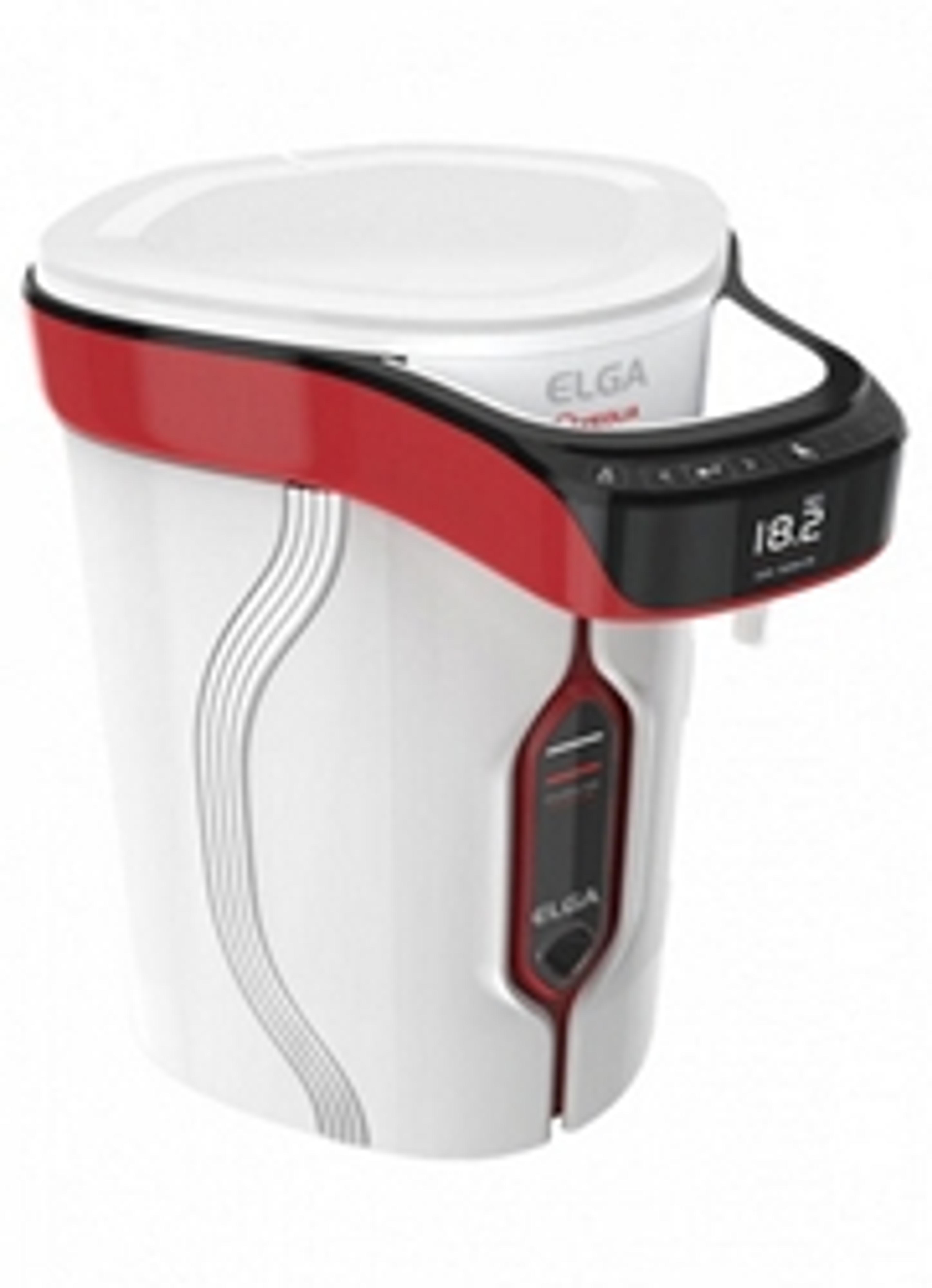
PURELAB® Chorus Halo Dispense Solutions
ELGA LabWaterThree remote dispensing and monitoring solutions enable you to position your PURELAB Chorus where you want – freeing up valuable work space. Halo Dispense – Fixed position dispenser for your basic dispensing needs Halo Advanced Dispense – Fixed position dispenser with advanced control features Halo Flexible Dispense – Hand held dispenser providing you with advanced control features and ultimate flexibility Three Halo dispense and monitoring solutions enable you to position the dispenser independent from the water purification system. This means you can locate PURELAB Chorus on a bench, under bench or wall mounted to optimize valuable space in your laboratory. Up to four dispense solutions in any combination can be connected in series with different point of use options to suit your application and configured to your specific water purity requirements. Applications: Removal of endotoxins, DNase, RNase and bacteria Conforms to international water standards e.g. ISO 696: Grade 1, 2 & 3 ASTM D1193-06, Pharmacopeia USP, EP, JP & CLSI / CLRW
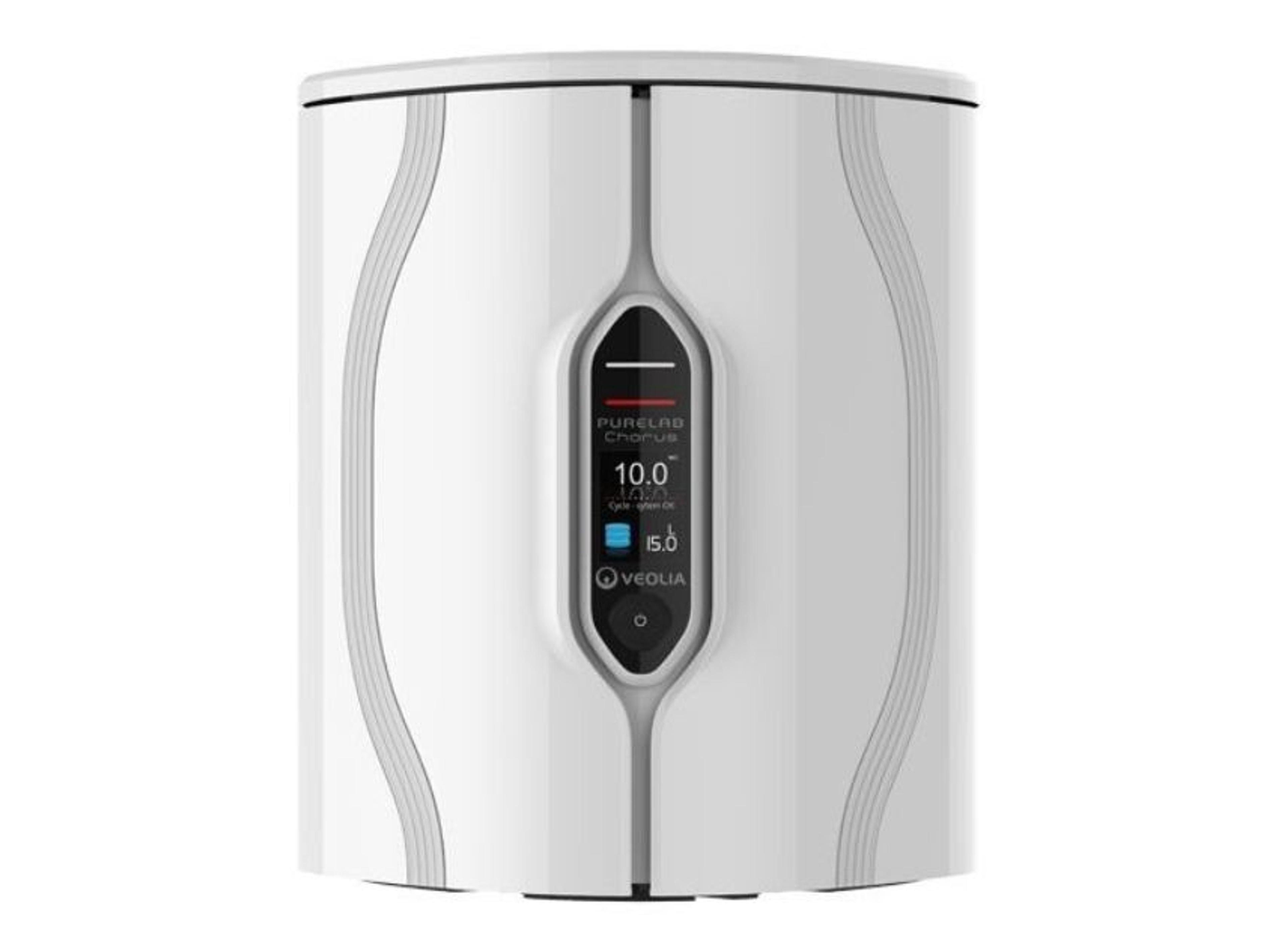
PURELAB® Chorus 3
ELGA LabWaterPURELAB Chorus 3 provides Type III (primary RO grade) water on demand with a wide range of flow rates up to 120 l/hr. When general laboratory grade water is needed PURELAB Chorus 3 (RO) provide reliable solutions with flexibility to suit your requirements. PURELAB Chorus 3 Features: Deionization - ‘Reverse Osmosis feed optimized’ resin mixes to maximize consumables capacity. Configuration - Ability to configure multiple systems to increase flow rate. Simplicity - Simple to install, operate and maintain with a clear indication of water purity. Auto Rinse - Maintains purity of water during periods of low use. Economical - Optional CO2 removal from the purified water (post RO) increasing the life of downstream consumables. Upgradable and Reliable - Easy upgrade to higher flow rates to meet your future demands. Applications: Stills Replacement Buffer Preparation pH Solution Preparation Washing / Rinsing All Stainless Steel Autoclaves General Chemistry Spectrophotometry Heating Baths Hydroponics / Plant Growth Cabinets Steam Generators Stability Chambers Sterilizer Feed Feed to Type I & II Polishers