
The conversations shaping ASMS 2026
Ahead of ASMS 2026, Boone Prentice considers the technologies, pressures, and conversations shaping mass spectrometry’s next chapter
27 May 2026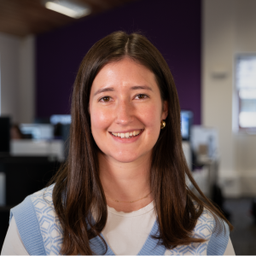
The Analytical Scientist team spoke with Boone Prentice following last year’s ASMS Conference on Mass Spectrometry and Allied Topics, he described the event as a microcosm of mass spectrometry’s best qualities: technical brilliance, collegiality, and optimism. He also identified several trends and challenges shaping the mass spec field: from the rise of multiomics workflows to uncertainty around research funding in the US.
So, one year on, how have those conversations evolved? As ASMS 2026 approaches, Prentice reflects on a field expanding into new applications while managing familiar pressures around data, training, funding, and the expertise needed to keep innovation moving.

Boon Prentice
As ASMS 2026 approaches, how would you describe the mass spectrometry landscape today?
Boone Prentice: I think the field is in a very strong place. Mass spectrometry has matured tremendously, but maturity does not mean stagnation by any means. If anything, the technology is expanding in utility, with applications in more fields and with increasing sophistication. There is also still a lot of technological innovation, with new developments continuing to provide tools for studying new questions. At the same time, mass spectrometry is also becoming more accessible and more widely appreciated outside its traditional areas of use.
That broader acceptance is an important sign of the field’s health. There was a time when, if you included a protein measurement in an NIH grant, you might have had to justify it exclusively with a Western blot. There is now a growing appreciation that mass spectrometry can provide a more sophisticated and rigorous way to make some of those validation measurements, and that accessibility and recognition are very good signs.
What themes, technologies, or conversations do you expect to define this year’s conference?
Boone Prentice: I think some of the themes we discussed last year will continue to be important, particularly multimodal and multiomics approaches. It’s an area that continues to expand, and it is becoming increasingly central to how researchers approach complex biological questions. If you are studying cancer, for example, you might already be using RNA sequencing, but now you may also be adding metabolomics, proteomics, or other MS-based measurements. That kind of integrated approach is very powerful.
Since we last spoke, those applications have only grown. Multiomics is becoming more routine, or at least more routinely considered, even though it remains a challenging set of experiments to do well.
Alongside that, I think we will continue to see a lot of discussion around AI and how we handle these increasingly large and complex datasets. That includes not only data analysis, but also experimental design, data processing, interpretation, and coding, particularly for those with limited prior experience.
If I had to describe my attitude toward AI in one word, I’d say “cautious.” Like many breakthrough technologies that have preceded it, there’s no doubt of its value in the right environment. But the introduction of computers did not mean we forgot how to do mathematics, or stopped needing to understand the results they produced, and I think the same principle applies here. The danger comes when we blindly trust the output without validation, and like any experiment, AI-driven analysis needs to be approached with skepticism, rigor, and care.
That said, it’s still an incredibly powerful and exciting tool, and it is something we’re using to do some very interesting work in our lab. Over the next few years, I expect its use and applications only to grow.
Are there any other themes, applications, or topics that you’ll be watching for this year?
Boone Prentice: Naturally, an area I’m always interested in is recent advances in imaging. It remains a very exciting space, particularly as more groups begin to connect imaging with other analytical capabilities.
What stands out to me is the growth of increasingly hyphenated workflows: imaging paired with secondary ionization, ion mobility, MS/MS, or other approaches. Each layer adds a different kind of information, and together they can enable experiments that would be difficult or impossible using a single method. I expect we’ll see more of that at this year’s conference, and it is certainly an area my own group is interested in as we think about new kinds of imaging experiments.
I’ve also noticed progress in data integration, though it remains an area that still needs work. Combining data from different technologies remains challenging, from pathway analysis to image co-registration, especially given the dimensionality involved. Even so, researchers are approaching those problems with increasing sophistication, partly enabled by AI and supported by advances in bioinformatics.
I expect that to keep improving. These studies are exciting because they can connect mass spectrometry to broader biological questions. If you can study a disease such as cancer or diabetes across multiple molecular dimensions, you can build a more comprehensive understanding of the underlying biochemistry, making the work relevant not only to mass spectrometrists, but to the wider scientific community.
Where do you think the field is under the most pressure right now, technically or otherwise? Last year, we discussed uncertainty around federal research funding – is that still the main concern?
Boone Prentice: I think so. If anything, after a year of reflecting on the situation, it feels as though it has become more severe. Existing awards that should be moving into their next year of funding are being delayed by months, and we are still waiting on decisions for proposals that have already been submitted, including some with highly competitive scores that, in previous years, would likely have been funded. That creates huge challenges for labs trying to operate, let alone plan for the future.
In response, I’m thinking about additional ways to diversify our funding portfolio and keep things moving, but I know a lot of people who are getting discouraged. You always need funding to run a lab, of course, but I think this situation will hit pre-tenure faculty, and people making the postdoc-to-faculty transition, especially hard. They often need those awards to secure tenure and move forward.
While this is damaging to science as a whole, I feel particularly concerned for the next generation of scientists. Should the situation persist or even worsen, it will take a long time to recover, as we risk losing people who might otherwise have built careers in the field.
For me, the issue is not only the lack of funding; it is the uncertainty. You start wondering whether writing a grant proposal is a reasonable use of time when there is so little clarity around process or timelines. Securing funding was never easy, but this level of unpredictability is incredibly frustrating.
In my lab, we’re trying to stay optimistic, look forward, and do what we can. But it does not feel like a sound investment in the health of the country, the scientific workforce, or the innovation that depends on it.
Are there areas of MS where the pace of progress has surprised you over the past year?
Boone Prentice: One area that has begun to gain prevalence again, particularly in my group, is the exploration of alternative ion types for structural characterization. That includes metals, multivalent metals, metal-ligand complexes, and related approaches. Using these more unusual ion types in this way is an area where I see a lot of potential. We’ve been looking at this across a few projects in my group, and it has been striking to see how much the choice of ion type can affect what you’re able to do experimentally. That makes me think there is still a lot more to explore.
Another area where progress has been encouraging is in the sophistication and accuracy with which we can analyze large biomolecular species. Researchers have been pushing for better ways to study monoclonal antibodies, intact proteins, and large protein complexes for a long time. But with growing pharmaceutical interest in mRNA vaccines, antibody-drug conjugates, and other large therapeutic modalities, those capabilities are taking on new importance.
Small molecules remain central to drug development, but they are comparatively familiar analytical territory. What feels different now is the growing appreciation of high-mass MS approaches – including charge detection mass spectrometry (CDMS) and intact-protein analysis – as tools for understanding larger, more complex, and increasingly pharmaceutically relevant systems.
Last year, you described turnkey instruments as a double-edged sword. How can the field expand access to MS without losing deeper technical expertise?
Boone Prentice: It’s a good question, and not one with an easy answer.
Ultimately, it depends on what you’re trying to accomplish. If your work does not require much technological innovation, it may be less important to understand the instrument holistically. But a fundamental understanding of the technology can make you much more creative in how you design experiments, use the instrument, and push its capabilities. Even if that level of innovation is not central to your work, you still need to understand the limits of the data being produced.
For those working outside fundamental mass spectrometry research, appropriate training is imperative. That could come from instrument companies, or from society- and community-based efforts, such as workshops, conferences, and training sessions. It could also mean bringing more mass spectrometry content into broader interdisciplinary communities, so that the fundamentals and limitations of the technology are well represented and understood.
Something I’ve always found challenging as an analytical chemist, especially as a graduate student or postdoc, is reading higher-level papers where several different technologies are used to support an analysis. The issue is that you may not always know exactly how those technologies work, and the raw data are not necessarily presented. At that point, it becomes difficult to assess the reliability or accuracy of what a research group has done. Raw mass spectra are not included in every paper, so I think this is something the field should keep an eye on.
One measure that helps is putting data in repositories and making them publicly available, so people can go back and examine the evidence themselves. But overall, it comes back to making sure people understand the limits of the tools they are using. Continuing to expand education and collaboration between labs, users, companies, industry professionals, conferences, and wider communities is something that really matters.
If we spoke again after the meeting, what would make ASMS 2026 feel like a success to you?
Boone Prentice: I genuinely don’t think I’ve ever been to an ASMS conference that didn’t feel like a success, mainly because the community is so passionate and vibrant.
The aspects I’ve come to value most are the interactions with colleagues. It’s always great to catch up and see how people are doing, but also to hear what they’re working on and what new areas are developing. The hallway chats, poster-session conversations, discussions between sessions, lunches and dinners – those informal interactions are invaluable. They help build and maintain relationships that matter both professionally and personally, and they can help sustain you during more difficult periods.
Scientifically, I always come away from ASMS with new ideas. I recently found an old notebook and, looking back through it, was reminded how often ASMS has generated those moments of inspiration. Without fail, I come back each year with dozens of notes: ideas from other people’s work that we might adapt to our own, or approaches that help us think about a problem differently. The ideas usually far outnumber our group’s bandwidth to explore them, but that only contributes to the meeting’s value.
So, for me, a successful ASMS is one where people leave feeling inspired: by the science, by the creativity of the community, and by the conversations that happen around the formal program. It’s a long, tiring week, but it’s also my favorite conference, and generally a great place to be.
Want the latest science news straight to your inbox? Become a SelectScience member for free today>>
Tags
Frequently asked questions
Show frequently asked questions
How is the mass spectrometry landscape evolving ahead of ASMS 2026, according to Boone Prentice?
Boone Prentice describes the mass spectrometry landscape as being in a very strong position ahead of ASMS 2026. He emphasizes that the field has matured without stagnating, with technology expanding in utility and sophistication across more application areas. Mass spectrometry is becoming more accessible and widely appreciated beyond its traditional domains, particularly as a rigorous tool for protein and biomolecular measurements in contexts such as NIH-funded research. This broader acceptance and recognition are highlighted as key indicators of the field’s overall health.
What key themes and technologies will shape ASMS 2026, including multiomics, imaging, and AI in mass spectrometry?
Prentice expects multimodal and multiomics approaches to remain central at ASMS 2026, especially in complex disease research such as cancer, where RNA sequencing is increasingly combined with metabolomics, proteomics, and other MS-based measurements. He highlights the growth of imaging mass spectrometry and increasingly hyphenated workflows that pair imaging with secondary ionization, ion mobility, and MS/MS to generate richer datasets. He also anticipates extensive discussion of artificial intelligence for handling large, complex datasets, spanning experimental design, data processing, interpretation, and coding. While he views AI as powerful and exciting, he stresses the need for cautious, rigorous validation of AI-driven analyses.
What challenges and pressures are currently affecting the mass spectrometry community, from research funding to training and data expertise?
Prentice identifies persistent uncertainty around US federal research funding as a major pressure on the mass spectrometry community, noting delays in continuing awards and decisions on highly rated proposals. He is particularly concerned about the impact on pre-tenure faculty and scientists transitioning from postdoc to faculty roles, warning that prolonged instability could drive talented researchers out of the field. Beyond funding, he points to the need for better training and technical understanding as turnkey instruments become more common, emphasizing that users must grasp the limits of their tools and data. He also highlights ongoing challenges in data integration across technologies, the importance of public data repositories, and the need for expanded education and collaboration among labs, industry, societies, and broader scientific communities.