
Syngene Unveils First Multi-application Single Lighting Module For Rapidly Imaging Fluorescent Dyes with a G:BOX Chemi Image Analyser

10 Jan 2008

Product news

Syngene, a world-leading manufacturer of image analysis solutions, today introduced the unique RGB Lighting Module, designed for the Syngene range of G:BOX Chemi imaging and documentation systems. The RGB Lighting Module is ideal for scientists who want the flexibility to quickly image gels or blots stained with commercially available fluorescent and visible dyes.

Syngene’s RGB Lighting Module has 84 high intensity LEDs providing red, blue, green and white light. Additional slots in the module also allow the fitting of UV tubes emitting light of 365nm or 254 nm, respectively thereby further enhancing the range of applications. The module, which can be fitted to the complete range of G:BOX chemiluminescence systems is fully computer controlled as is the filter wheel containing the emission filters, making it quick and easy to begin fluorescence, white light and UV imaging.

The LED’s used in the RGB Module can emit light for over 75,000 hours without diminishing performance. By using the RGB Module with correct emission filters, users have the flexibility to accurately image stains including: SYBR® Green, Pro-Q® Diamond, CyDye™, Alexa Fluor®, HEX™ and Oregon Green®. The LED’s do not require any warm up period so users can begin their imaging immediately and they do not get hot when in use, making them safe to leave on for long exposures.

Laura Sullivan, Syngene’s Divisional Manager stated: “Many scientists require lighting that is inexpensive to run, ready to use on demand and can help detect weak fluorescent signals. We are delighted to fulfil these needs by being the first company to bring a non-halogen based multi-application lighting unit to market. Using the innovative RGB Lighting Module in a G:BOX Chemi with our extensively tested emission filters, scientists can confidently image gels stained with any commercial fluorescent or visible dye.”
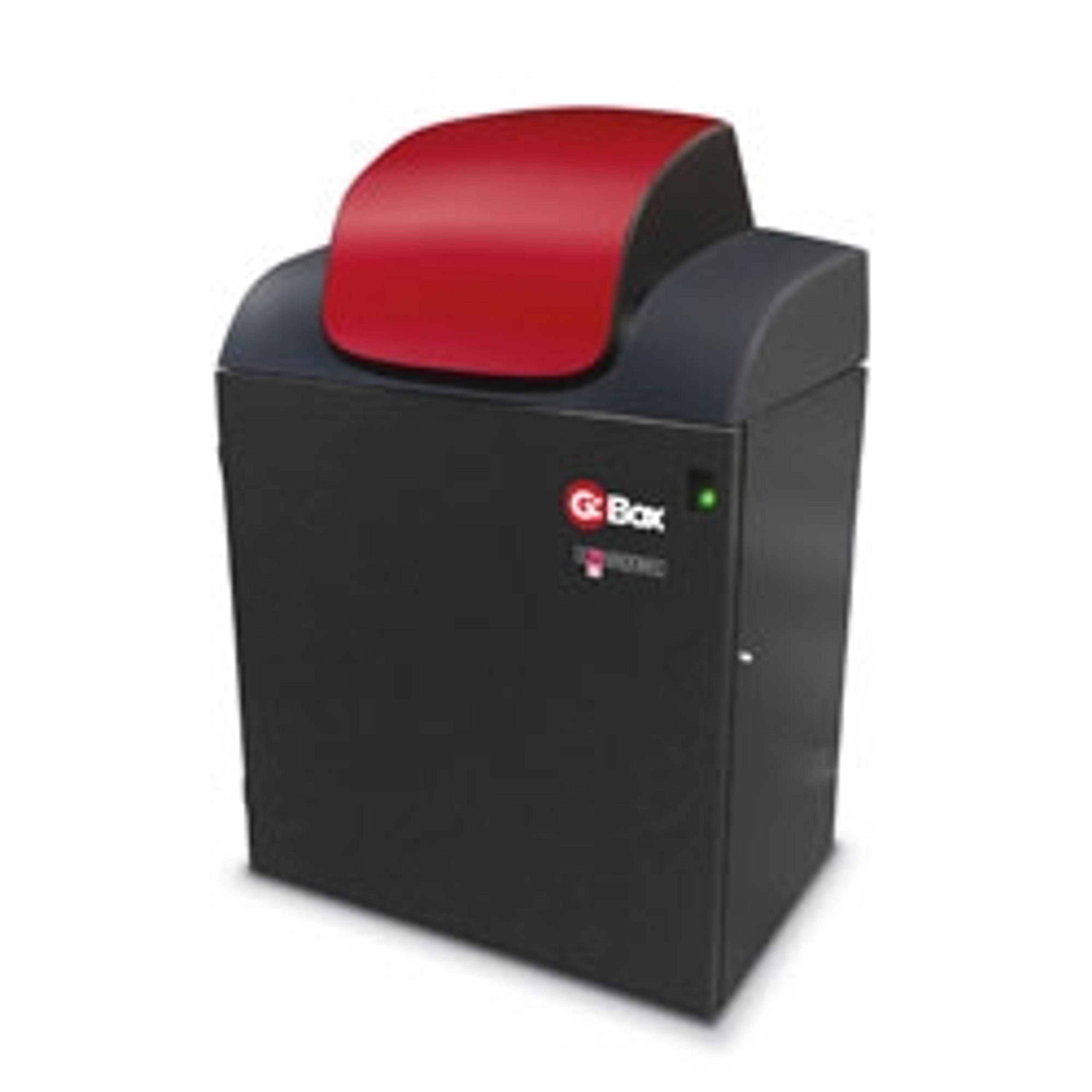
G:BOX F3

Syngene

An entry level system for imaging fluorescence and visible applications, the G:BOX F3 gel doc is the ideal solution for your laboratory.

(3)

Links

Tags

ElectrophoresisElectrophoresis equipment is used to separate mixtures of protein, DNA or RNA, based on their electric charge, size and other physical characteristics, by passing them through a medium such as a polyacrylamide gel, an agarose gel or a capillary tube. Electrophoresis equipment includes horizontal and vertical gel electrophoresis chambers, isoelectric focusing systems, 2D electrophoresis and capillary electrophoresis instruments. Precast gels with a gradient can be used or gels can be hand cast. Samples are run alongside ladders or markers to identify the approximate size of a molecule. Separated proteins and nucleic acids in the gel can be stained or probed with fluorescent markers and then imaged and detected using gel documentation instruments, transilluminators, densitometers and scanners. Find the best electrophoresis equipment in our peer-reviewed product directory: compare products, check customer reviews and receive pricing direct from manufacturers.Western BlottingWestern blotting equipment is used to transfer and identify specific proteins within a sample, reveal protein modifications, as well as give a semi-quantitative estimation of their concentration. Western blotting equipment includes all apparatus necessary to transfer proteins from gel to membrane and subsequent processing steps. Protein transfer can be performed by electroblotting with wet, semi-dry and dry transfer systems onto nitrocellulose and PVDF membranes. Blocking, washing and labeling of membranes follows, involving buffers, blocking reagents, blotting / incubation trays, labeling reagents, immunoblotting assays, antibodies and conjugates. Automated equipment for these steps is available to accelerate your lab workflow. Finally, detection and imaging of proteins can be conducted using gel documentation and imaging systems. Find the best western blotting equipment in our peer-reviewed product directory: compare products, check customer reviews and receive pricing direct from manufacturers.Genome AnalysisGenomics, the study of genomes, includes functional genomics, evolutionary genomics and comparative genomics. There are many genomic technologies such as DNA sequencing of whole genomes, computational biology and bioinformatics. DNA and nucleic acids must be isolated and concentrated from cells for analysis with kits, automated analyzers and software. Other useful technologies for studying genomics include PCR, microarrays and electrophoresis.ProteomicsProteomics is the systemic bioinformatics study of proteins and amino acids, including their structure, size, function and identification. Tools used in proteomics include chromatography, blotting and gels, protein arrays, mass spectrometry and ELISA and associated analysis software. Analyzers and proteomic systems should be sensitive, high resolution, fast and may be automated for high-throughput.Gel Doc / Image AnalysisGel documentation (gel doc) or gel imaging systems are used for the analysis of proteins, antibodies and nucleic acid immobilized in polyacrylamide or agarose gels, membranes or microarrays. Explore a range of a gel imaging systems, densitometers, scanners, transilluminators or UV lamp + CCD cameras for your image analysis solutions. Colorimetric, fluorescent and/or radioisotopic samples can be visualized and documented for further analysis. See gel doc / Image analysis software for quantitative 1D and 2D analysis of your samples. Find the best gel doc / image analysis products in our peer-reviewed product directory: compare products, check customer reviews and receive pricing direct from manufacturers.
Syngene Unveils First Multi-application Single Lighting Module For Rapidly Imaging Fluorescent Dyes with a G:BOX Chemi Image Analyser