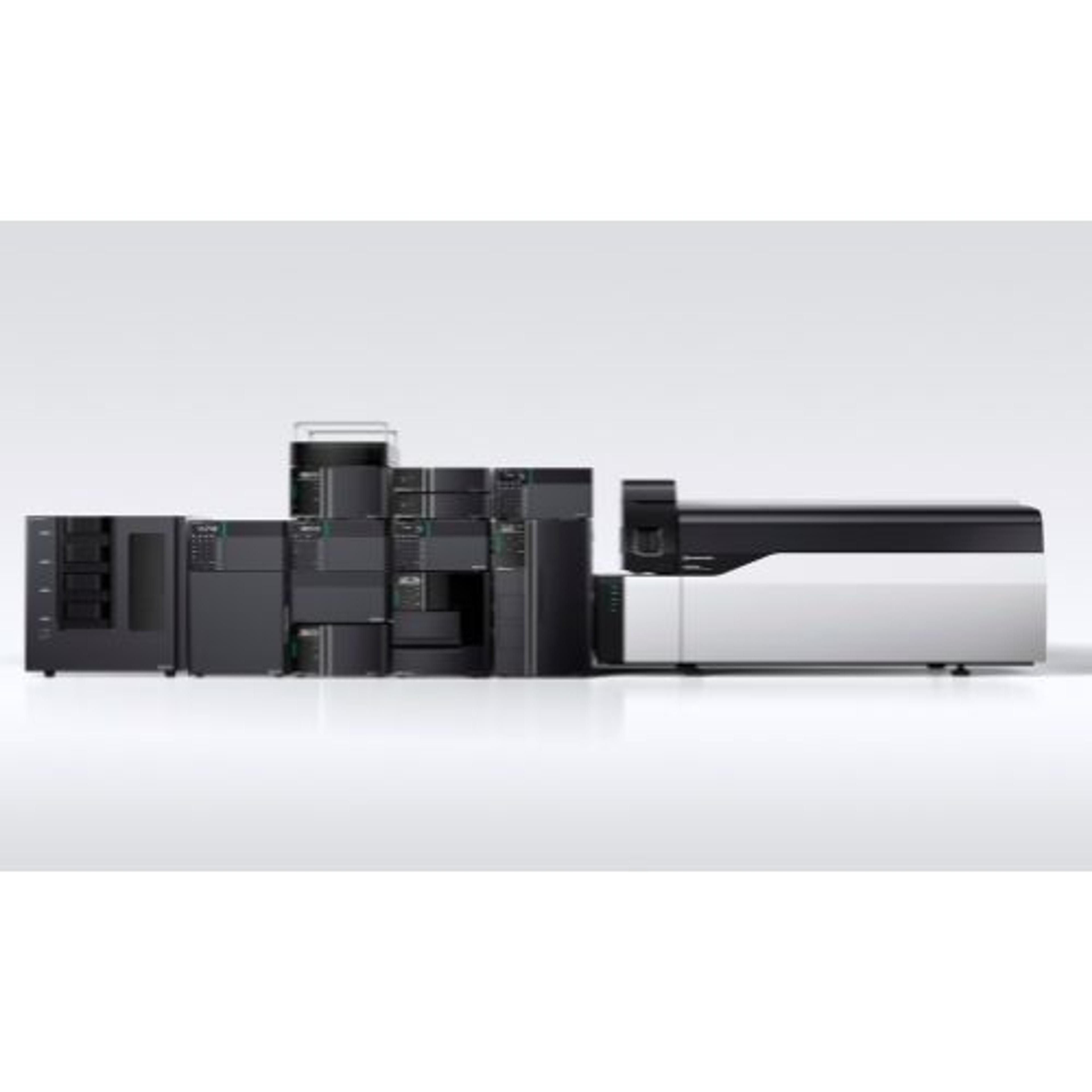
Shimadzu Corporation Launches Nexera UC - The World’s Foremost Unified Chromatography System
16 Mar 2015
The fully automated supercritical fluidic chromatography-based Nexera Unified Chromatography system (Nexera UC) can sequentially analyze up to 48 samples utilizing automatic extraction and chromatographic separation combined with high-sensitivity detection of targets by mass spectrometry.
The Nexera UC system is designed to fulfil the measurement requirements of a wide range of applications including, monitoring pesticides in food products; drug delivery and search for disease biomarkers; additives in forming polymers; drug discovery research in pharmaceuticals and biopharmaceuticals along with cleaning validation.
Speed and efficiency while reducing human errors in the analysis workflow
The Nexera UC system eliminates the need for complicated sample pre-treatment and enables highly reliable and stable analysis of delicate samples that are prone to oxidation or dissociation if exposed to air. Notably, in the analysis of pesticides in food products, the state-of-the-art Nexera UC system takes only five minutes for a complete analysis sample pre-treatment when compared with at least 35 minutes for conventional systems. Furthermore, the fully automated Nexera UC system has a much higher target analyte recovery rate and reduces the possibility of human error during analysis when compared to conventional manual systems.
Nexera UC system highlight
World's first-ever unified and fully automated system that combines supercritical fluidic extraction (SFE) with supercritical fluid chromatography (SFC)
Industry-leading sample throughput for supercritical fluid extraction, enabling up to 48 samples to be continuously and automatically processed
Achieves the highest levels of sensitivity by injecting the entire volume of eluent
Details
The innovative Nexera UC system offers a wide range of separation modes, enabling the separation of a diverse wide range of compounds at once, which is not possible with single systems that are based on gas and liquid chromatography. The automated extraction and chromatography is achieved using a mobile phase of supercritical fluidic Carbon Dioxide (that exhibits the solubility of liquids and diffusivity of gases) into which alcohol and other such organic solvents are added.
Notably, the supercritical fluid chromatography Nexera UC system has the remarkable capability of high-sensitivity analysis of approximately 500 different types of pesticides in less than one hour, thereby shortening the analysis time considerably as compared to conventional chromatography systems.
The Nexera UC system is environmentally "green" as it significantly reduces the quantity of organic solvents used for such applications as the chiral analysis of enantiomers that are common in pharmaceutical drugs.
The Nexera UC system was developed in collaboration between Shimadzu Corporation, Osaka University, Kobe University and Miyazaki Agricultural Research Institute, which is funded by the Japan Science and Technology Agency (JST).