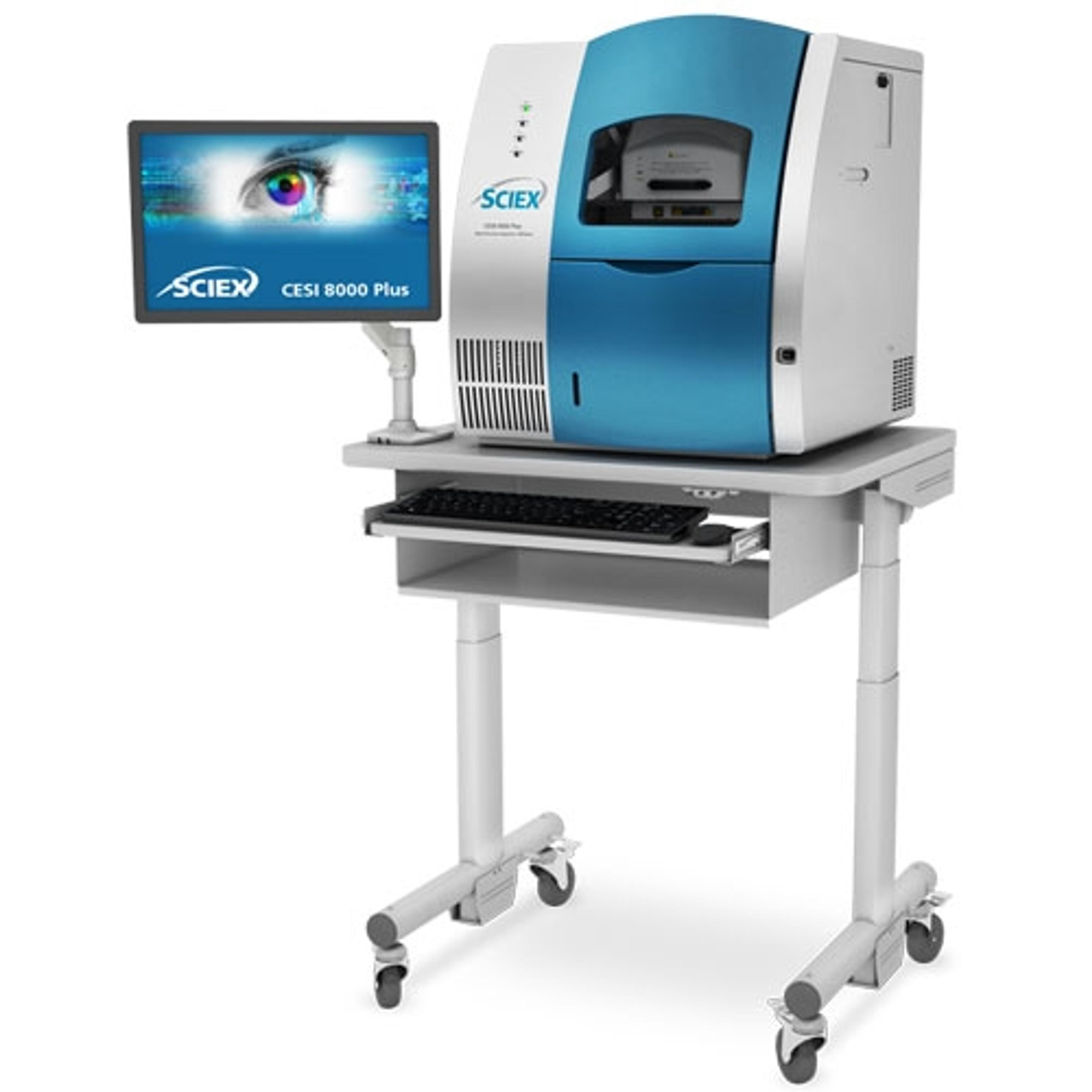
SCIEX Launches the CESI 8000 Plus, a High Performance CESI-MS Platform that Delivers High Resolution and Ionization Efficiency

The next generation CESI-MS system extends capabilities for biopharmaceutical, proteomics and metabolomics researchers

24 Nov 2015

Lois Manton-O'Byrne, PhD
Executive Editor

Product news

SCIEX, a global leader in life science analytical technologies, has introduced the CESI 8000 Plus, their next generation CESI-MS platform. This new platform further advances CESI-MS, enabling multiple experiments to be generated from as little as 5 microliters (μL) of starting material. Combining this capability with the multi-segment injection methodology, one can process ten experiments in the time it would normally take to process one, with less than 1 μL consumed.

This system is ideal for experiments where samples are limited, including microdialysates, needle biopsies, FFPE archives, rare circulating tumor cells, or where samples are highly toxic. In addition, the innovation of neutral capillary surfaces further reduces system flow to less than 10 nanoliters/min (nL/min). The CESI 8000 Plus delivers higher resolution separations, improved ionization efficiency and reduced ion suppression. Optional Laser-induced Fluorescence, Diode-Array and Selectable Wavelength UV detector modules are available, enabling off-line method development capability on this platform.

The CESI 8000 Plus enables the separation of intact protein isoforms followed by mass spectrometry for researchers who need to understand the critical characteristics of biotherapeutics in development. CESI-MS provides a liquid-phase ion mobility separation, which now makes it possible to resolve closely related proteoforms, glycoforms, phosphorylated species and other post translational modifications (PTMs) on proteins.

For academics, the OptiMS neutral capillary cartridge enables researchers to map and separate complex proteomes using either protein digest or intact protein strategies. For the first time, Enzymes, Protein-Protein and receptor-ligand complexes can now be investigated with high resolution separation in a native state, to study their structure/function relationships with mass spectrometry. Metabolomics researchers can take advantage of a single platform for analysis of both negatively and positively charged metabolites, allowing the automated analysis of these analytes without having to change columns or reagents.

"When SCIEX introduced CESI-MS several years ago, we set a new benchmark for the needs of biopharma scientists, and now the CESI 8000 Plus represents another break-through for scientists working in other applications." said John Plohetski, Global Vice President, Separations at SCIEX. "Combined with the unique separation selectivity and enhanced sensitivity, our customers are utilizing the CESI 8000 Plus to get more information from precious samples that may only be available in limited quantity, and they are identifying proteins and protein modifications never before reported."

CESI 8000 Plus system

SCIEX

Extending the reach of your mass spectrometer. Mass spectrometry (MS) has become an indispensable technology for the analysis of compounds of biological interest. Our improvements in assay sensitivity and reduction in ion suppression reveal new information that is critical to your research, whether you’re characterizing a therapeutic protein, identifying the proteins that make up a specific proteome, analyzing post-transitional modifications, or studying a metabolomic fingerprint. We developed a new front-end separation and ionization technology called CESI, which combines the high efficiency and ultra-low flow of capillary electrophoresis (CE) with an integrated electrospray ionization source. This optimization of electrospray ionization (ESI) into the nanoflow region has been shown to greatly improve assay sensitivity and reduce ion suppression.  

(0)

Links

Tags

AntibodiesAntibodies are used in techniques such as confocal and fluorescence microscopy, flow cytometry, ELISA, ELISPOT, immunohistochemistry, western blotting and immunopreciptation. Select specific antigen reactivity, high specific affinity, low non-specific binding, monoclonal or polyclonal, primary or secondary antibodies and associated conjugates such as an enzyme or dye for visualization.ProteomicsProteomics is the systemic bioinformatics study of proteins and amino acids, including their structure, size, function and identification. Tools used in proteomics include chromatography, blotting and gels, protein arrays, mass spectrometry and ELISA and associated analysis software. Analyzers and proteomic systems should be sensitive, high resolution, fast and may be automated for high-throughput.Protein PurificationProtein purification is a vital step in drug discovery, therapeutics, biotech and life science research. The purification process typically involves subcellular or membrane protein extraction with cell lysis kits, separation of proteins from cell debris by filtration or spin columns, and the isolation of proteins of interest from other proteins and impurities with affinity purification (including fusion protein tags and antibody binding proteins A, G and L), immunoprecipitation or chromatographic methods, such as ion exchange, size exclusion and immobilized metal affinity chromatography. All purification methods come in multiple formats for your laboratory needs, including agarose or magnetic beads, resins, columns and filter plates. Find the best protein purification equipment in our peer-reviewed product directory: compare products, check customer reviews and receive pricing direct from manufacturers.BiomarkersBiomarkers are biological markers which can be measured and evaluated to indicate a biological state. The use of biomarkers in research and diagnosis can indicate a normal or disease state or drug response of cells / tissues. Biomarkers include genetic markers, cell surface markers such as antigens, antibodies or receptors and secreted molecules such as cytokines. An assay system is required for identification of biomarkers. :Clinical ChemistryBiochemistry (or clinical chemistry) involves the analysis of bodily fluids using chemical tests. Techniques used include HPLC, chromatography, spectroscopy, mass spectrometry, immunochemical, electrophoresis, turbidometric / spectrophotometric assay, MRI and ISE analysis. Tests are often carried out on plasma or serum but urine (urinalysis) and fecal specimens are also processed.Protein QuantificationThe detection and quantification of proteins in a sample is vital across life sciences, pharmaceutical research and clinical diagnostics, and a variety of equipment is available to scientists to simplify the workflow. Proteins of interest can be easily labeled and detected on light-based detection instruments. Immunoassay kits allow you to identify a specific protein of interest and protein detection beads or antibody microarrays allow you to identify multiple specific proteins at once. Protein interactions and enzyme activity can also be monitored with protein-protein interaction assays. Additionally, the biophysical characterization of proteins is made easy with biokinetic analyzers. Find the best protein detection and quantification products in our peer-reviewed product directory: compare products, check customer reviews and receive pricing direct from manufacturers.BiopharmaceuticalsBiopharmaceuticals are proteins and other compounds (such as nucleic acids) produced by living organisms that have uses as therapeutics or for in vivo diagnostics. The most well known example of a biopharmaceutical product, and the first to be approved for therapeutic use, was recombinant human insulin.Post-Translational ModificationsBiotherapeuticsBiotherapeutics are proteins and other compounds (such as nucleic acids) produced by living organisms that have uses as therapeutics or in <i>in vivo</i> diagnostics. The most well-known example of a biotherapeutic product, and the first to be approved for therapeutic use, was recombinant human insulin.CTCsFFPEFormalin-fixed paraffin-embedded (FFPE) tissues are commonly used in medical research, particularly in histology and cancer studies. The preservation process allows long-term storage of tissue samples for later analysis. Explore FFPE research products in our peer-reviewed product directory; compare products, check reviews, and get pricing directly from manufacturers.Molecular DiagnosticsMolecular diagnostics use an individual’s genetic code and gene expression to diagnose and monitor diseases. The technique is used increasingly in the field of infectious diseases and oncology, as well as areas such as coagulation, HLA typing and pharmacogenomics. Molecular diagnostics plays a pivotal role in personalized medicine.Liquid BiopsiesLiquid biopsies are non-invasive tests used to detect cancer and other diseases by analyzing blood or other bodily fluids. This technique is gaining popularity for early detection, monitoring treatment response, and detecting minimal residual disease. Explore liquid biopsy solutions in our peer-reviewed product directory; compare products, check reviews, and get pricing directly from manufacturers.